
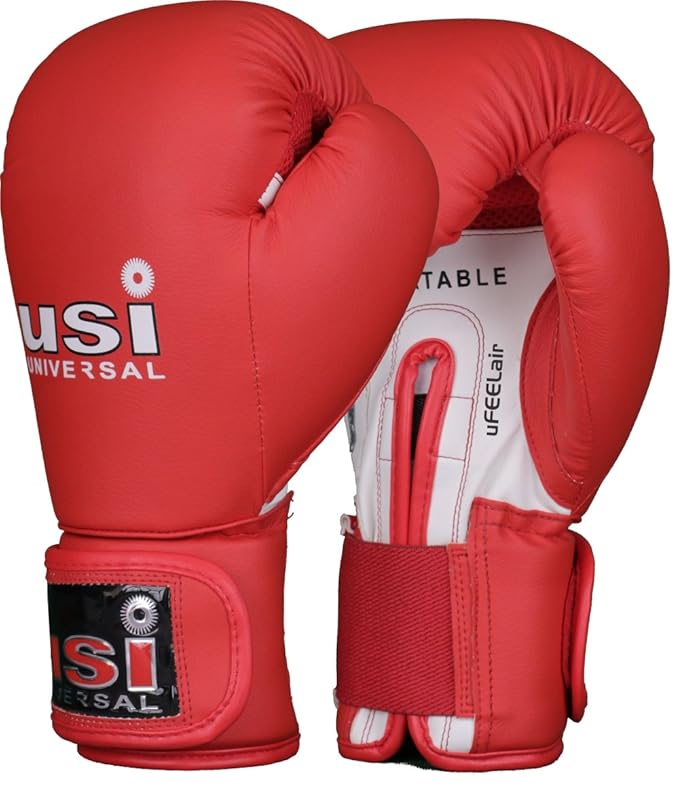
Durable PU material.
USI UNIVERSAL THE UNBEATABLE Lite Contest Pu Boxing Gloves for Men & Women with Moulded Foam Padding, Sweat Wicking Lining, Elasticated Hook & Loop Wrap Around Closure System (Red, 12oz)
Original price was: ₹1,999.00.₹1,804.00Current price is: ₹1,804.00.
Description
Boxing Gloves for Men:
An In‑Depth Guide
Introduction
Boxing gloves are more than protective gear—they are essential to the sport, influencing performance, safety, comfort, and hygiene. Whether for competition, training, sparring, or fitness, choosing the right pair makes a big difference. This article explores men’s boxing gloves in their full scope: history, design, materials, sizing, usage, how to select and care for them, and current trends.
1. History and Purpose of Boxing Gloves
1.1 Origins and Evolution
-
Ancient roots: The use of hand protection in combat sports goes back to ancient civilizations. The Greeks used himantes (leather strips) in pankration; Romans had similar rudimentary hand coverings.
-
19th‑century formalization: Modern boxing as a regulated sport, especially in England and the US, introduced rules such as the Queensberry Rules (mid‑1800s), which led to gloves becoming standard for safety.
-
Evolution of design: Initial gloves were simple, lightly padded; over time, designs incorporated foam padding, varied closure types, different shapes for different boxing styles (e.g. curved, flat). Weight classes and glove weights also became standardized.
1.2 Functions of Boxing Gloves
Boxing gloves have several overlapping purposes:
-
Protection of hands: The bones in the hand (metacarpals, phalanges) are relatively fragile. Gloves absorb impact, reduce risk of fractures.
-
Safety for opponents: Raw knuckles can cause serious damage. Gloves distribute force, reduce cuts.
-
Training adaptation: In sparring or pads work, gloves allow for training with power and speed while managing injury risk.
-
Sport’s rules/regulations: Amateur and professional boxing require gloves of specific weights, sizes, materials, to maintain fairness and safety.
2. Anatomy of Boxing Gloves: What Makes Them Work
To understand how gloves perform, it helps to break down their components.
2.1 Outer Shell (Exterior Material)
-
Leather: Full‑grain cowhide leather is durable, breathable, molds over time; often more expensive.
-
Split leather: Cheaper than full grain, less durable, more prone to cracking.
-
PU (Polyurethane) or synthetic leather: More affordable, easier to maintain, water‑resistant, but tends to degrade faster, less breathable, sometimes stiffer.
2.2 Padding
-
Foam layers: Usually multi‑layered foams with different densities—softer inner foam for hand comfort; harder outer for impact absorption.
-
Gel inserts: Some gloves have gel (silicone or other) to absorb shock better, especially around knuckles.
-
Horsehair: Traditional in older gloves or in certain premium models; dense, durable, but less shock absorbing than modern foams, and heavy.
2.3 Lining
-
Moisture‑wicking fabrics: Needed to reduce sweat build‑up, odor, chafing.
-
Smooth foam or padding inside the glove wrist area: For comfort and support.
2.4 Wrist Closure
-
Velcro straps: Common in training gloves; allow easy on/off; adjustable tightness.
-
Lace‑up: Offers more precise fit and better wrist stabilization; preferred in competition / pro fights; more time needed to tie.
2.5 Thumb Attachment
-
Often attached (“fixed” thumb) to reduce risk of thumb injury or accidental finger jabs. Some gloves have a semi‑attached or detachable thumb—less common and riskier.
3. Types / Styles of Boxing Gloves
Different gloves are made for different activities. Often one athlete will have multiple pairs.
| Type | Description | Where Used / Purpose |
|---|---|---|
| Competition / Fight Gloves | Lightweight, minimal padding (but still protective), sleek design, lace‑up closure often required in professional/amateur bouts. | Matches, sanctioned events. |
| Sparring Gloves | Heavier padding, larger weight, usually with Velcro straps; designed to protect both wearer and sparring partner. | Gym sparring, partner drills. |
| Training / Bag / Pad Gloves | Mixed padding, durable exterior; bag gloves often have harder surface to cope with repeated impact, but require enough hand protection. | Hitting heavy bags, speed bags, pads. |
| Fitness / Aerobic Gloves | Lighter gloves often for cardio boxing classes; sometimes minimal padding; focus more on speed than power; often used with wraps. | Group fitness, boxing workouts. |
| Muay Thai / Kickboxing Gloves | Slightly different thumb/wrist angle for clinch work; more flexible in wrist, sometimes with features suited for low, mid, high strikes. | Muay Thai, kickboxing, mixed martial arts striking. |
4. Weight, Size, and Fit
Getting the right glove weight and size is as crucial as the type.
4.1 Glove Weight (in Ounces)
Boxing gloves are often labeled by weight in ounces (oz). Common sizes include 8 oz, 10 oz, 12 oz, 14 oz, 16 oz, 18 oz, and above. The weight determines how heavy the glove feels, mostly due to padding and size.
-
8‑10 oz: Usually for competition; less padding, lighter glove; higher risk if used incorrectly.
-
12‑14 oz: Common for training; moderate protection; suitable for bag work or lighter sparring.
-
16‑18 oz and above: Reserved for heavy sparring and beginner hands; maximum padding to protect both partners.
4.2 Hand Size & Fit
Fit depends not only on weight but on hand circumference / glove’s internal dimensions.
-
Measure around knuckles (with hand flat) to get circumference.
-
Try on gloves with hand wraps, since wraps add thickness.
-
Check that the glove doesn’t squeeze fingers too tightly, or leave them too loose (which increases risk of injury).
4.3 Choosing Based on Purpose
-
Sparring vs Bag work: Sparring gloves should offer more protection even if heavier. Using a light glove for sparring may hurt your partner; using too heavy a glove for speed/power bag work may slow you down or stress joints.
-
Competition rules: Different boxing federations and tournaments have rules about glove weight & brand. If fighting, verify those before buying.
5. Materials and Construction: Durability, Comfort, and Performance
Here we dive deeper into the materials, padding types, and how construction affects use.
5.1 Exterior Materials
-
Full‑grain leather: Durable, breathable; over time becomes supple. More expensive, premium gloves often use this.
-
Synthetic leather (PU/PU composite): Lower cost, easier to clean, less odor retention. However, prone to peeling/cracking after heavy or long‑term use.
5.2 Padding Types
-
High‑density foam: Provides good impact dissipation; retains shape.
-
Multi‑layer foam: Different layers for different impact zones; combinations of foams with varying density.
-
Gel padding: Offers superior shock absorption around the knuckles; results in a more cushioned feel.
-
Traditional padding (horsehair/wool): More for tradition; tends to compact over time (loses padding height), harder to clean.
5.3 Internal Lining & Sweat Management
-
Sweat can degrade gloves internally: ideal linings are moisture‑wicking, anti‑microbial, quick‑dry. Some gloves even have removable liners.
-
Good ventilation: ventilation holes or mesh panels help reduce humidity inside the glove, which helps hygiene.
5.4 Wrist Support & Closure System
-
A robust wrist strap or lace‑up helps reduce wrist sprains. If Velcro, should be wide, strong, and wrap multiple ways (i.e. cover top and bottom wrist).
-
Padding/cuffs around wrist also contribute to support.
6. Safety, Injury Prevention, and Hygiene
Using gloves but also caring for them matters greatly to avoid injuries and maintain glove lifespan.
6.1 Injuries Prevention
-
Hand wraps: Always wrap hands underneath gloves to protect knuckles, wrists, fingers.
-
Right glove weight: Using gloves too light leads to joint injuries; too heavy may reduce technique or fatigue you excessively.
-
Partner safety: When sparring, use gloves that protect opponent; compensate for mismatched weight or strength.
6.2 Hygiene & Care
-
Drying: After each session, air dry the gloves; open all closures; avoid leaving in gym bags overnight.
-
Deodorizing / anti‑microbial treatments: Use glove deodorizers / stuffing with newspaper / cedar wood / silica packets. Use sprays if safe to reduce bacteria and odor.
-
Cleaning exterior: Wipe down leather/synthetic with damp cloth, mild soap; avoid soaking.
-
Inspecting: Check for padding breakdown, stitching coming loose, Velcro or lace damage.
7. How to Choose the Right Gloves: Checklist
This section is a guide you can use whenever you’re thinking of buying.
-
Define your purpose
-
Competition? Sparring? Bag work? Fitness?
-
What styles do you practice (boxing, kickboxing, etc.)?
-
-
Check regulations (if competition / gym has rules)
-
Determine size & weight based on your body weight, hand size, and usage
-
Pick material
-
Want durability and premium feel → real leather
-
Want cost savings, easier cleaning → synthetic
-
-
Closure system (Velcro vs lace‑up)
-
Padding type (foam, gel, etc.)
-
Fit & comfort (try with hand wraps; check wrist support; thumb safety)
-
Aesthetics (optional but many care)
-
Color, branding, design—helps with motivation & identity; sometimes linked with team or sponsorship
-
-
Budget
-
Boxing gloves can range from relatively modest (synthetic, simpler styles) to quite premium (top‑tier leather, handcrafted). Decide what you’re willing to spend; consider glove’s expected lifespan.
-
8. Typical Weight/Size Guide by Body Weight & Usage (Example)
Below is a sample guideline (general, may vary by brand):
| User Body Weight | Type of Use | Common Glove Weight |
|---|---|---|
| ≤ 60 kg | Bag work or fitness | 10‑12 oz |
| 60‑75 kg | Training, light sparring | 14 oz |
| 75‑90 kg | Sparring heavy power; competition | 16 oz |
| > 90 kg | Heavy sparring; maximum protection | 18 oz+ |
Also, sometimes competitions require standard glove weight (e.g. 10 oz for pros in certain weight classes).
9. Pros & Cons of Different Types / Features
When choosing, it helps to know trade‑offs.
| Feature | Advantages | Disadvantages |
|---|---|---|
| Lace‑up closure | Very secure, better wrist support; sleek fit | Time consuming to put on/off; need assistance; less convenient in casual gym settings |
| Velcro closure | Quick, easy; self‑sufficient; adjustable in gym | May be less supportive; Velcro can lose grip over time or collect lint; edges may catch |
| Real leather | Durability, comfort, longer lifespan; molds to your hand | Higher cost; requires more maintenance; sensitive to water |
| Synthetic leather | Lower cost; easier cleaning; more forgiving in wet/humid conditions | Less durable; may crack; may not breathe as well; may feel stiffer initially |
| Heavy glove (16‑18 oz +) | Increased protection; better for sparring; helps build strength/stamina | Slower hand speed; more fatigue; not allowed in many competitions |
| Light glove (8‑10 oz) | Faster punching; competition legal; more responsive | Less padding → higher injury risk; not ideal for sparring or heavy bag work without care |
10. Brands, Price Ranges, & Value
While this section doesn’t list specific Boxing Gloves for Men models, it helps to understand what you get for your money.
10.1 Entry‑Level Gloves
-
Price: Lower cost materials Boxing Gloves for Men(synthetic leather), simpler padding.
-
Use: Occasional training, fitness, beginners.
-
Lifespan: Moderate; may degrade Boxing Gloves for Men faster with heavy use.
10.2 Mid‑Range Gloves
-
Price: Better leather or higher Boxing Gloves for Men quality synthetics; better internal padding; more comfort.
-
Use: Regular training, sparring; Boxing Gloves for Men gym‑level usage.
-
Lifespan: Better durability; better warranties.
10.3 Premium & Competition Gloves
-
Price: Highest; real leather; Boxing Gloves for Men possibly hand‑crafted; special padding or technology; often lace‑up.
-
Use: Competitive fighters; Boxing Gloves for Men serious trainers.
-
Lifespan: Longest, provided well‑maintained; retains shape and performance.
10.4 Value Considerations
-
Return policy / warranty: Leather Boxing Gloves for Men splitting, stitching failures—good brands often have warranties.
-
Replaceable parts: Some gloves allow Boxing Gloves for Men replacing the liner or have Velcro parts changeable.
-
Resale / re‑use: If sparring gloves degrade, may repurpose as bag gloves; less ideal for hygiene.
11. Care & Longevity: Getting Maximum Life Out of Gloves
Gloves are an investment—proper care ensures Boxing Gloves for Men they last longer and stay safe.
-
After every use: wipe inside & outside; Boxing Gloves for Men air dry; open Velcro or lace as much as possible.
-
Regular deodorizing: Use glove deodorizers (wood balls, charcoal, etc.); avoid strong chemicals that degrade materials.
-
Periodic inspection: Look for cracked leather, flattening of padding, detached thumb, fraying stitches. If serious damage, retire or use for less intense work.
-
Storage: Dry, cool place. Avoid direct sunlight Boxing Gloves for Men (harms leather), avoid damp environments.
-
Use alternates: If possible have two gloves (or two pairs) and alternate; gives them time to dry and recover.
12. Common Mistakes & How to Avoid Them
Recognizing pitfalls helps you make better choices and stay Boxing Gloves for Men safer.
-
Buying solely by look or brand without checking fit, Boxing Gloves for Men protection, weight.
-
Using competition‑light gloves for sparring → leads Boxing Gloves for Men to injuries.
-
Never wrapping hands, or wrapping Boxing Gloves for Men them poorly.
-
Neglecting glove hygiene → leads to bad Boxing Gloves for Men odor, bacterial growth, skin infections.
-
Overusing gloves that are damaged → Boxing Gloves for Men broken padding or structural integrity reduces safety.
-
Mismatched glove weight in sparring → one partner using very light glove vs heavy → danger.
13. Innovations & Trends in Men’s Boxing Gloves
What’s new or improving in gloves? What to Boxing Gloves for Men look out for in newer models.
-
Advanced padding technologies: Boxing Gloves for Men Hybrid foams, variable density, gel inserts to better absorb shocks.
-
Ergonomic design: Curved gloves that follow fist shape; pre‑curved palms to reduce fatigue.
-
Better wrist support: More Boxing Gloves for Men engineering in cuffs and closures to reduce sprains.
-
Lightweight materials that retain protection: Reducing glove bulk while keeping impact absorption.
-
Eco‑friendly materials: Bio‑based leathers, more sustainable synthetics; reducing chemical and manufacturing waste.
-
Improved hygiene: Antimicrobial linings, anti‑odor fabrics, better ventilation.
-
Custom fit / boxing gloves tailored: Some companies offer gloves shaped for individual hand anatomy, or with options for thumb style, wrist wrap tightness.
14. Specific Use Cases
How men in different circumstances Boxing Gloves for Men may choose gloves differently.
14.1 For Beginners
-
Should focus on hand protection; Boxing Gloves for Men get heavier gloves (e.g. 14‑16 oz) even for bag work.
-
Moderate price, synthetic acceptable.
-
Make sure gloves are comfortable; avoid looking for elite competition gloves initially.
14.2 For Fitness / Cardio Boxing
-
Lighter gloves, more emphasis on Boxing Gloves for Men movement, speed.
-
Comfortable fit without compromising Boxing Gloves for Men protection.
-
Velcro closures for easy on/off.
14.3 For Sparring Regularly
-
Maximum protection: thicker padding, Boxing Gloves for Men especially over knuckles and wrist.
-
Possibly two pairs: one for Boxing Gloves for Men heavy sparring, another for lighter partner work.
-
Durable material; strong closures.
14.4 For Competition / Amateur Fights
-
Follow sanctioning body rules: Boxing Gloves for Men weight allowed, gloves approved brands, type of closure.
-
Lace‑ups often required; glove must weigh exact amount.
-
Need a glove that balances power delivery (less padding) with Boxing Gloves for Men safety (still enough cushion).
15. Cultural, Aesthetic, Psychological Aspects
Beyond physical function, gloves have significance.
-
Aesthetics & color: Some prefer classic black, red; others want standout colors or custom designs. Aesthetic can build confidence.
-
Brand loyalty & identity: Fighters often build identity with certain brands (Everlast, Cleto Reyes, Winning, etc.).
-
Ritual: Glove donning, smell, feel—part of psychological prep.
-
Symbolism: Gloves can carry significance—representing challenge, readiness, perseverance.
16. Cost & Budget Breakdown (Estimated Prices)
Though prices vary by country, quality, and brand, here’s a rough breakdown (converted into USD for reference, but in India / local markets adjust for taxes and import costs).
| Category | Typical Price Range (USD) | What You Get |
|---|---|---|
| Entry / Budget | $30 ‑ $70 | Synthetic materials, basic padding, Velcro, basic comfort. |
| Mid‑Range | $80 ‑ $150 | Better leather or higher quality synthetic, better craftsmanship, more comfort, wrist support. |
| Premium / High‑End | $160 ‑ $300+ | Top leather, advanced padding/gel, custom features, possibly handcrafted, brand reputation. |
In India, because of import duties and shipping, premium gloves may cost notably more. Local brands or manufacturers may offer good mid‑range at lower price.
17. Summary: What Men Should Keep in Mind
Putting it all together, for any man interested in boxing (whether as sport, fitness, or training), key takeaways are:
-
The purpose is the biggest driver of glove choice — training, sparring, competition will each demand different attributes.
-
The glove must fit well — in hand size, weight, closure.
-
Protection (of both wearer and opponent) is non‑negotiable.
-
Durability and hygiene impact safety, comfort, and cost over time.
-
Spending wisely: sometimes paying more up front for better gloves gives better value long term.
-
Care and maintenance are essential: no glove is good forever if neglected.
Conclusion
Men’s boxing gloves are a piece of gear whose importance can’t be overstated. They protect, enable performance, and reflect one’s style and seriousness. With the right glove—appropriate weight, material, fit, closure, and care—a boxer, trainer, or fitness enthusiast can train hard, stay safe, and enjoy the sport fully. If you ever need help selecting a glove set in your region, comparing models, or want suggestions, I’d be happy to help!
Reviews
There are no reviews yet.