
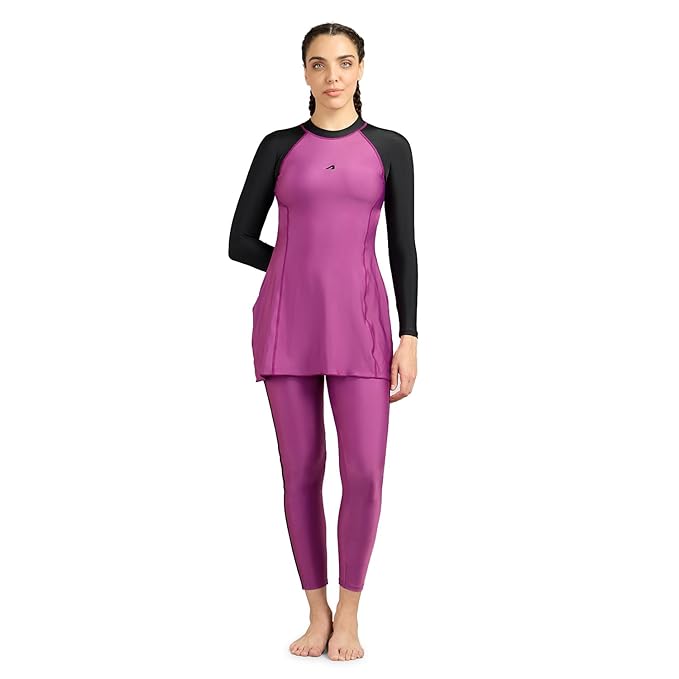
ELEGANT A-LINE SILHOUETTE WITH FULL SLEEVE COVERAGE: The Boldfit Swim Peplum A-Line Co-ord features a flattering A-line silhouette designed for both style and functionality. The flowy fit enhances movement, while the full sleeves provide extended coverage, protecting you from sun exposure, chlorine, and harsh water conditions. The contrast raglan sleeve design adds a sporty touch, making it the perfect blend of elegance and practicality for beach vacations, poolside lounging, or water sports.
Boldfit Swimming Suit for Women 2 Piece Swim Suit Set Full Body Swimming Costume for Women Stretchable Fit Swimwear for Ladies Sleeve Swimsuit for Woman Berry XL
Original price was: ₹2,299.00.₹1,599.00Current price is: ₹1,599.00.
Description
Women’s Swimming Suit:
A Complete Guide
1. What Is a Women’s Swimming Suit
Swimming Suit for Women (also called a swimsuit, Swimming Suit for Women bathing suit, swimwear, costume) is a garment designed to be worn in water (pools, oceans, lakes, etc.), or at beaches, water parks, or other Swimming Suit for Women aquatic settings. Its purpose is practical (covering, modesty, protection), functional (freedom of movement, hydrodynamics), and Swimming Suit for Women aesthetic (style, fashion, self‑expression).
Swimming suits come in many styles: one‑piece, two‑piece Swimming Suit for Women (bikinis),Swimming Suit for Women tankinis, swim dresses, full coverage suits (burkinis), legsuits, etc. They can be used for leisure, sport, beachwear, sun tanning, or more serious competitive swimming.
2. Key Components & Construction
To understand what makes a good swimming suit, it helps to know Swimming Suit for Women how they are made and what features are involved.
2.1 Fabric / Material
-
Stretchable synthetic fabrics: Most suits are made from blends of nylon/polyamide, polyester, spandex (also called Lycra, elastane) etc., which provide stretch, shape retention, resistance to water, chlorine, Swimming Suit for Women sun, and quick drying.
-
Lining: Many high‑quality suits have internal lining for modesty, coverage, Swimming Suit for Women prevention of show‑through, and to protect the outer material.
-
Pad inserts / cup support: For bust support / shaping, Swimming Suit for Women some suits include removable or sewn pads, underwires, shelf bras, molded cups.
-
UV protection / UPF rating: Some fabrics are treated or inherently Swimming Suit for Women protective against ultraviolet rays. Useful for beachwear or long sun exposure.
-
Chlorine and salt water resistance: Exposure to pool chemicals and Swimming Suit for Women salt can degrade fabric; certain blends or treatments resist fading, stretching, or weakening from these.
2.2 Cut & Style Features
-
Neckline: Scoop neck, V‑neck, halter, bandeau, high neck, square or sweetheart neckline – contributes to both style and how much support or lift is provided.
-
Straps: Fixed straps, adjustable straps, convertible straps (can be worn in different ways), racerback, crossback etc. Straps affect support, comfort, strap slippage.
-
Back and coverage design: Full back, keyhole back, open back, low back, strap‑back etc. The back cut affects mobility (especially for strokes like freestyle, butterfly) but also modesty or fashion preferences.
-
Leg cut / Bottom design: High‑cut, moderate, full coverage, cheeky, Swimming Suit for Women thong, boy‑shorts, skirted bottom etc. The cut affects how much skin is exposed, how comfortable it is for movement, and how flattering it looks.
-
Waist / torso shaping: Ruched panels, tummy control panels, waistbands, side panels, color blocking or patterning that help visually slim or accentuate certain areas.
-
Sleeves or sleeves‑alternatives: Short sleeves (cap sleeves), long sleeves, Swimming Suit for Women sleeves with rash guard parts, mesh inserts; sometimes to protect from sun or for modesty.
2.3 Fit & Ergonomics
-
Sizing & fit: Important that the suit fits body shape, bust, hip width, torso length. Suits that are too loose or too tight can cause discomfort, chafing, slipping, or poor performance.
-
Support in high impact / active use: For swimming laps, diving, Swimming Suit for Women beach sports, etc., support in the bust region (via pads, underwire, shelf bras) is key. For competitive use, minimal drag and secure fits are preferred.
-
Freedom of movement: Stretch in the fabric, proper strap design, appropriate cut so arms, legs, shoulders can move without restriction or pulling.
-
Comfort: Soft linings, smooth seams, avoiding hardware that digs in etc. Also avoiding see‑through when wet, ensuring durability so suit doesn’t lose shape or cover.
3. Styles & Types of Women’s Swimming Suits
There are many styles, each with pros and cons. The choice depends on purpose Swimming Suit for Women (sport vs leisure), body type, comfort, modesty, fashion tastes.
| Style | Description | Pros | Considerations |
|---|---|---|---|
| One‑piece | Classic style covering the torso in one piece. Variations in neckline, back, leg cut. | Good coverage, supportive, often more secure for active swimming; fewer gaps or wardrobe‑malfunction risk. | Can feel less freeing for tanning; sometimes harder to get on/off especially if wet; styles must balance support and fashion. |
| Two‑piece / Bikini | Separate top and bottom. Many styles (triangle, halter, bandeau tops; low waist, high waist bottoms, etc.). | Versatility; mix‑and‑match; easier to change sizes for top/bottom; more style/fashion options. | Less coverage; risk of slippage; top support is especially important; bottoms may shift. |
| Tankini | Top resembling a tank (longer) plus separate bottoms. Offers more coverage than bikini, more flexibility. | More modest, more coverage for midriff; easier to use for restroom breaks; stylish. | May feel less streamlined for performance; top may billow; fit must be good or it looks bulky. |
| Swim dress / Skirted suits | One‑piece or two piece with skirt or dress‑style overlay. | Extra coverage for hips, thighs; modest look; stylish for leisure. | Skirt adds bulk; can get heavy when wet; may interfere with highly active movement. |
| Legsuits / Full coverage / Wetsuit‑style | Suits with longer legs (knee‑length or full length), long sleeves, high coverage suits (e.g. burkini) etc. | Excellent modesty; protection from sun; good for surfing, learning, cooler water; less drag from splash etc. | More fabric = heavier; drying and maintenance more. Mobility might be somewhat constrained. |
| Competitive / Speed suits | Designed for minimal drag, tight fit, high‑performance fabric; minimal design features, often with racerback or open back. | Better for training or races; sleek look; fast drying; materials often high quality. | Higher cost; less fashion variety; less coverage; support may be less comfortable for casual wear. |
4. Functional vs Fashion: What Drives Choice
When women choose a swimming suit, several factors play roles. Some prioritize performance, others style, modesty, or specific needs.
4.1 Performance & Activity
-
If you swim laps, do water aerobics, dive, surf or do beach sports—you’ll want a suit with solid support, non‑slipping straps, good leg cut, and fabric that resists chlorine and retains shape.
-
For competitive swimming, hydrodynamic cuts, minimal drag, compression materials matter.
4.2 Sun / Environmental Considerations
-
UV protection in fabric (UPF ratings) if you’ll be outdoors for long periods.
-
Light‑fast colors / fabric quality so colors do not fade in sun or with chlorine.
-
Protection against wind, sand, salt water etc.
4.3 Comfort, Modesty & Personal Style
-
Some want more coverage (skirts, longer legs, higher necklines) for personal comfort or cultural reasons.
-
Fashion trends: patterns, colors, cutouts, ruffles, asymmetry, mesh panels, etc.
-
Fit and body shape: what flatters your figure; what makes you feel confident.
5. Material Technology & Fabric Innovations
Modern swimsuit fabrics have advanced features beyond basic stretch.
-
High stretch / four‑way stretch fabrics: Allow movement in all directions; stretch and recover well so suit holds shape.
-
Chlorine‑resistant materials: Blends or treatments that prevent fading, stiffness, breakdown due to pool chemicals.
-
Quick‑drying fabrics: Important if moving between swimming and other activities; reduces discomfort, chafing.
-
Hydrophobic / water‑repellent finishes: Helps water slide off, reduces drag, less water weight.
-
Textured or sculpting fabrics: Ruching, paneling, laser cuts etc. to shape body, hide problem areas, enhance visuals.
-
Eco‑friendly / recycled materials: Recycled nylon, polyester; sustainable options.
-
Anti‑UV / UPF fabrics: Provide protection from harmful sun rays; useful for beach, outdoor pool.
6. Fit, Sizing & Comfort
6.1 Measuring & Size Guides
-
Bust, under‑bust, waist, hip measurements are key. Some brands also consider torso length (important for one‑pieces).
-
Understand that sizing varies by brand; always check size charts.
6.2 Trying for Fit
-
Suit should feel snug but not painful; when wet, some stretch happens but not so much that it becomes loose.
-
Straps should stay in place during arm movement.
-
For two‑pieces, top & bottom should align well (no gaping, no digging in).
-
Check leg cut: high‑cut might expose more; modest cut may limit certain movements.
6.3 Adjustability Features
-
Adjustable straps, tie backs, clasp backs, hook backs.
-
Removable padding or cups so you can customize shape and coverage.
6.4 How it Feels Wet vs Dry
-
Dry fit may feel fine, but wet‑fit test is helpful: does the suit ride up, stretch, show through?
-
Consider weaknesses: seams, linings; material that becomes transparent when wet.
7. Style, Trends & Aesthetic Choices
What a swimming suit looks like is often as important as how it functions.
-
Colors & Patterns: Solid colors, color blocking, gradients, prints (floral, geometric), metallic, textured fabrics.
-
Details & Accents: Ruffles, cut‑outs, mesh inserts, wrap styles, asymmetrical lines, straps designs.
-
Neckline & Back Styles: Plunge, square, halter, scoop, one‑shoulder; back options like racerback, cross‑back, low‑back, open‑back.
-
Modesty vs Boldness: Options from full coverage to revealing; swim dresses, skirts, burkinis for modesty; bikinis, cut‑outs for bolder look.
-
Mix & Match: Two‑piece suits allow combining different tops & bottoms; swapping bottoms for better fit etc.
8. Benefits of a Good Swimming Suit
A well‑designed, well‑fitting swimming suit offers many benefits:
-
Comfort & Confidence: Wearing something that fits well and flatters helps you feel confident, enjoy your time in water.
-
Performance & Movement: Less drag, secure fit, freedom of movement which makes swimming or water activity efficient and less fatiguing.
-
Durability & Value: Quality materials resist chlorine, sun, salt; good stitching and linings preserve shape; better suits last longer.
-
Protection: Against sun (UV), abrasions, chafing; more coverage also helps protect skin.
-
Fashion & Self‑Expression: A swimming suit is also a style tool; can reflect personality, body pride, trends.
-
Versatility: Some suits can be used for multiple purposes: lounging, swimming laps, water sports, or even under‑shirt layering.
9. Common Issues, Problems & What to Avoid
Even good swimsuits can have downsides if design or choice is poor. Here’s what to watch out for.
-
Sagging / Shape loss: Cheap material or poor fabric that doesn’t recover; stretched out after use, especially with chlorine or salt water.
-
Color fading: Dye quality poor; no UV protection; left wet in sun; washed improperly.
-
Transparency when wet: Some lighter colors or thin fabric become see‑through when wet.
-
Strap slip or discomfort: Straps that dig in or slide off shoulders; lack of adjustability.
-
Rubber / elastic fatigue: Elastic around leg / waist may stretch out or lose grip.
-
Skin irritation: From seams, labels, rough fabrics; from chemical finishes; rubbing or chafing.
-
Poor support: For larger busts, no cups or underwire can mean discomfort, bouncing.
-
Misfit in torso length: One‑pieces that are too short or too long in the torso can pull or sag; discomfort.
10. How to Care for a Swimming Suit: Maintenance Tips
To keep a swimsuit in good condition, prolong its life, and maintain look & function, proper care is important.
-
Rinse immediately after use in fresh water (pool chlorine, salt water, or sand can degrade fabric).
-
Wash by hand if possible, using mild soap or swim‑wear friendly detergent. Avoid harsh detergents or bleach.
-
Avoid wringing out forcefully; gently squeeze to remove water; lay flat to dry away from direct strong sunlight (which fades color and damages fabric).
-
Dry inside out or patches with lining facing out, to protect lining and outer finish.
-
Avoid rough surfaces (pool edges, rocks) which can snag or tear fabric.
-
Rotate suits if you swim frequently so one suit is given time to fully dry and recover elasticity.
-
Check care labels: some suits recommend machine wash on gentle, some not; some warn against tumble drying.
11. Buying Tips: What to Choose Based on Your Needs
To choose the right suit, think through your priorities and how you’ll use the suit.
-
Purpose / Use Case
Are you swimming laps? Doing water sports? Just lounging at the beach? Competitive vs recreational usage changes priorities: performance vs style vs coverage. -
Body Shape & Fit Preference
Know your bust, waist, hip proportions; whether you prefer more bum coverage, more bust support, covering midriff, or modesty. -
Durability vs Price Trade‑Off
Higher priced suits often give better fabric, better elastic, better line finishes, better pattern work / style. But sometimes mid‑price suits give good value; cheap ones often degrade faster. -
Check for Reviews
Look at fit feedback (do suit run large/small), fabric quality washed out or fading, how straps and stitching hold up. -
Try On / Fit Testing
If possible, try on before buying. Move around: lift arms, squat, stretch, bend. See how suit behaves when wet (if possible). -
Look for Support Features
Adjustable straps, removable padding, underwire or shelf bra if needed; thicker fabric or reinforced stitching in key stress zones. -
Consider Care & Maintenance
If you swim often, a suit with chlorine resistance and durable fabric is essential. If you’re going to use in salt water, sunlight etc., consider UV protection and colorfast fabric. -
Style & Confidence
Ultimately, wear what makes you feel good. Color, pattern, design that match your aesthetic can enhance confidence, which is part of wearing it well.
12. Typical Price Ranges & What They Get You
Understanding what different price points offer helps you decide what to spend.
-
Low / Budget Range
Simple one‑piece or bikini; basic synthetic blend, minimal lining; less support; Swimming Suit for Women may degrade faster. Affordable but often replacement needed sooner. -
Mid Range
Better fabric blends (nylon/spandex with higher elastane, Swimming Suit for Women better stitching, lining, more styles, some support features (padded cups or adjustable straps). Likely good durability if cared for. -
Premium / Designer / Performance Range
High grade fabrics (chlorine/cold water/sun resistant), better shape retention, stylish designs, support structure, possibly proprietary fabrics, durability, more fashion detailing. Often more expensive.
13. Sustainability & Ethical Considerations
As swimwear becomes more mainstream and frequent‑use, Swimming Suit for Women sustainability matters.
-
Use of recycled fabrics (recycled nylon, polyester) reduces environmental impact. Many brands are moving this direction. The Economic Times+3nuvoledibellezza.com+3skinfit.eu+3
-
Minimizing chemical treatments; avoiding harmful dyes; ensuring materials used are safe, non‑toxic.
-
Fair manufacturing practices; ethical labor; transparency of supply chain.
-
Longevity: buying suits that last longer reduces waste.
14. Trends & Fashion Directions
What’s currently popular or emerging in women’s swimwear.
-
Bold patterns, color‑blocking, Swimming Suit for Women prints (tropical, floral, geometric). nuvoledibellezza.com+1
-
Textured fabrics, Swimming Suit for Women ribbing, ruching, Swimming Suit for Women mesh inserts. Bewakoof+1
-
High‑waisted Swimming Suit for Women bikini bottoms, retro Swimming Suit for Women silhouettes. The Economic Times+1
-
Asymmetrical cuts, Swimming Suit for Women one‑shoulder styles. nuvoledibellezza.com+1
-
Sustainable swimwear: recycled materials, Swimming Suit for Women eco‑friendly brands. nuvoledibellezza.com+1
-
Maxi lengths or skirts / dresses over swimsuits; modest swimwear styles Swimming Suit for Women including burkinis. Wikipedia+2skinfit.eu+2
15. How to Use & Care Practically
Practical advice for daily use.
-
Before swimming, wet the suit (soaking) can help reduce chlorine absorption.
-
After every swim, rinse thoroughly in cold fresh water.
-
Don’t wring; gently squeeze out water.
-
Dry flat in shade; avoid direct sun.
-
Rotate between two suits if you swim often so fabric / elastic have recovery time.
-
Store dry; avoid folding or damaging linings.
-
Avoid rough surfaces (pool edges, concrete) that snag.
-
Wash gently; inside out if possible.
16. Psychological & Social Aspects: Confidence, Body Image & Modesty
How a suit affects not just the body but mindset.
-
A good fit and flattering style helps confidence; what matters is how it makes you feel, not just how you look.
-
Modesty preferences vary: style, coverage, cultural factors. Society or peers’ opinions can affect choice; personal comfort should guide the decision.
-
Some may feel self‑conscious about certain areas (midriff, thighs, bust); design features like ruching, pattern, cutouts, high‑waisted, skirts etc. help manage that.
-
The importance of choosing swimwear that you can move freely in, feel comfortable wearing in public, enjoying water activities without anxiety about wardrobe malfunctions.
17. Summary & Key Takeaways
To sum up all the above, here are the most essential things to remember when choosing / using a women’s swimming suit:
-
Fit: bust, hips, waist, torso length Swimming Suit for Women matter.
-
Purpose: leisure, competitive, sun protection, Swimming Suit for Women modesty make a big difference in what features you need.
-
Material quality: stretch, chlorine‑/salt‑/UV‑resistance, Swimming Suit for Women fast‑drying, durability.
-
Style: neckline, back cut, strappings, bottom coverage, color/pattern should reflect your taste and confidence.
-
Support: for bust, for active movement; adjustability, padding, Swimming Suit for Women underwire etc.
-
Care: rinse, wash gently, dry in shade, prevent overstretching, Swimming Suit for Women store properly.
-
Sustainability: consider eco‑friendly materials and longevity to reduce Swimming Suit for Women environmental footprint.
Additional information
| size | XS, M, L, XL, 2XL |
|---|
Reviews
There are no reviews yet.