
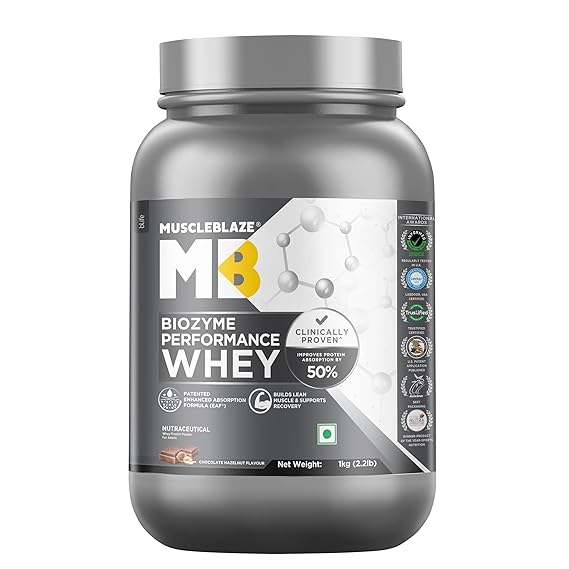
100% Clean & Pure Whey Protein: Sourced from premium whey concentrate from the USA and Europe, delivering 25g protein, 11.75g EAAs, and 5.51g BCAAs per serving to support muscle growth, recovery, and performance
MuscleBlaze Biozyme Performance Whey Protein Powder, Chocolate Hazelnut (1kg / 2.2lbs) | 25g Protein Per Scoop | Clinically Tested 50% Higher Protein Absorption
Original price was: ₹3,349.00.₹2,949.00Current price is: ₹2,949.00.
Description
Protein Powder:
An In‑Depth Guide
1. What Is Protein Powder
Protein powder is a concentrated, powdered form of protein that comes from various animal‑ or plant‑based sources. It is used as a dietary supplement to help people meet their protein needs more conveniently than by whole foods alone.
1.1 Protein vs Whole Food Protein
-
Whole foods (meat, dairy, legumes, nuts, eggs) naturally provide protein along with other nutrients (vitamins, minerals, fats, fiber).
-
Protein powder isolates or concentrates protein, removing much of the bulk, sometimes fat, lactose (in dairy‑based powders), and non‑protein components.
1.2 Why Use Protein Powder
-
Convenience: easier to ingest high‑quality protein when you’re busy or in situations where whole protein sources are not available.
-
Helps meet increased protein needs: during muscle building, recovery from injury, aging (to prevent muscle loss), or when following restrictive diets (vegetarian, vegan).
-
Supports certain fitness, athletic, or body composition goals (bulking / cutting).
2. Types & Sources of Protein Powder
There are several kinds of protein powders, each with different properties, digestion rates, amino acid composition, and suitability for different uses.
| Type | Source | Key Characteristics | Advantages / Disadvantages |
|---|---|---|---|
| Whey Protein | Milk (a by‑product of cheese) | Rapid digestion; rich in essential amino acids & branched‐chain amino acids (BCAAs) like leucine, which promotes muscle protein synthesis. | Advantages: fast absorption, good for post‑workout. Disadvantages: lactose content can cause issues for lactose intolerant; not vegan. Health+2Health+2 |
| Casein Protein | Milk | Slower digestion; forms gel in stomach; provides prolonged amino acid release. Useful for times when long periods without eating (e.g. overnight). | Advantages: sustained release, good for overnight recovery. Disadvantages: slower to act, same dairy allergy/lactose issues. Verywell Health+1 |
| Egg Protein | Eggs | High quality complete protein; moderate digestion rate; minimal lactose/dairy issues. | Pros: good for those with dairy intolerance; strong amino acid profile. Cons: cost, flavor/texture may not suit everyone. |
| Plant‑Based Proteins | Pea, soy, rice, hemp, or blends | Varying digestion rates; often combined to give complete amino acid profile. May have higher fiber content or other phytonutrients. | Pros: vegan/vegetarian friendly; often easier on digestion for dairy issues. Cons: some plant proteins lack certain essential amino acids unless blended; taste/texture issues; may be lower in certain BCAAs. HealthifyMe+2Healthline+2 |
| Blended / Mixed Sources | Combinations (e.g. whey + casein, plant + plant) | Aim to balance speed of digestion, amino‑acid completeness, texture/flavor improvements. | Pros: versatile, better overall profile. Cons: slightly more complex; cost may be higher. |
| Weight Gainers / Mass Gainers | Protein + large amounts of carbs/fats | Very high calorie; used for people who need to gain weight or bulk up. | Pros: helps those with high caloric needs; cons: can lead to excess fat gain if not managed; cost; may include added sugars/fillers. ironliftclub.com |
3. Key Nutritional Components
When evaluating or comparing protein powders, these attributes matter:
-
Protein content per serving: how many grams of protein vs how many grams total.
-
Amino acid profile: whether it contains all essential amino acids; especially leucine, isoleucine, valine (BCAAs).
-
Digestibility: how fast it’s absorbed; presence of lactose (for dairy).
-
Carbohydrates & sugars: some powders add carbs or sugars for flavor or to meet caloric goals.
-
Fats: included or not; type of fats; how much saturated vs unsaturated.
-
Calories per serving: important so you don’t overshoot your daily caloric goals.
-
Additives / sweeteners / flavorings: artificial vs natural, sugar alcohols, texture agents.
-
Allergen content: dairy, soy, gluten, etc.
4. Benefits of Protein Powder
Used properly, protein powder can offer several positive effects.
4.1 Muscle Growth and Recovery
-
After resistance training or physical stress, muscles undergo small micro‑damage. Protein (especially with enough leucine) triggers muscle protein synthesis, helping repair and build muscle.
-
Fast‑digesting proteins (like whey) are especially helpful shortly after workouts.
4.2 Meeting Daily Protein Needs
-
Some people have difficulty eating enough protein through whole foods alone (vegans, older adults, those with smaller appetites). Supplements help fill the gap.
-
High protein diets can help maintain or increase lean mass during cutting phases (when you’re reducing calories).
4.3 Satiety, Weight Management & Fat Loss
-
Protein is more satiating than carbohydrates or fats, so higher protein meals (including shakes) can reduce hunger and calorie intake.
-
May help preserve muscle while in caloric deficit, which is important to avoid reducing metabolic rate.
4.4 Convenience & Practicality
-
Easy to prepare (shake, mix), portable, no need for extensive cooking or preparation.
-
Useful in travel, busy schedules, or situations like post workout when immediate protein supply might be helpful.
4.5 Supporting Special Populations / Conditions
-
Older adults: helps combat sarcopenia (muscle loss with aging).
-
Injuries, illness or surgery: increased protein helps with repair and immune function.
-
Vegetarian/vegan diets: to ensure sufficient protein and amino acids.
5. Risks, Side Effects & What Can Go Wrong
Using protein powder wrong or choosing low‑quality products can lead to problems.
5.1 Digestive Issues
-
Many dairy‑based powders contain lactose; those sensitive or intolerant may get bloating, gas, diarrhea.
-
Some powders (especially plant ones or flavored/sweetened ones) include fiber, sugar alcohols, gums or thickening agents that can cause gastrointestinal discomfort. EatingWell+1
5.2 Excess Calories and Unwanted Weight Gain
-
If you add protein shakes/powder in addition to your regular diet without adjusting calories elsewhere, you may inadvertently consume surplus calories and gain fat.
-
Mass gainers are particularly likely to cause fat gain if caloric needs are not well accounted for.
5.3 Kidney, Liver, Bone and Other Health Concerns
-
For healthy individuals, high protein intake is generally safe; but individuals with pre‑existing kidney disease or compromised kidney function need to be cautious. Healthline+1
-
Early concerns about high‑protein diets weakening bones appear largely unfounded; protein may help bone health when calcium intake is adequate. Healthline
-
Potential interaction with medications may exist; always check with healthcare provider if you are on medication. Health
5.4 Contamination and Quality / Label Issues
-
Some protein powders have been found to contain heavy metals (lead, cadmium, arsenic, mercury) or environmental toxins, sometimes exceeding acceptable levels. Harvard Health+2Health+2
-
Mislabeling: some powders may declare more protein than present, or substitute cheaper protein sources. Healthline+1
5.5 Dependency or Overuse
-
Overreliance on powders instead of whole foods can mean loss of benefits from whole foods: fiber, micronutrients, healthy fats.
-
Psychological dependency: viewing powder as essential rather than a supplement, possibly neglecting balanced meals.
6. How Much Protein Do You Need: Dosage & Timing
Getting the right amount at the right time optimizes benefit and limits risk.
6.1 Daily Protein Requirements
-
General recommended dietary allowance (RDA) for healthy adults: ~0.8 grams per kilogram of body weight per day. Healthline
-
For people engaging in resistance training, trying to build muscle, or older individuals: protein needs often increase to about 1.4‑2.0 grams/kg/day (or more in specific training or recovery situations). Healthline+1
6.2 How Much from Powder vs Food
-
Ideally, most protein comes from whole foods. Protein powder is useful to “fill in” gaps.
-
One or two scoops per day is common, depending on goals and total protein intake. Exceeding this often adds cost, risk of excess calories, and strain in some situations.
6.3 Timing
-
Post workout: a whey shake soon after resistance training helps supply amino acids quickly.
-
Between meals / snack: as a protein‑rich snack to maintain muscle protein synthesis across the day.
-
Before sleep: slower digesting proteins (e.g. casein) may help during overnight fasting periods.
-
If meals are spaced far apart: protein powder can help avoid long gaps without adequate protein.
7. How to Choose a Good Protein Powder
Given many options, selecting a high quality, suitable powder is crucial.
7.1 Source & Type Based on Goal
-
For fast recovery / muscle growth: whey isolate or hydrolysate.
-
For sustained release: casein.
-
For plant/vegan preferences: blends of pea + rice, soy, hemp or combinations.
-
For weight gain: mass gainers with additional carbs/fats.
7.2 Check Nutritional Label Carefully
-
Protein per serving vs total serving size.
-
Sugar and carbohydrate content. Avoid high added sugar.
-
Fat content: type of fats, whether there are unhealthy saturated or trans fats.
-
Calories per serving.
-
Presence of artificial sweeteners, fillers, gums, flavors.
-
Allergen statements.
7.3 Quality Assurance & Third‑Party Testing
-
Look for products certified by third‑party labs (NSF Certified for Sport, Informed Choice, USP, etc.).
-
Choose brands with transparent labelling or batch testing.
-
Avoid suspiciously cheap powders that may cut corners.
7.4 Flavor, Mixability & Ingredient Tolerance
-
Taste and texture matter: some powders are chalky, others have aftertastes. Trying sample sizes may help.
-
If lactose intolerant: choose low‑lactose whey isolate, plant proteins, or lactose‐free blends.
-
Consider flavor options (unflavoured, vanilla, chocolate…) vs adding your own flavor.
7.5 Cost per Gram of Protein
-
Calculate cost efficiency: how many rupees (or local currency) per gram of protein. Sometimes cheaper powders have lower quality or more fillers, so balance cost vs value.
8. Myths & Misconceptions
Many myths exist around protein powder; knowing facts helps avoid wrong beliefs.
| Myth | Reality |
|---|---|
| “Protein powder damages kidneys in healthy people.” | Studies show healthy individuals tolerating even higher protein intakes without harm. It’s those with existing kidney disease who need caution. Healthline+1 |
| “All protein powders are artificial/unhealthy.” | Many are well‑made, especially those with minimal additives or artificial sweeteners. It depends on brand, purity, and ingredients. |
| “Plant proteins are inferior to animal proteins.” | Some plant proteins are lower in certain essential amino acids, but well‑formulated blends can be complete and effective. HealthifyMe+1 |
| “More protein = more muscle, no matter what.” | You need stimulus (exercise), appropriate caloric intake, rest. Extra protein without those may not yield extra gain and could mean wasted calories. |
| “Protein powder alone can replace balanced diet.” | Not true; whole foods provide many nutrients powders don’t. Powders are supplements. |
9. Practical Use: How to Incorporate Protein Powder
Here are suggestions for integrating protein powder into diet safely and effectively.
9.1 Sample Use Scenarios
-
After strength training: mix with water or milk for recovery.
-
As a breakfast boost: add to oatmeal, smoothies, or shakes.
-
Between meals: use when you feel hungry and need protein to carry you over.
-
Before bed (slow protein like casein) to support overnight repair.
9.2 Recipe Ideas
-
Smoothies: combine with fruit, milk (or plant milk), nut butter.
-
Protein pancakes or waffles: use protein powder in batter.
-
Protein oats: stir into oat porridge.
-
Baked goods: muffins, protein brownies (but watch sugar/fat content).
9.3 Monitoring Effects
-
Check how your body feels: digestion, energy levels, recovery.
-
Keep track of weight/composition changes.
-
Adjust calories, protein intake if you are not seeing desired results (muscle gain, fat loss).
-
Hydration: higher protein metabolism requires more water; support kidney function.
10. Regulation, Safety Standards, and Industry Issues
Understanding how protein powders are regulated (or under‑regulated), and what to watch out for.
-
Supplements (including protein powder) are generally less strictly regulated than pharmaceuticals. Producers are often responsible for checking safety and labeling. Harvard Health+1
-
Clean Label Project and other independent labs have found concerning levels of heavy metals, pesticides, BPA, and other contaminants in many protein powders. Harvard Health+1
-
Certifications (third‑party) are important signals: NSF, Informed‑Sport, USP, etc.
-
Production process: source of raw material, how soil and water could contribute heavy metals (plants absorb from soil), processing, storage.
11. Dosage, Limits & Safety
How much is safe, what are upper limits, and when to avoid or be cautious.
-
Typical safe usage for healthy adults: up to about 1.4‑2.0 g protein per kg body weight/day depending on activity. Exceeding that may offer diminishing returns. Healthline+1
-
If you already consume a high protein diet, added protein powder may push you beyond what your body needs.
-
Avoid or reduce use if you have kidney disease, liver issues, allergies. Consult doctor.
-
Be cautious with long‑term high use of flavored or heavily sweetened powders (added sugars, etc.).
-
Watch for drug interactions in some cases. Some powders may interfere with certain medications (e.g., absorption issues).
12. Case Studies & Research Highlights
A few findings from recent research help put things into perspective.
-
Investigations (e.g. Clean Label Project) found many protein powders contain detectable levels of heavy metals; some exceeded regulatory thresholds for safety in certain cases. Harvard Health+1
-
Studies show whey protein supplementation during resistance training improves muscle mass retention and gain, particularly in populations with lower baseline protein intake. Healthline+2WebMD+2
-
Research also shows that high protein diets do not harm kidney or liver function in healthy individuals, but caution is warranted if pre‑existing condition exists. Healthline+1
13. Pros & Cons: Summary
Here’s a comparative summary to help you quickly weigh the upsides vs potential downsides.
| Pros | Cons / Cautions |
|---|---|
| Helps reach protein goals; supports muscle growth & recovery | Possible digestive issues (lactose, etc.) |
| Convenient, fast, portable | Risk of excess calories if not accounted for |
| Useful for special diets or increased protein needs (vegans, athletes, elders) | Some products have poor quality, contaminants, mislabelling |
| Variety of types to match preferences (taste, digestion rate, source) | Long‑term effects of high intake/supplements less well understood for some people |
14. Best Practices & Recommendations
To get the most benefit with minimum risk, here are best practices.
-
Start with your diet: assess how much protein you get from whole foods. Use powder only to fill gaps.
-
Set realistic goals: what are you trying to achieve (muscle gain, weight loss, recovery, health)? Let that guide your powder choice, serving size, timing.
-
Pick high quality: go for reputable brands, third‑party tested, check purity, avoid too much sugar and fillers.
-
Cycle / vary: you might occasionally rotate types or brands; use unflavoured when possible; don’t rely excessively on one source.
-
Hydrate well: protein metabolism requires water; increases waste (urea) excretion.
-
Monitor results: check performance, body composition, how your body feels; adjust accordingly.
-
Consult a healthcare provider: especially if you have kidney/liver issues, allergies, are pregnant, or are under medication.
15. Conclusion
Protein powder is a powerful tool when used properly. It offers major advantages in supporting muscle growth, recovery, helping special populations, managing diets, and filling nutritional gaps. But it is not magic: quality matters, whole foods are foundational, and overuse or low‑quality products bring risks.
If you keep your goals in mind, pick wisely, and use protein powder as a supplement—not a substitute—you can benefit significantly from it.
Reviews
There are no reviews yet.