
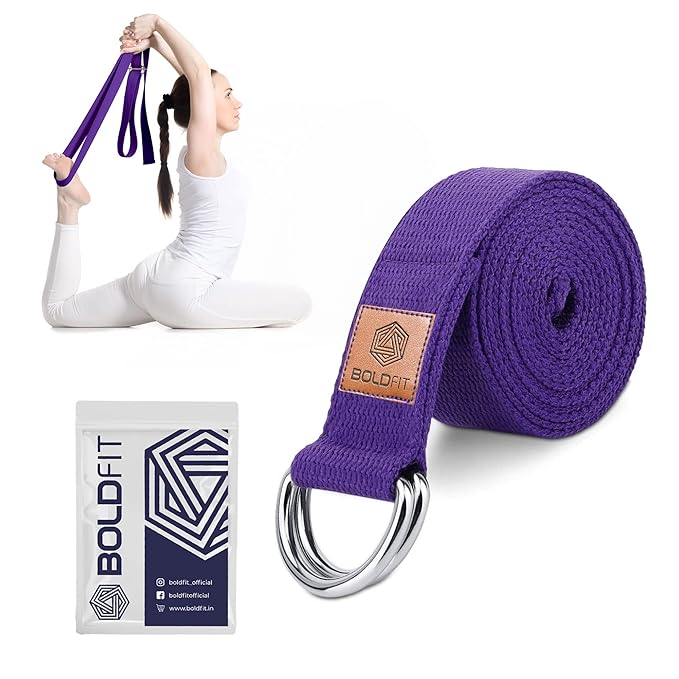
Made with soft and sturdy polyester cotton material, these yoga straps offer optimal resistance and great stability. Boldfit yoga belt stretching is extremely durable and will not break or lose its own shape. Besides, it is small and lightweight to carry around and store.
Boldfit Yoga Belt for Women and Men – Yoga Strap for Stretching with Extra Safe Adjustable D-Ring Buckle – Durable and Comfy Texture – Perfect for Your Yoga Session – 6 Feet, Purple
Original price was: ₹499.00.₹189.00Current price is: ₹189.00.
Description
The Ultimate Guide to Yoga Belts:
Unlock Flexibility, Alignment & Strength
Table of Contents
-
Introduction to Yoga Belts
-
What Is a Yoga Belt?
-
History and Evolution of Yoga Props
-
Benefits of Using
-
Types of Yoga Belts (Materials, Lengths, Styles)
-
How to Choose the Right
-
Basic Yoga Belt Techniques & Uses
-
Essential Yoga Poses Using
-
Advanced Applications
-
Yoga Belt for Rehabilitation & Therapy
-
Common Mistakes and How to Avoid Them
-
Caring for Your
-
Frequently Asked Questions (FAQs)
-
Conclusion
1. Introduction to Yoga Belts
Yoga is a practice that demands patience, alignment, and gradual progress. For many practitioners, especially beginners or those with tight muscles, reaching certain positions or achieving perfect alignment can be challenging. This is where yoga props like come in — they act as an extension of your body, helping you reach, hold, and deepen poses safely and effectively.
In this guide, we explore everything about : their benefits, uses, types, and how they can elevate your practice.
2. What Is a Yoga Belt?
A yoga belt, also known as a yoga strap or yoga band, is a flexible strap used to extend your reach, provide support, and improve alignment during yoga poses. Typically made from cotton or other sturdy materials, come with a buckle or D-ring to adjust the length.
They are designed to assist in holding poses longer, enhancing stretches, and helping practitioners who might lack flexibility or strength in certain areas.
3. History and Evolution of Yoga Props
Traditional yoga, especially in India, often used minimal props — mostly just blankets or bolsters. However, as yoga spread globally, particularly in the West, the introduction of props became popularized to make the practice more accessible and therapeutic.
Yoga belts emerged as essential tools for practitioners to modify challenging poses, allowing everyone to progress safely, regardless of age, injury, or flexibility.
4. Benefits of Using
4.1 Enhances Flexibility
Yoga belts allow practitioners to gradually deepen stretches without strain, especially in hamstrings, shoulders, and hips.
4.2 Improves Alignment
By providing additional length, yoga belts help maintain proper posture and alignment in poses, reducing the risk of injury.
4.3 Assists in Holding Poses Longer
With extra support, you can hold poses with less discomfort, enhancing endurance and strength.
4.4 Enables Accessibility
make yoga accessible for beginners, seniors, or those recovering from injury by compensating for limited mobility.
4.5 Supports Rehabilitation and Therapy
In therapeutic settings, are used to aid gentle stretching and muscle strengthening safely.
5. Types
5.1 Materials
-
Cotton: Durable, soft, and easy to wash. Most common.
-
Nylon: Strong and slightly elastic; dries quickly.
-
Polyester: Durable and resistant to stretching.
5.2 Lengths
Common lengths range from 6 to 10 feet (180 cm to 300 cm), adjustable to your height and needs.
5.3 Buckle Types
-
D-ring buckles: Most popular, easy to adjust.
-
Metal slide buckles: Provide secure grip.
-
Plastic buckles: Lightweight but less durable.
6. How to Choose the Right
When choosing a yoga belt, consider:
-
Length: Taller practitioners may need longer straps.
-
Material: Cotton for comfort, nylon for durability.
-
Buckle type: Ease of adjustment is key.
-
Width: Wider belts provide better grip and comfort.
-
Color & design: Personal preference.
7. Basic Techniques & Uses
7.1 Extending Your Reach
Use the belt to hold your feet or hands when you can’t reach them directly, especially in seated forward bends or shoulder stretches.
7.2 Enhancing Stretch
Loop the belt around limbs to create gentle leverage and deeper stretches.
7.3 Improving Alignment
Use the belt to maintain posture, such as keeping shoulders down or keeping the spine long.
7.4 Supporting Balance
Use the belt as a support in balance poses, helping steady your body.
8. Essential Yoga Poses Using
8.1 Seated Forward Fold (Paschimottanasana)
Loop the belt around your feet to gently pull yourself forward, improving hamstring flexibility.
8.2 Reclined Hand-to-Big-Toe Pose (Supta Padangusthasana)
Use the belt to hold your extended leg without strain.
8.3 Cow Face Pose (Gomukhasana) Arms
Use the belt between your hands behind your back if your hands don’t meet.
8.4 Shoulder Stretch
Wrap the belt behind your back to gently stretch shoulders and chest.
8.5 Bridge Pose (Setu Bandhasana)
Use the belt around thighs to keep knees aligned.
9. Advanced Applications
-
Assisting in arm balances and inversions for safety and support.
-
Using the belt for resistance training and strengthening.
-
Incorporating the belt in partner yoga for assisted stretching.
-
Exploring deeper hip openers and backbends with controlled leverage.
10. Yoga Belt for Rehabilitation & Therapy
Yoga belts are vital in physical therapy and rehabilitation. They enable gentle movement and stretching, crucial for recovery from injuries such as:
-
Hamstring strains
-
Shoulder injuries
-
Lower back pain
-
Post-surgical recovery
Therapists often recommend yoga belts to aid safe, incremental progress.
11. Common Mistakes and How to Avoid Them
-
Using the belt too tightly causing strain.
-
Relying too much on the belt instead of progressing naturally.
-
Choosing the wrong length or material.
-
Not maintaining proper posture when using the belt.
12. Caring for Your Yoga Belt
-
Wash regularly as per material instructions.
-
Avoid harsh chemicals.
-
Air dry to prevent shrinkage.
-
Store in a dry, cool place.
13. Frequently Asked Questions (FAQs)
Q: Can I use a regular belt for yoga?
A: It’s best to use a yoga-specific belt as they are designed for flexibility and comfort.
Q: How long should a yoga belt be?
A: Between 6-10 feet, depending on your height and flexibility.
Q: Can yoga belts replace yoga blocks or straps?
A: Yoga belts serve different purposes than blocks; straps are similar but belts are typically longer and sturdier.
14. Conclusion
Yoga belts are versatile, affordable tools that enhance your yoga practice, making it accessible, safe, and effective. Whether you’re a beginner needing assistance or an advanced yogi deepening your stretches, a yoga belt is a valuable addition to your yoga toolkit.
Reviews
There are no reviews yet.