
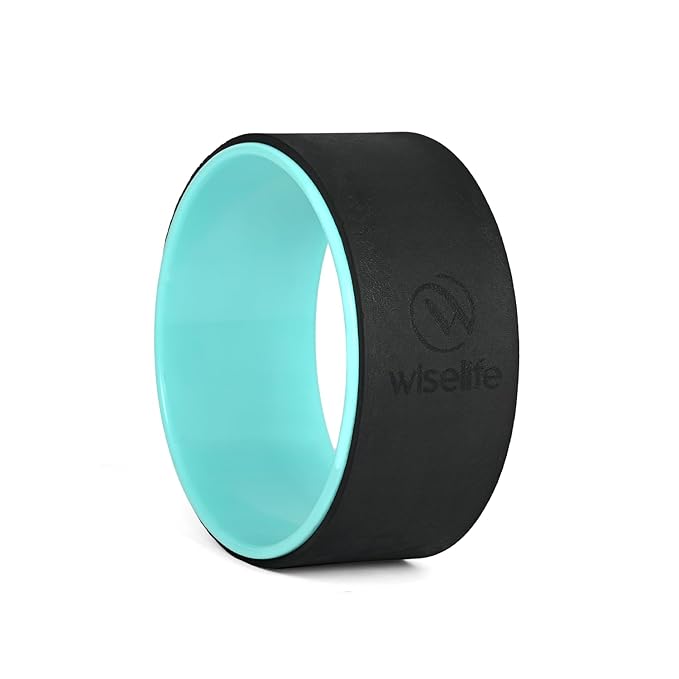
SIMPLE AND EFFECTIVE LASTING BACK PAIN RELIEF: Wiselife yoga back wheel is designed for everyday people who suffer from chronic back pain. Use it to help relieve myofascial pain and muscle tension along the spine in your upper back, lower back and neck.
WISELIFE Yoga Wheel For Men & Women | Big Circle Wheel For Abs, Home Training, Deep Tissue Massage, Back Pain, Stretching, Back Bends, Sweat Resistant | 12.75×5.75 inch (Black-Torquoise)
Original price was: ₹2,075.00.₹1,182.00Current price is: ₹1,182.00.
Description
The Ultimate Guide to the Yoga Wheel:
Unlock Flexibility, Strength, and Balance
Table of Contents
-
What Is a Yoga Wheel?
-
History and Origins of the Yoga Wheel
-
Benefits of Using a Yoga Wheel
-
Anatomy of a Yoga Wheel
-
How to Choose the Right Yoga Wheel for You
-
Getting Started: Basic Yoga Wheel Safety Tips
-
Essential Yoga Wheel Poses for Beginners
-
Intermediate Yoga Wheel Poses to Challenge Your Practice
-
Advanced Yoga Wheel Moves for Strength and Flexibility
-
How to Incorporate the Yoga Wheel into Your Daily Routine
-
Common Mistakes to Avoid When Using the Yoga Wheel
-
Yoga Wheel Workouts for Specific Goals (Back Pain, Flexibility, Strength)
-
Maintaining and Caring for Your Yoga Wheel
-
Frequently Asked Questions (FAQs)
-
Conclusion
1. What Is a Yoga Wheel?
A yoga wheel is a circular prop, typically made from sturdy materials like wood or durable plastic, designed to assist yogis in stretching, strengthening, and improving balance. It acts as an aid to deepen stretches, open the chest, increase spinal flexibility, and support challenging poses by providing stability and resistance.
Used both in restorative yoga and advanced practices, the yoga wheel offers versatility that appeals to practitioners of all levels.
2. History and Origins
The yoga wheel is a relatively recent addition to the traditional yoga toolkit, gaining popularity over the past decade. While inspired by ancient yoga principles focused on spinal health and flexibility, the wheel was designed in modern times to address common limitations in mobility and flexibility.
It emerged as a fusion of traditional yoga with contemporary fitness trends, emphasizing functional movement, injury prevention, and strength building.
3. Benefits of Using
3.1 Deepens Stretches and Enhances Flexibility
The curved surface allows for a greater range of motion in spinal and chest stretches.
3.2 Improves Spinal Health
By supporting backbends and spinal extension, it promotes better posture and spinal alignment.
3.3 Builds Core and Upper Body Strength
Balancing on the wheel challenges the core muscles, arms, and shoulders.
3.4 Boosts Balance and Stability
The unstable surface requires micro-adjustments, enhancing balance.
3.5 Aids in Injury Prevention and Rehabilitation
Provides support during therapeutic stretches and gentle backbends.
3.6 Encourages Mind-Body Connection
Requires focus and control, improving concentration and breath awareness.
4. Anatomy
-
Outer Rim: Usually padded with foam or rubber to provide comfort and grip.
-
Core Structure: Made of wood, plastic, or carbon fiber for durability and support.
-
Size: Typically ranges from 12 to 15 inches in diameter and 5 to 6 inches in width.
-
Weight Capacity: Most can support 250–400 pounds depending on materials.
5. How to Choose the Right for You
-
Material: Wooden wheels offer sturdiness and aesthetic appeal; plastic wheels are lightweight and affordable.
-
Size: Beginners benefit from smaller wheels (12 inches) for easier control, while larger wheels provide greater support.
-
Padding: Thick padding offers comfort during deep backbends; thinner padding offers more stability.
-
Grip: Non-slip surfaces are essential for safety.
-
Weight Capacity: Choose one that safely supports your body weight.
6. Getting Started: Basic Safety Tips
-
Warm up your body before using the wheel.
-
Use the wheel on a non-slip yoga mat or carpeted surface.
-
Avoid forcing your body into any position.
-
Engage your core to protect your lower back.
-
Move slowly and mindfully when transitioning on or off the wheel.
-
Consult a healthcare provider if you have back or neck injuries.
7. Essential Poses for Beginners
7.1 Supported Chest Opener
Lie on the wheel with your spine aligned, arms extended overhead, opening your chest gently.
7.2 Reclined Twist
Lie on the wheel and rotate your torso to each side to stretch obliques.
7.3 Seated Forward Fold Assistance
Place the wheel under your feet or thighs to enhance hamstring stretches.
7.4 Cat-Cow Stretch with Wheel Support
Position the wheel under your hands or knees for deeper movement.
8. Intermediate Poses to Challenge Your Practice
8.1 Wheel-Assisted Backbend
Use the wheel to support your spine in a deeper backbend, easing into the stretch.
8.2 Wheel Plank
Place your feet or hands on the wheel to increase core engagement and balance.
8.3 Side Stretch
Balance your side body over the wheel to stretch the intercostal muscles.
9. Advanced Moves for Strength and Flexibility
9.1 Wheel Handstand Prep
Use the wheel to support your back as you practice handstand alignment.
9.2 Wheel Crow Pose
Place the wheel under your chest to challenge balance and arm strength.
9.3 Full Wheel Backbend
Deepen your backbend by rolling the wheel from your lower back to your shoulders.
10. How to Incorporate the into Your Daily Routine
-
Use it as part of your warm-up or cool-down.
-
Add 10–15 minutes of yoga wheel stretches to increase flexibility.
-
Combine with meditation for mindful body awareness.
-
Use the wheel to release tension in the back and shoulders after long sitting hours.
11. Common Mistakes to Avoid When Using the
-
Overextending or forcing the backbend.
-
Neglecting proper core engagement.
-
Using the wheel on slippery surfaces.
-
Ignoring pain signals.
-
Skipping warm-ups or cooldowns.
12. Workouts for Specific Goals
12.1 For Back Pain Relief
Gentle spinal stretches and supported backbends.
12.2 For Improving Flexibility
Consistent stretching of the chest, shoulders, and spine.
12.3 For Building Strength
Balancing poses and planks on the wheel.
13. Maintaining and Caring for Your
-
Wipe down after use with a damp cloth.
-
Avoid exposure to direct sunlight or moisture.
-
Store in a cool, dry place.
-
Check for cracks or damage regularly.
14. Frequently Asked Questions (FAQs)
What size yoga wheel should beginners use?
12 inches is ideal for most beginners.
Can the yoga wheel help with sciatica?
Yes, gentle stretching with the wheel may relieve sciatic nerve tension, but consult a doctor first.
Is the yoga wheel safe during pregnancy?
It depends; consult your healthcare provider before use.
15. Conclusion
The yoga wheel is a versatile, accessible, and effective tool to deepen your yoga practice, improve flexibility, and build strength. With consistent, mindful use, it can unlock new possibilities in your body and mind, helping you achieve better posture, spinal health, and overall wellness. Whether you’re a beginner or an advanced yogi, incorporating the yoga wheel into your routine offers numerous physical and mental benefits.
Reviews
There are no reviews yet.