
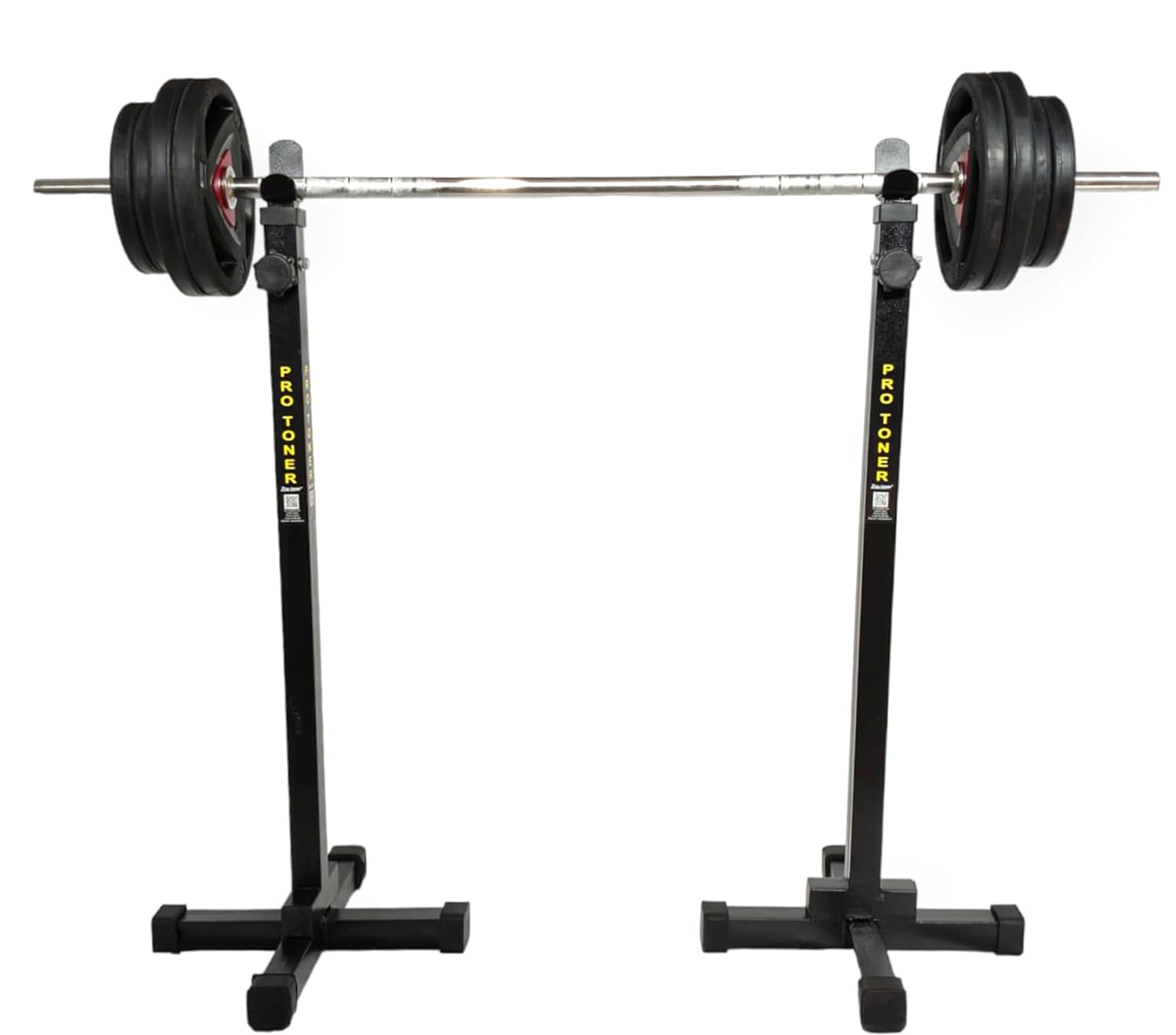
Protoner Adjustable Power Squat Stand
Protoner Power Squat Stand Free Standing
Original price was: ₹4,999.00.₹2,498.00Current price is: ₹2,498.00.
Description
Power Squat Stand
Ultimate Guide to the Power Squat Stand (2,500 Words)
Introduction
A Power Squat Stand is one of the most fundamental pieces of strength training equipment. Whether you’re an elite powerlifter, a CrossFit enthusiast, or a home gym owner, a squat stand serves as a reliable and space-efficient solution for performing compound lifts, including squats, overhead presses, bench presses, and more. While less bulky than a full power rack, a quality squat stand offers enough functionality and safety features to support your strength goals.
This guide dives deep into what makes a Power Squat Stand valuable, its features, materials, uses, safety tips, maintenance, and how to choose the right model for your training needs.
1. What Is a Power Squat Stand?
A Power Squat Stand is a piece of weight training equipment designed to hold a barbell at various heights, allowing the user to perform exercises such as squats, bench presses, and overhead lifts. It typically consists of two vertical uprights with barbell hooks or J-cups that support the bar.
Unlike a full power cage or rack, squat stands are more compact and allow for greater freedom of movement, making them a preferred choice for home gyms or smaller fitness studios.
2. Key Features of a Power Squat Stand
2.1. Upright Steel Columns
At the heart of any squat stand are its uprights. Most high-quality models use 11-gauge or 12-gauge steel, which balances strength and cost-efficiency. Heavier-duty stands use thicker steel and larger tubing dimensions (e.g., 3”x3”), which increases overall stability and durability.
2.2. J-Cups or Barbell Holders
J-cups or barbell rests are adjustable attachments mounted on the uprights that support the barbell. They’re typically coated with UHMW plastic to protect the knurling on your barbell. Some stands include adjustable safety spotter arms or pins, ideal for bench pressing or squatting without a spotter.
2.3. Base and Footprint
The base determines how stable the squat stand is. Power squat stands often use an H-style base or flat foot design, which increases ground contact and stability. Some models feature bolted floor plates or optional weight storage pegs that double as stabilizers.
2.4. Height Adjustability
Many squat stands feature incremental height adjustments using numbered holes on the uprights. This makes it easier to switch between exercises or accommodate different users.
2.5. Optional Attachments
While basic squat stands are minimalistic, premium models offer optional attachments such as:
-
Dip bars
-
Pull-up bars
-
Plate storage pegs
-
Landmine attachments
-
Safety spotter arms
These additions allow for a greater variety of training options without needing to purchase more equipment.
3. Benefits of Using a Power Squat Stand
3.1. Compact Footprint
Squat stands are ideal for small home gyms or tight spaces, taking up less space than full racks while still enabling a wide range of barbell exercises.
3.2. Versatility
Despite its minimal design, a squat stand can support:
-
Back squats
-
Front squats
-
Overhead presses
-
Rack pulls
-
Bench presses (with a bench)
-
Shrugs
-
Clean pulls
Add a pull-up bar or dip attachment, and your training options expand even further.
3.3. Cost-Effective
Squat stands are generally more affordable than full cages. This makes them attractive to beginners or intermediate lifters who want to build strength without a huge investment.
3.4. Portability
Many models are lightweight enough to be moved around the room or folded when not in use. This is a major advantage for multi-use spaces or shared environments.
4. Specifications to Look For
Before purchasing a Power Squat Stand, consider these specifications:
| Feature | Description |
|---|---|
| Steel Gauge | Look for 11-gauge steel for durability. Lower gauges (e.g., 7-gauge) are stronger but cost more. |
| Tube Dimensions | 2×2″, 2×3″, or 3×3″ uprights are common. 3×3″ offers maximum compatibility with attachments. |
| Weight Capacity | Ensure the stand supports at least 500 lbs; some heavy-duty models exceed 1,000 lbs. |
| Hole Spacing | Westside spacing (1” in bench area) is ideal for precise adjustments. |
| Height | Choose a model tall enough for overhead work, especially if it includes a pull-up bar. |
| Finish | Powder-coated or black zinc finishes resist corrosion and wear. |
| Base Stability | A wide or bolted base improves safety, especially under heavy loads. |
5. Types of Power Squat Stands
5.1. Basic Independent Stands
These are two freestanding uprights that are not connected. They’re lightweight, portable, and easy to store but may lack stability under heavy loads.
5.2. Connected or Fixed-Base Stands
These have a solid connecting base between the uprights, which improves stability. Some may include a built-in pull-up bar.
5.3. Folding Squat Stands
Ideal for garages or small spaces, these models can fold against the wall when not in use.
5.4. Commercial Squat Stands
Heavy-duty stands used in gyms. These are designed for high-volume, high-weight usage and typically come with a full range of attachments.
6. Who Should Use a Power Squat Stand?
6.1. Home Gym Owners
Those with limited space who still want the functionality of barbell training will find squat stands to be an excellent investment.
6.2. Personal Trainers & Studios
Fitness professionals who need mobile or versatile equipment will benefit from compact stands that offer training variety.
6.3. Olympic Lifters
Because squat stands don’t restrict movement like cages do, they’re often preferred for clean & jerk or overhead work.
6.4. Athletes
Athletes looking to build explosive strength through compound lifts will appreciate the accessibility and function of squat stands.
7. Safety Tips for Using a Power Squat Stand
-
Use Spotter Arms: Always attach spotter arms when lifting alone.
-
Check Stability: Ensure the stand is on level ground and not wobbling.
-
Avoid Maxing Out Alone: If lifting near your 1RM, have a spotter or use a cage instead.
-
Secure the Base: Add weight plates to storage pegs or bolt the stand to the ground.
-
Proper Form First: The safety of a squat stand depends on proper lifting mechanics.
8. Maintenance and Care
To keep your squat stand in top condition:
-
Clean regularly with a dry cloth or mild detergent to remove dust and sweat.
-
Lubricate bolts and joints every few months to prevent rust or squeaking.
-
Inspect welds, bolts, and J-cups for wear or damage.
-
Re-tighten loose components regularly, especially if the stand is moved often.
-
Store indoors to prevent rust or weather-related damage.
Reviews
There are no reviews yet.