
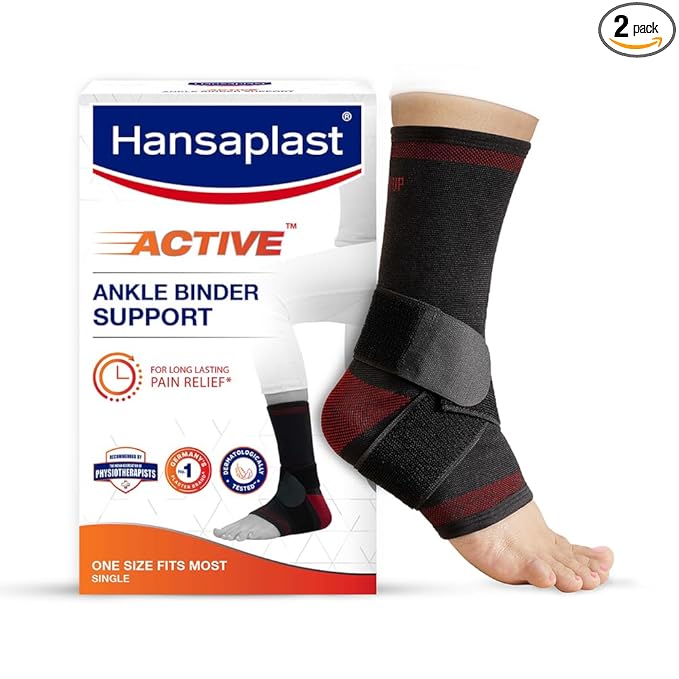
TRUSTED BY EXPERTS: Recommended by the Indian Association of Physiotherapists, our ankle support is expert-approved. You can trust that you’re choosing a product that meets the highest standards of quality and effectiveness for your well-being.
Hansaplast Active Ankle Binder Support for Men & Women | 1 Unit | One Size Fits Most | Ankle Brace for Long Lasting Pain Relief , Stability & Targeted Compression | Skin Friendly Ankle Support with Comfortable Fit | Instability, Sprain, Strain, Preventive Care, Overuse Care
Original price was: ₹400.00.₹305.00Current price is: ₹305.00.
Description
Ankle Binder Support
Complete Guide to Protection, Recovery & Performance
Introduction
The ankle is one of the most complex and injury-prone joints in the human body. It supports body weight, allows movement in multiple directions, and absorbs shock during walking, running, and jumping. Because of its role, the ankle is vulnerable to sprains, strains, tendonitis, and instability. An Ankle Binder Support is a specialized device designed to protect, stabilize, and aid recovery for the ankle joint.
Whether you’re an athlete, recovering from injury, or looking for everyday support, an ankle binder can provide the structure and relief your ankle needs. This comprehensive guide dives deep into everything you need to know about ankle binder supports—from their types and benefits to how to choose, use, and maintain them effectively.
What is an Ankle Binder Support?
An Ankle Binder Support (also known as an ankle brace, wrap, or sleeve) is a medical or fitness accessory worn around the ankle to provide support, compression, and stabilization. It helps prevent injuries, reduce swelling, promote healing, and improve performance during activities.
These supports are commonly used in sports, after surgeries, during physical therapy, or for daily wear by people with weak or injured ankles.
Anatomy of the Ankle Joint
Understanding the structure of the ankle joint highlights the importance of support devices:
-
Bones Involved: Tibia, fibula, and talus
-
Ligaments: Anterior talofibular, calcaneofibular, deltoid, and others
-
Tendons: Achilles tendon and peroneal tendons
When any of these components are stressed, torn, or weakened, stability is compromised. That’s where an ankle binder plays a crucial role.
Common Conditions Treated with Ankle Binders
1. Ankle Sprains
-
Most common injury, often affecting lateral ligaments
-
Ankle binders restrict movement, allowing ligaments to heal
2. Chronic Ankle Instability
-
Frequent rolling or giving out of the ankle
-
A binder offers stability and confidence in movement
3. Tendonitis
-
Inflammation of the tendons around the ankle
-
Compression from binders reduces swelling and pain
4. Arthritis
-
Causes joint stiffness and pain
-
Ankle support improves alignment and reduces load
5. Post-Surgical Recovery
-
Stabilizes the joint and controls swelling after surgery
6. Achilles Tendon Injuries
-
Helps offload pressure and immobilize the ankle partially
Types of Ankle Binder Supports
There are different types of ankle supports to suit various needs:
1. Compression Sleeves
-
Made of stretchy fabric like neoprene or elastic knit
-
Provide mild support and improve blood circulation
-
Ideal for mild sprains, fatigue, or daily wear
2. Wraparound Binders
-
Adjustable straps allow customized compression
-
Suitable for moderate sprains or general instability
3. Lace-Up Ankle Braces
-
Offer firm support with customizable fit
-
Used in moderate to severe injuries or during sports
4. Rigid or Semi-Rigid Braces
-
Include hard plastic shells or reinforced sides
-
Designed for post-injury support or post-surgical use
5. Hybrid Ankle Braces
-
Combine compression sleeves with straps or stays
-
Balance flexibility and stability
Key Features to Look For
When buying an ankle binder support, consider the following:
1. Material
-
Neoprene: Offers warmth, flexibility, and compression
-
Nylon/Elastic Knit: Breathable and lightweight
-
Rigid Plastic: Maximum stability, often post-surgical
2. Level of Support
-
Mild: Sleeves for daily wear or mild sprains
-
Moderate: Wraps or lace-up designs
-
Maximum: Hinged or rigid braces for injury recovery
3. Adjustability
-
Velcro straps or laces ensure a secure, customized fit
4. Breathability
-
Important for all-day wear, especially during sports
5. Open or Closed Heel Design
-
Closed heel for more compression
-
Open heel allows more flexibility and range of motion
Benefits of Ankle Binder Support
1. Injury Prevention
-
Stabilizes the joint during activities that involve sudden movement or uneven surfaces
2. Pain Relief
-
Compression reduces inflammation and nerve irritation
3. Faster Recovery
-
Promotes blood flow and reduces swelling, accelerating healing
4. Posture and Gait Correction
-
Prevents uneven weight distribution caused by favoring an injured foot
5. Increased Confidence
-
Helps wearers move freely without the fear of re-injury
Who Should Use an Ankle Binder?
Ankle binders are beneficial for:
-
Athletes in high-impact sports (e.g., basketball, soccer, running)
-
Seniors with balance issues or arthritis
-
Individuals recovering from ankle surgery or injury
-
Workers with physically demanding jobs
-
People with chronic ankle instability
When and How to Wear an Ankle Binder
When to Wear:
-
During physical activity or sports
-
Post-injury or post-surgery (as advised by a doctor)
-
While walking or standing for long periods
-
At work if your job involves lifting or moving
How to Wear:
-
Choose the correct size.
-
Slide your foot into the sleeve or position the wrap correctly.
-
Adjust straps or laces for firm, snug fit—not too tight.
-
Ensure no wrinkles or folds to avoid discomfort.
-
Wear socks underneath if desired for added comfort.
How to Choose the Right Size
Most ankle binders come in sizes from S to XL. To determine your size:
-
Measure the circumference of your ankle just above the ankle bone.
-
Consult the brand’s size chart before purchase.
-
A properly fitting brace should be snug but not restrict blood flow.
Ankle Binders in Sports and Fitness
Sports Where Binders Are Commonly Used:
-
Basketball: Prevent ankle rolls while jumping or changing direction
-
Soccer: Protects against lateral sprains from rapid footwork
-
Running: Reduces repetitive stress
-
Tennis: Helps with sudden lateral movement
-
Gym Workouts: Supports stability during squats, lunges, or jumping
Athletic Benefits:
-
Enhances proprioception (body awareness) Ankle Binder Support
-
Reduces fatigue and overuse injuries Ankle Binder Support
-
Allows continuation of training during rehab Ankle Binder Support
Ankle Support vs. Taping
| Feature | Ankle Binder Support | Taping |
|---|---|---|
| Ease of Use | Easy to wear and remove | Requires professional skill |
| Reusability | Reusable | Single-use |
| Adjustability | Highly adjustable | Needs to be redone each time |
| Cost-Effectiveness | Cost-effective over time | Costly over regular use |
| Support Level | Moderate to high | Customizable, but variable |
Care and Maintenance Tips
Proper care extends the life of your ankle binder:
-
Regular Washing: Hand wash or machine wash on gentle Ankle Binder Support cycle using mild detergent.
-
Air Dry Only: Avoid dryers or high heat that can damage elastic fibers.
-
Inspect Often: Check for worn-out Velcro, torn seams, or Ankle Binder Support loss of elasticity.
-
Storage: Keep in a dry place away from direct sunlight.
Safety Considerations
-
Always consult a healthcare professional before using if you have circulation issues, diabetes, or nerve damage.
-
Avoid over-tightening to prevent numbness or tingling.
-
Discontinue use if pain increases or skin irritation develops.
-
Do not wear while sleeping unless prescribed by a doctor.
Frequently Asked Questions (FAQs)
Q1: Can I wear an ankle binder all day?
A: It depends on your condition and activity. For injury recovery or chronic instability, extended wear may be beneficial—but take breaks to avoid over-reliance.
Q2: Should I wear it on bare skin or over socks?
A: You can do both. Wearing it over a sock can reduce skin irritation.
Q3: Is it okay to run or play sports with an ankle binder?
A: Yes, many athletes wear them for support. Just ensure you have Ankle Binder Support the right type for dynamic movements.
Q4: Will it completely prevent injuries?
A: No support is foolproof, but it significantly reduces risk, especially when combined with proper training and warm-up.
Q5: Can children or seniors use ankle binders?
A: Yes, as long as they use the correct size and style. There are youth- and senior-friendly models available.
Conclusion
An Ankle Binder Support is a simple yet powerful tool for protecting one of the most important—and vulnerable—joints in your body. Whether you’re recovering from an injury, preventing one, or supporting a chronic condition, the right ankle binder can improve your mobility, confidence, and comfort.
From elite athletes to everyday workers, everyone can benefit from a reliable ankle support device. By understanding the types, materials, uses, and proper care, you can make an informed choice that supports your health and lifestyle.
Reviews
There are no reviews yet.