
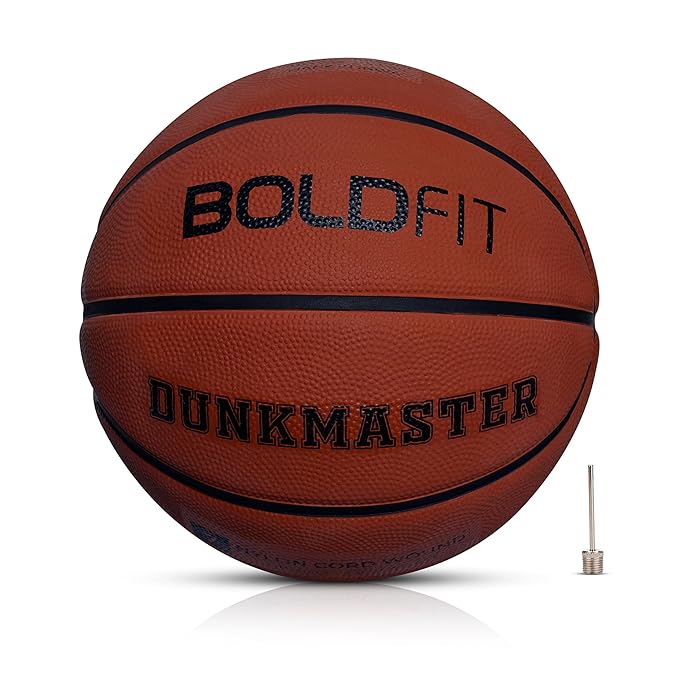
DURABILITY – Our Boldfit Dunkmaster basketball has the quality which works on any wooden and concrete courts, It is a long lasting equipment owing to its ultra durable covering.
Boldfit Rubber Basketball Size 7 Professional Basket Ball for Indoor-Outdoor Training Basketball for Players Basketball Basketball Match Ball for Kids, Men Dunkmaster No 7, Brown
Original price was: ₹1,799.00.₹699.00Current price is: ₹699.00.
Description
What is a Rubber Basketball
A rubber basketball is a basketball whose exterior (and often parts of the internal structure) are made primarily from rubber (natural or synthetic) or rubber‑based compounds. Compared to leather or composite balls, rubber basketballs are usually more rugged, cheaper to produce, and designed to withstand harsher playing surfaces (like concrete, asphalt) Rubber Basketball and adverse conditions (outdoor courts, rough use). They’re especially common for recreational play, outdoor courts, street ball, and for beginners.
The term “rubber basketball” may also include balls with moulded rubber Rubber Basketball outer shells, pebbled texture, deep channels, and internal bladders made with rubber or other synthetic materials to hold air. The materials and design may vary, but the defining feature is the use of rubber for durability and grip.
Construction & Materialshttps
To understand how rubber basketballs perform (bounce, feel, durability), it helps to Rubber Basketball break down what they are made of and how.
Outer Cover / Shell
-
Rubber Material: Could be natural rubber or synthetic rubber (like styrene‑butadiene, butyl rubber mixes, or other rubber compounds). The rubber shell is moulded, often in panels, or sometimes in a full moulded pattern. This shell is what makes the ball tough and able to resist abrasive surfaces. ballerinstinct.com+2normansport.com+2
-
Pebbling / Texture: The surface is usually textured (pebbled or grainy) to improve grip. The texture helps your hands grip the ball, especially outdoors or when your hands are less than perfectly dry. The depth of pebbling and prominence of channels between panels (the ribs) make a difference. Khelomore Shop+2ballerinstinct.com+2
Internal Components
-
Bladder: Inside the ball is a bladder (air chamber) that holds the air. Many rubber basketballs use rubber bladders (synthetic rubbers like butyl) because it helps with bounce and air retention. Zotezo+1
-
Backing / Reinforcement Layers: Some balls may have internal reinforcements (nylon wrapping or other fibres) under the shell to help maintain shape, resist deformation, and help with bounce consistency. These layers vary by quality and price of the ball. Wikipedia+1
Size, Weight, & Air Pressure
-
Size: Standard basketball sizes are used (Size 7 for men, Size 6 for women or youth, etc.). The circumference must meet regulatory or recommended measurements depending on level of play. normansport.com+1
-
Weight: The ball must have a weight consistent with the size; rubber tends to make the ball somewhat heavier or harder feeling than premium leather/composite balls, especially initially.
-
Air Pressure: Correct inflation is crucial — both for bounce (performance) and shape retention. Often a pressure range is given by the manufacturer. Over‑ or under‑inflation will degrade performance and may stress the materials.
Advantages / Strengths of Rubber Basketballs
Rubber basketballs offer several benefits, especially in certain conditions. These are the reasons many people, schools, parks, beginners, or outdoor players often prefer them.
-
Durability, especially outdoors
Rubber resists abrasion, rough surfaces, moisture better than many composite or leather materials. On concrete or asphalt courts, rubber outer shells fare much better in resisting scuffs, cuts, degradation. ballerinstinct.com+2normansport.com+2 -
Cost‑effectiveness
They are cheaper to produce, which translates to more affordable prices for consumers. For casual or frequent use (e.g. in parks, schools), rubber balls offer good value. ballerinstinct.com+1 -
Low maintenance
These do not require breaking in (as leather balls do), nor do they need special care like rubbing conditioners, or keeping away from moisture as strictly. They are more forgiving of rough use. ballerinstinct.com -
All‑surface / all‑weather suitability
Rubber balls are less affected by water, temperature changes, or exposure to sun. So they are more reliable outdoors or in variable weather conditions. Grip does deteriorate when very wet, but overall they maintain function. ballerinstinct.com+1 -
Grip and control for beginners / recreational players
Because of textured surfaces and deep channels, they often give good grip and control even for those whose hands are less conditioned or whose technique is still developing. Also, they’re more forgiving in handling. Khelomore Shop+1
Disadvantages / Limitations
Rubber basketballs are not ideal in every situation. Here are drawbacks and what to watch out for.
-
Less “premium feel”
Compared to leather or high‑end composite balls, rubber balls often feel harder, less soft, less refined. They may feel stiffer at first, with less tactile feedback. For players used to leather balls, the difference is noticeable. ballerinstinct.com+1 -
Bounce / Responsiveness
The bounce or “live” feel is often less crisp or consistent than with leather or composite balls — especially on indoor hardwood courts. The weight, material stiffness, and texture can lead to slightly dampened rebounds. ballerinstinct.com+1 -
Grip changes over time
As the rubber wears down, the pebbling can flatten, channels can smooth out, reducing grip. On very rough surfaces, the rubber surface may become shiny or lose texture. Also, when wet, grip tends to drop more than on leather/composite which might have special tack or grip coatings. Amazon India+1 -
Regulation / Competitive Use
Most official basketball games, leagues, college/pro leagues etc., use leather or composite balls conforming to strict standards of weight, bounce, material. Rubber balls are usually not approved for high‑level competitive play. If you train mainly with rubber, adjusting to a regulation ball later might be harder. normansport.com+1 -
Comfort issues for prolonged use
Padding or shock absorption is less than premium materials; catching fast passes, extended dribbling or shooting might feel more jarring on hands. Also, hard rubber can cause more blisters or discomfort if hands are not well conditioned or when used without gloves/tape.
Where Rubber Basketballs Are Best Used
Given strengths and limitations, here are use‑cases / environments where rubber basketballs shine:
-
Outdoor Courts (asphalt, concrete) — where durability is key; leather/composites deteriorate quickly.
-
Schools / Parks / Community Centres — multiple users, rough handling, minimal care; rubber balls are ideal.
-
Beginners & Youth Players — for initial skill development, less cost, less worry about damaging a premium ball.
-
Recreational / Pick‑Up Games — where the goal is fun and frequent play rather than regulation feel.
-
Training Tools — e.g. using rubber balls for drills where you expect more wear: dribbling, passing, outdoor cardio, etc.
They are less suited when:
-
You want official “game feel” under regulation play.
-
Indoor hardwood court, serious shooting / advanced technique, where ball response matters more.
-
For players very used to premium materials who want consistency across training and competition.
How to Choose a Good Rubber Basketball
If you decide to get one, these are the criteria you should evaluate.
| Criterion | What to Look For | Why It Matters |
|---|---|---|
| Material Quality | Thick rubber shell, good compound, preferably with abrasion‑resistant additives. Shell that resists cracking and hardening with use. | Better durability, longer life, better bounce retention. |
| Pebbling / Texture Depth | Deep pebbling, pronounced channels/ribs. Good grip even when slightly wet. | Grip helps ball control, dribbling, shooting especially outdoors. |
| Bladder & Air Retention | Quality bladder (butyl or similar), good valve, double‑stitched or well moulded. | Improves bounce stability, less frequent need to re‑inflate. |
| Size & Weight | Match player’s age/gender; standard sizes (Size 7 ≈ 29.5 in, etc.). Proper weight as specified. | Ensures proper development and avoids strain; performance matches expectations. |
| Shape Retention | Ball should hold its round shape even after heavy/rough use, frequent bouncing on hard surfaces. | Deformed balls bounce poorly; consistency in training or play. |
| Brand / Warranty | Reputable brands tend to use better materials and have QC; warranty or return options are good. | Protection in case a ball fails prematurely. |
| Price Versus Use | If you play often outdoors, paying a little more for durability may pay off; if very occasional, a cheaper one may suffice. | Balances cost with long‑term value. |
Care, Maintenance & Longevity
Even though rubber basketballs are low maintenance, taking some care helps maximize lifespan and performance.
-
Proper Inflation: Keep the ball inflated to the suggested pressure (usually printed or recommended). Overinflation strains seams; underinflation causes poor bounce and shape distortion.
-
Regular Cleaning: Wipe off dirt/debris. Use mild soap and water; avoid harsh chemicals that may degrade rubber. Dirt embedded in the pebbling reduces grip.
-
Avoid Extreme Temperatures: Very hot sun, or very cold environments can damage rubber (making it brittle or too soft). Store in moderate, shaded areas when not in use.
-
Drying: If the ball gets wet (rain, puddles), dry it off when possible to avoid prolonged moisture contact which may degrade the rubber or bladder.
-
Rotate Usage: If you have more than one ball, rotate them; this helps even out wear.
-
Inspect for Damage: Keep an eye on cracks, peeling, worn‑down pebbling, valve leaks. Replace when damage significantly affects performance or safety.
Technical / Performance Characteristics
To give an idea of how rubber basketballs behave in play.
-
Bounce Behaviour: Rubber balls tend to have a good bounce outdoors; may feel a bit stiffer or harsh indoors. The bounce height and consistency depend on bladder, shell stiffness, inflation.
-
Grip under Conditions: They often grip better when clean or slightly damp than composite balls, but worse when very wet or muddy. Texture wears with time, so grip degrades.
-
Spin & Shot Feedback: When shooting or spinning, rubber balls may give louder rim/clink, less “soft” feel; feedback is sharper. Some players use rubber balls for training because mastering control with less forgiving ball improves touch.
-
Weight Distribution & Balance: Good quality balls balance panels well; cheaper ones may have uneven moulds or panels that produce small imbalances which can affect long throws, spin or bounce.
Rubber Basketballs in Comparison to Other Types Rubber Basketball
It helps to compare rubber basketballs to leather, synthetic leather, and composite balls.
| Feature | Rubber | Composite / Synthetic Leather | Genuine Leather |
|---|---|---|---|
| Durability on rough/outdoor surfaces | High | Moderate to high (depends on type) | Low for outdoor use; leather degrades quickly outdoors |
| Initial Price | Low to moderate | Moderate to high | High |
| “Game Feel” (for competition, inner grip, softness) | Lower; harder feel | Closer; more “premium” feel | Highest, once broken in |
| Maintenance & Break‑in Time | Minimal; ready to use | Some break‑in may be needed; more care | Requires breaking in; more careful storage |
| Grip when wet / dirty / on rough ground | Better (depending on texture) | Some degrade; may get slippery | Poorer; leather absorbs moisture / gets slippery |
| Regulation / League‑approved use | Rare for elite competitions | Many leagues allow/combine | Standard in many professional leagues |
Real‑world Examples & Reviews Rubber Basketball
-
The Lifetime Rubber Basketball ‒ All‑surface rubber, deep channels for improved grip, durable for driveway / outdoor courts. Lifetime Products, Inc.
-
Spalding Rebound Rubber Basketball ‒ synthetic rubber back (PU composite + rubber), designed for indoor/outdoor, full pebbling, decent grip and feel. Khelomore Shop+1
Users often report that while rubber basketballs lose grip and texture over time, they outperform cheaper composites outdoors in terms of longevity and cost‑per‑month. Also, many note that air leakage / valve issues are common points of failure in cheaper rubber balls.
Summary
In summary:
-
Rubber basketballs are tough, affordable, and particularly well suited for outdoor, casual, recreational, or multi‑user settings.
-
They trade off some of the premium feel, bounce finesse, and aesthetics you get with leather or high‑end composite balls.
-
For many, the durability, low cost, and “good enough” performance make them the smart choice, especially if you play often outside or want a ball that can take abuse.
-
To get the best rubber basketball, pay attention to material quality, texture, bladder construction, proper size and weight, and keep it well maintained.
Reviews
There are no reviews yet.