
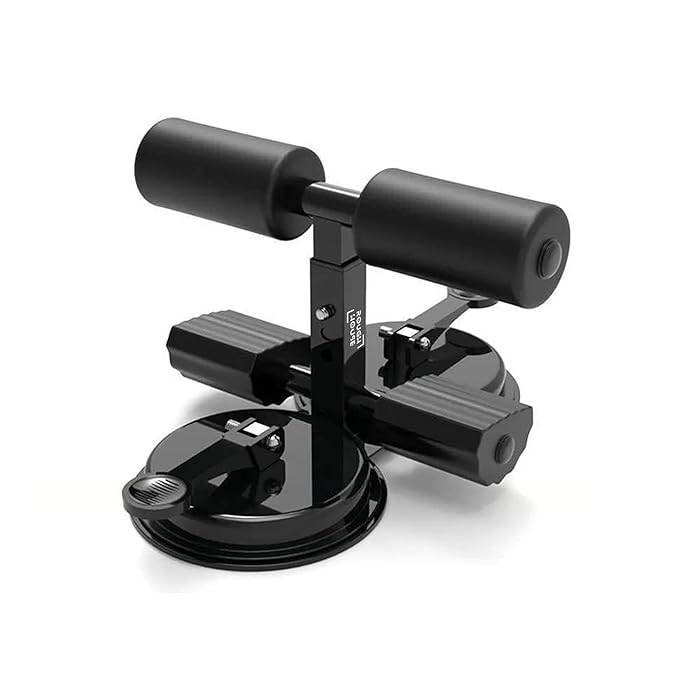
Powerful Dual Suction Base: The Roughhouse sit-up bar features two robust suction cups that secure firmly to smooth surfaces, making it a dependable partner for sit-ups, leg raises, and core exercises.
Roughhouse Adjustable Sit-Up Bar for Home Workouts | Portable Abdominal Exercise Equipment with Strong Dual Suction Cups | Sit-Up Assistant Device for Abs, Core Strength, and Fitness at Home
Original price was: ₹2,599.00.₹649.00Current price is: ₹649.00.
Description
What Is an Adjustable Sit‑Up Bar
Adjustable Sit-Up Bar An adjustable sit‑up bar (also called a sit‑up assistant or sit‑up anchor) is a device designed to hold or secure your feet or ankles while you perform core exercises such as sit‑ups, crunches, leg raises, planks, etc. It “anchors” the lower part of your body so your feet don’t slip, allowing better focus on the abdominal/core muscles.
Key features include:
-
Foot/ankle clamp or bar: A padded bar or handle that your feet or ankles get hooked under or held down.
-
Height adjustment: Allows changing the height Adjustable Sit-Up Bar of the bar to accommodate different foot sizes, leg lengths, or comfort levels.
-
Anchor/base mechanism: Often Adjustable Sit-Up Bar uses suction cups (single or dual), or clamps (for door frames or racks), to fix the bar in place so it remains stable during exercise.
-
Padding: Foam or soft material around the bar/contact points to prevent discomfort, bruising or slipping.
-
Frame/materials: Steel or strong metal for the bar/frame, rubber or synthetic suction base, foam/rubber padding.
How It Works
Here is the basic working mechanism:
-
Placement & Anchoring
You set the base of the bar on a smooth, clean, flat surface (tile, marble, wood floor, etc.). The base is secured via suction or via clamping. Suction‐type adjustable sit‑up bars often have a rubber suction cup with a locking mechanism or lever to create vacuum and fix it. Clamps or hooks fit over door frames or rack bars in some models. -
Adjustment
You adjust the height of the bar to a level comfortable for your feet/ankles. This ensures that when performing sit‑ups or other core exercises, your feet are held securely but without excessive strain. Height is often adjusted using spring snaps, buckle mechanisms, or sliding parts. -
Use for Core and Related Exercises
Once anchored and adjusted, you hook your feet or slide them under the bar/pad. Then you perform your exercise (sit‑ups, crunches, leg raises, etc.). Because your feet are held, you get more stability, which helps isolate the abdominal muscles. -
Release / Move
After exercise, you release the lock or suction, un‑hook your feet, and store the device. Some models are portable and foldable, or are small enough to carry in a bag.
Key Types / Variations
Adjustable sit‑up bars come in several designs. Differences influence use‑cases, comfort, stability, portability, price, durability, etc.:
| Type | Anchoring mechanism | Height/adjustability | Portability | Best suited for |
|---|---|---|---|---|
| Suction‑base floor models | Suction cup(s) that stick to floor | Often 3‑4 height levels | Very portable, light | Home workouts, apartment use, travel |
| Door/rack clamp types | Clamped under door or to frame | Fixed or small adjustment | Moderate; depends on frame setup | Homes with suitable doors/racks, heavier users needing more stability |
| Hook‑or‑bar under‑door models | Hooking under door or stairs, bar pivots | Less height adjustability | Very lightweight | Users wanting minimal equipment, low profile set up |
| Hybrid models with extra accessories | Suction + extra straps or resistance bands | Multiple levels, sometimes removable parts | Bulkier; more components | For more varied workouts, core + leg/arm work, those investing more in home gym gear |
Benefits of Using an Adjustable Sit‑Up Bar
Incorporating this device offers multiple advantages:
-
Better core isolation
By stabilizing your lower body, your core (rectus abdominis, obliques, transverse abdominis) works more efficiently without compensatory movement from legs or hips. -
Improved form & consistency
Feet slipping is a common problem during sit‑ups/crunches. Having them anchored reduces cheat/assist via momentum or leg drive, making each rep more effective. -
Increased range of motion and variation
With height adjustment you can experiment with different angles; deeper sit‑ups, different feet positions, etc. This allows progressive overload even with simple bodyweight. -
Comfort & reduced risk of injury
Padding helps protect ankles/feet. Also anchoring reduces strain on hip flexors or lower back due to uncontrolled leg movement. -
Portability and home‑use friendly
Many models are lightweight, small, foldable or disassemblable. This makes them easy to store or carry when traveling. -
Versatility
Aside from sit‑ups/crunches, similar devices serve for push‑ups (by hooking feet), leg raises, planks; some even double as stretching anchor points.
Drawbacks / Limitations
While they have many positives, there are some drawbacks too:
-
Dependence on surface
Suction‑based models require very smooth and flat surfaces. Tiles, marble, concrete are good; carpet, textured flooring is less effective. If the suction fails, stability suffers. -
Suction wear or loss of seal Adjustable Sit-Up Bar
Over time, rubber suction pads degrade, or dust/dirt affects grip. Leaks can form; the strength of anchoring may decrease. -
Load limits Adjustable Sit-Up Bar
For heavier users or very forceful reps, suction may not hold. Door clamp/hook types may be more secure but depend on door/frame strength. -
Comfort issues Adjustable Sit-Up Bar
If the height is not well adjusted, or padding insufficient, feet/ankle discomfort, chafing or bruising may occur. -
Not as effective as weighted equipment for advanced growth
Once you are strong and using high reps, bodyweight + sit‑up bar may be insufficient for further resistance; may need weights or other equipment. -
Limited to certain exercises
While versatile, you’re mostly targeting core and lower body anchoring; not suitable to replace full gym equipment.
What to Look for When Buying / Choosing One
To get a good adjustable sit‑up bar that lasts and works well, consider:
-
Anchor strength & mechanism
If suction type — look for large diameter suction cups, strong vacuum seals, locking levers. If clamp or hook type — strong metal build, reliable clamps, pad protection to avoid damaging surfaces. -
Height adjustability
Minimum of 3 levels is typical. Check that snapping/locking is secure, doesn’t slip. Also check whether it covers the range you need (for your height or foot/ankle size). -
Padding & comfort
Soft/ergo foam around feet/ankles, smooth edges, grippy surfaces. Poor padding can discourage usage or cause discomfort. -
Material & durability
Strong steel or metal parts, durable plastic or rubber for suction, high‑density foam. Welds/joints should be strong. -
Portability & storage
Weight, ability to disassemble, compactness when stored. If you travel or have limited space, size matters. -
Surface compatibility
Check if it works on your floor type. Not all floors are ideal for suction; if yours are carpeted, may need clamp/hook type. -
Price vs features Adjustable Sit-Up Bar
More expensive models often provide stronger base, more height adjustment, more accessories. You should decide how much you’ll use it vs what features you need. -
User reviews and real‑life feedback Adjustable Sit-Up Bar
See what people say about suction strength, how often it slips, material wear, etc. Useful to avoid pitfalls.
How To Use an Adjustable Sit‑Up Bar Safely & Effectively
To get maximum results and avoid injury, follow these guidelines and steps: Adjustable Sit-Up Bar
-
Set up properly
- Find a clean, flat, smooth floor surface. Wipe away dirt, dust so suction works well.
- Position the suction base or clamp securely. Test the anchor before you begin: tug on it, see if it moves. -
Adjust to correct height
Set bar/foot clamp so that your knees/ankles/feet are in a natural and comfortable position. If it’s too low or high, it can strain back or hips. -
Warm up
Do dynamic stretches, especially hip flexors, lower back, core, to prepare. -
Maintain correct form during sit‑ups or other exercises:Adjustable Sit-Up Bar
- Keep core tight, avoid pulling with neck or arms.
- Exhale on the effort (when coming up) and inhale when lowering.
- Move with control; avoid fast momentum; slow lowering helps. -
Start light/fewer reps
If you’re new, begin with lower reps; let your body Adjustable Sit-Up Bar adapt. Over time increase reps or use more challenging variations. -
Vary angles and exercises
Use different foot positions, change height, do decline/flat sit‑ups, leg raises, planks, etc., to work different parts of core and avoid plateaus. -
Check anchor mid‑workout
Especially for suction models, periodically check that Adjustable Sit-Up Bar anchoring is still solid; re‑set if needed. -
Listen to your body
If you feel pain (especially in lower back, hip joints, knees), stop and adjust. Discomfort from effort is normal; sharp pain is not.
Practical Use Examples & Exercises
Here are examples of exercises you can do with an adjustable sit‑up bar, with variations:
-
Basic Sit‑Ups / Crunches: Feet anchored, lie flat, raise torso, return.
-
Decline or deep sit‑ups: Lower bar height (if possible) to increase difficulty.
-
Leg raises: Lie on your back, hook feet under bar, extend legs up/down.
-
Reverse crunches: Anchor feet, pull knees toward chest.
-
Planks with feet elevated: Feet under bar, body plank on forearms or hands.
-
Push‑up variation: Some models allow Adjustable Sit-Up Bar hooking feet so you can do incline or decline push‑ups.
-
Stretching / flexibility: Use the anchor to stabilize feet for hamstring stretches, hip flexor stretches.
Buying / Market Examples (Features & Pricing)
Here are features observed in real adjustable Adjustable Sit-Up Bar sit‑up bar products, to help you compare what’s available. These are drawn from actual product descriptions in India / global markets:
-
Many models come with 3 height levels adjustable via spring buckle or snaps. Amazon India+2lagmart.com+2
-
Strong suction bases are common; dual suction or large rubber suction cups for better hold. Amazon India+2Flipkart+2
-
Foam padding for ankle/instep comfort is a consistent feature. Adjustable Sit-Up Bar lagmart.com+2Burnlab.Co+2
-
Lightweight, portable designs: small base size, few components. lagmart.com+2GNS Beauty & Personal Care+2
-
Use on smooth surfaces like tile, marble, wood; less effective on carpet or rough/uneven floors. lagmart.com+1
-
Price range in India examples from about ₹400‑₹1,200 depending on build, features. rarelyst.com+3Amazon India+3Amazon India+3
Potential Risks & How to Mitigate Them
Even though sit‑up bars are relatively simple equipment, certain Adjustable Sit-Up Bar risks exist. Here are what to watch out for and how to mitigate:
-
Slipping of feet or anchor failure → leads to loss of control, possible strains.
Mitigation: ensure anchor is solid; test before use; avoid overly forceful jerks; don’t over‑load suction beyond its rated strength. -
Poor spinal alignment / lower back strain if you arch too much or use momentum.
Mitigation: keep core engaged; ascend/descend with control; Adjustable Sit-Up Bar don’t pull with neck or arms. -
Discomfort in ankles/feet from clamping too tight or using Adjustable Sit-Up Bar with insufficient padding.
Mitigation: adjust height properly; ensure padding is good; wear socks; make sure bar position is comfortable. -
Injury if device fails mid‑rep especially with forceful movements.
Mitigation: regular inspection of parts; maintain suction pad;Adjustable Sit-Up Bar avoid using on unsuitable surface; consider clamp/hook types if heavier or more intense workout. -
Overuse fatigue: since this device may allow you to do Adjustable Sit-Up Bar many reps, risk of overtraining core muscles or hip flexors.
Mitigation: include rest days; vary exercises; include stretching and mobility work.
Summary / Who It’s Best For
An adjustable sit‑up bar is a very helpful tool in the following situations:
-
Beginners or intermediate fitness enthusiasts wanting to do core strength work at home without needing a full bench or gym machine.
-
People with limited space who want compact, portable equipment.
-
Those who have smooth, appropriate flooring to use suction‑based anchor mechanisms.
-
Users wanting to do bodyweight core routines and needing better stability for feet/ankles.
It becomes less of a priority if:
-
You already have gym access with heavy equipment or weight‑loaded core Adjustable Sit-Up Bar machines.
-
If your workout surfaces are rough or uneven and suction anchoring will be unreliable.
-
If you need very high resistance or progression via weights rather than bodyweight.
Reviews
There are no reviews yet.