
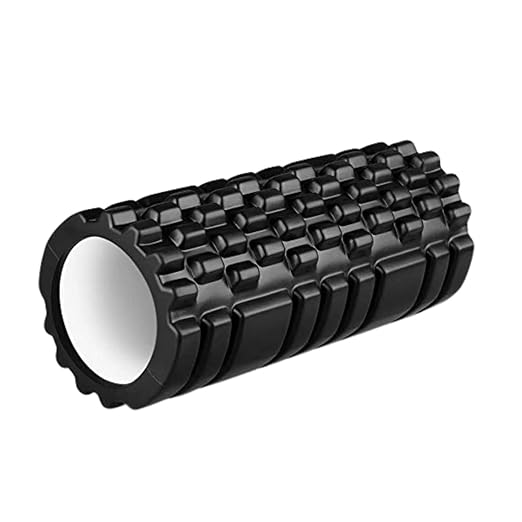
Relieve Back & Leg Pain Fast – Deep tissue massage roller targets muscle stiffness, soreness, and knots after workouts or sitting long hours.
AnaMart Deep Tissue Foam Roller for Back & Muscle Pain Relief – High-Density EVA for Recovery, Yoga, Gym, & Physiotherapy – 13 Inch Black Roller
Original price was: ₹1,400.00.₹599.00Current price is: ₹599.00.
Description
Foam Roller for Back:
Complete Guide
1. Introduction
Your back is one of the most used, and often abused, parts of your body. With long hours of sitting, poor posture, repetitive movements, or over‑training, muscles around the spine (upper, mid, lower) tend to get tight, knots form, mobility reduces, and pain or stiffness results. A foam roller can be an excellent self‑care tool to relieve these issues: improving flexibility, reducing soreness, helping in posture, and aiding recovery.
In this guide, we’ll explore how foam rolling works for the back, what the benefits are, how to use it correctly, different types of rollers, safety, routines, and how to choose a foam roller that suits your needs.
2. What is a Foam Roller & How It Works
2.1 Self‑Myofascial Release (SMR)
Foam rolling is a form of self‑myofascial release. The myofascia is the connective tissue surrounding muscles; when it becomes tight, binds, develops “knots” or adhesions, movement & blood flow are restricted. By rolling a foam cylinder over muscle and connective tissue, you apply pressure which helps to loosen fascia, reduce adhesions, and restore mobility. Cleveland Clinic+3pliability.com+3Wikipedia+3
2.2 The Mechanism of Relief
-
Pressure + movement: Rolling creates intermittent pressure that pushes into muscle tension areas, stimulating blood flow and softening tight tissues.
-
Stretching effect: As you roll, muscles and fascia are stretched and massaged, helping increase flexibility.
-
Neurological feedback: Foam rolling affects nerve receptors (e.g. Golgi tendon organs, muscle spindles), helping to reduce over‑active tension and “turn off” tightness reflexes. pliability.com+1
2.3 Areas of Back Affected
Different parts of the back respond to foam rolling differently:
-
Upper back / thoracic region (between shoulder blades) often benefits greatly as many people hunch forward or sit with rounded shoulders.
-
Mid‑back can loosen up after upper back, helping posture.
-
Lower back / lumbar region: more caution needed. Roller use here should avoid putting direct pressure on vertebrae; instead, use supporting or indirectly rolling via large muscles around lower back, or do stretches rather than heavy rolling. Onlymyhealth+3pliability.com+3mad-hq.com+3
3. Benefits of Using a Foam Roller for the Back
Here are the major benefits, especially for back health:
3.1 Reduce Muscle Soreness and Pain
Foam rolling helps lessen delayed‑onset muscle soreness (DOMS) after workouts by increasing circulation, flushing metabolic waste, and releasing muscle tension. For the back, this can mean relief after intense lifting, training, or prolonged static posture. Healthline+1
3.2 Improve Flexibility and Range of Motion
By loosening tight muscles and fascia, foam rolling allows for deeper stretching, greater joint/torso mobility, better posture, and therefore better movement patterns. Mitt vs Fact+3Medpoint+3Hydrow+3
3.3 Posture Improvement
Many posture issues (rounded shoulders, forward head, tight chest, weak upper back) are exacerbated by thoracic stiffness. Rolling the upper back helps relieve stiffness, allows the spine to extend, opens up the chest, and aids in re‑factoring posture. mad-hq.com+2Bicycling+2
3.4 Increased Blood Flow and Circulation
Rolling stimulates vascular flow to the muscles of the back, increasing oxygen delivery and helping remove toxins. This enhances recovery, reduces stiffness, supports general muscle health. Runstreet+1
3.5 Reduced Risk of Injury
By addressing tight or overworked muscles, postural imbalances, and limited range of motion, foam rolling helps prevent strains or overuse injuries. Also helps muscles move more symmetrically. Medpoint+1
3.6 Relaxation & Stress Relief
Releasing tension in the back often leads to a sense of relaxation. Many people report lower levels of stress, less tension across shoulders/upper back, better sleep and reduced discomfort from sitting or standing long hours. Medpoint+1
3.7 Convenience and Cost‑Effectiveness
Foam rollers are relatively inexpensive, portable, require no electricity or professional setting. You can use one at home, gym, office (for quick breaks). The investment is small compared to massage, physio. Medpoint
4. Types of Foam Rollers & Their Features
Not all foam rollers are the same. What type you use will affect how it interacts with your back, how intense it is, how comfortable, etc.
| Type | Surface / Firmness | Best For | Considerations |
|---|---|---|---|
| Smooth / Standard Dense Foam | Uniform surface, firm but not super hard | Beginners; gentle rolling; general-purpose; upper/mid back work Healthline+1 | Less pinpointed; may be less effective on knots; too soft may collapse under body weight |
| Textured / Ridged Rollers (with bumps, knobs, ridges) | Raised texture; firmer density | Deep tissue relief; working out knots, trigger points; for those used to rolling Mitt vs Fact+1 | Can be painful initially; not good for acute injury; may bruise if overused |
| High Density Foam / EVA / EPP | Very firm, holds shape | Athletes; heavy users; for deep work; for sturdy back muscles Mitt vs Fact+1 | Can be uncomfortable for light individuals; risk of overpressure especially around spine/lower back |
| Soft / Low Density Foam | More cushioning; less firm | Beginners; those with sensitivity; recovery days; gentle rolling Cleveland Clinic+1 | Less aggressive release; may compress too much losing effect |
| Vibrating Rollers | Adds vibration to rolling motion | Deep muscle relaxation; speeding recovery; enhanced circulation Mitt vs Fact | More expensive; needs power; may be less portable; some persons may find vibration uncomfortable |
| Special shapes e.g. half‑rollers, peanut rollers, rollers with cut‑outs, etc. | For targeted areas; spinal friendly shapes for avoiding direct pressure on spine | When you want to avoid the vertebrae; better for precise work; upper back; sides of back | Less surface area; may limit full body rolling; might need multiple rollers for different regions |
5. How to Use a Foam Roller for Back: Technique & Guidelines
Using the foam roller improperly can worsen pain or cause injury. Here’s how to do it right.
5.1 General Principles
-
Warm up a little before rolling (e.g. walk, gentle movement), so muscles are not “cold.”
-
Use slow, controlled movements rather than fast rolling. The point is not speed but measuring comfort, tenderness, and effectiveness.
-
Breathe normally; avoid holding breath. Relax into the motion.
-
Never roll directly over the spine (vertebrae) or sensitive bony areas. Roll the muscles around the spine.
-
Stop if you feel sharp pain; discomfort/tenderness is okay, but sharp, shooting, radiating pain is not.
5.2 Upper Back / Thoracic Spine Rolling
-
Lie on your back, knees bent, feet flat on floor. Place foam roller perpendicular to spine under shoulder blades.
-
Cross your arms to open chest or support head with hands.
-
Lift hips slightly so body weight applies to roller. Slowly roll from just below shoulder blades up toward base of neck – and then back down toward mid‑back. Keep core engaged. Cleveland Clinic+3YouTube+3Hydrow+3
-
Do 30‑60 seconds in one zone; move roller up/down in segments.
5.3 Mid‑Back Rolling
-
Similar position; focus on area between lower shoulder blades and upper lumbar (but avoiding putting pressure on lumbar vertebrae).
-
You can roll side to side slightly (almost a tilt) to reach rhomboids, traps.
5.4 Lower Back: Precautions & Alternatives
-
Direct rolling on lower back vertebrae is often discouraged: the lumbar spine is more vulnerable; placing full body weight there can strain vertebrae, discs, ligaments. pliability.com+2Mitt vs Fact+2
-
Alternative: roll the muscles around the lumbar (e.g. erector spinae) but avoid placing roller under the spine itself.
-
You can also do support / “extension” over a roller: placing roller vertically along spine, lying so that low back rests but weight is supported by feet/hips, doing a gentle back bend (if safe for you).
5.5 Duration & Frequency
-
For back rolling, aim for ~ 30‑90 seconds per area (upper back, mid back). More if needed, less if sensation is strong. Bicycling+1
-
Use a foam roller 3‑4 times a week for maintenance; daily on recovery days if needed and tolerated. Bicycling+2Cleveland Clinic+2
-
Can be used before exercise (as part of warm‑up) or after workout (for cool‑down). Using before helps mobility; after helps recovery.
6. Safety: When to Be Careful / What to Avoid
Understanding risks helps avoid making things worse.
6.1 Contraindications / When Not to Roll
-
Acute injuries: recent fracture, severe sprain, disc herniation, spinal surgery, etc. Rolling may exacerbate.
-
Osteoporosis or severely weak bones: pressure may risk injury.
-
Severe pain / nerve symptoms (e.g. radiating pain, numbness) — consult medical professional.
-
Pregnancy: especially later stages — talk to doctor and avoid certain positions that put pressure on abdomen or strain lower back.
6.2 Common Mistakes
-
Rolling too fast or bouncing — reduces effectiveness, increases risk of bruising.
-
Applying too much pressure — using full body weight immediately; better to start gently.
-
Rolling directly over spine or joints.
-
Ignoring posture/body alignment during rolling — e.g. letting hips sag, neck unsupported.
-
Over‑rolling (too long) or too frequent without rest; can lead to inflammation or tenderness.
6.3 Listening to Your Body
-
Sensation should be of discomfort or tenderness, not sharp pain.
-
After rolling, some soreness may be normal, but worsening pain or swelling is a red flag.
-
Adjust roller firmness, duration, pressure according to tolerance.
7. Choosing the Right Foam Roller for Your Back
What features matter? Tailor the roller to your body, your back issues, and goals.
7.1 Firmness / Density
-
Lighter / softer for beginners, for sensitive backs, recovery days.
-
Medium density for general use.
-
High density / firmer rollers for experienced users, bigger bodies, chronic tightness.
7.2 Size & Length
-
Shorter rollers (~ 12‑18 inches / 30‑45 cm): good for targeting specific areas (upper back, glutes, etc.), portability.
-
Longer rollers (~ 24‑36 inches / 60‑90 cm): for full‑length use, allowing you to lie with roller along your back; more stable.
7.3 Surface Texture
-
Smooth: gentler, easier control.
-
Textured with ridges/knobs: deeper pressure, better for knots but more intense.
7.4 Shape / Special Features
-
Peanut shape: curve that fits under spine, avoids spinal pressure.
-
Cut‑out rollers or those with channels to reduce pressure on spinal processes.
-
Vibrating or motorized rollers.
7.5 Material / Durability
-
EVA / high density foams retain shape longer.
-
Cheaper foam may compress / degrade with use.
-
Covering or shell (if any) should be durable, moisture‑resistant.
7.6 Portability & Cost
-
If you travel, go with lightweight, shorter rollers.
-
Budget vs premium: premium ones may offer more durability, comfort, attachments.
8. Sample Foam Roller Routines for the Back
Here are routines you can follow, depending on need (pre‑workout, post‑workout, recovery, posture work).
Routine A: Warm‑Up / Mobility (Upper & Mid Back)
-
Thoracic extension
-
Lie with roller under upper back, knees bent. Lift hips slightly. Cross arms over chest or support head.
-
Roll from just below shoulder blades up toward base of neck; hold small extension at top (arching slightly) and return. Repeat.
-
-
Upper/mid back roll
-
As above, roll 30‑60 seconds, dividing into segments (upper thoracic, mid thoracic).
-
-
Lat/Side roll
-
Lie on side, roller under armpit; support yourself with forearm; roll from armpit down toward mid‑back / upper flank. Switch sides.
-
-
Shoulder blade / rhomboid release
-
One arm crossed over chest, roll between scapulae; pivot body slightly to vary pressure.
-
Routine B: Post‑Workout Recovery / Relaxation
-
Light upper back rolling, smooth, slow (~ 60 seconds).
-
Mid back rolling, slightly deeper, for ~ 45‑60 seconds.
-
Gentle spinal decompression / extension over roller placed vertically under spine (if safe).
-
Finish with stretches: chest opener, child’s pose, cat‑cow, lying twist (if no spinal issues).
Routine C: For Desk Workers / Poor Posture Relief
-
After long sitting (e.g. 1‑2 hours), take a break:
-
Stand, move around, gentle loosen.
-
Upper back roll: 30 seconds.
-
Lat roll each side: 30 seconds.
-
Mid back roll: 30‑45 seconds.
-
-
Doing this 2‑3 times in a day helps avoid stiffness and maintain mobility.
9. Expected Timeline and Results
What to expect over time:
-
Initially: some soreness / unfamiliar discomfort, especially if you have tight muscles or poor posture. Use lighter pressure first.
-
Within days to a week: slight improvement in mobility, relief of stiffness, especially in upper back. More comfortable sitting/standing.
-
Over 2‑4 weeks with regular rolling + stretching + strengthening: smoother movement, less frequent back pain, improved posture, less reliance on pain relief.
Continue rolling maintenance (1–3× per week) to keep benefits.
10. Frequently Asked Questions (FAQs)
Q: Should I roll my lower back?
A: Be cautious. Rolling directly on the lumbar vertebrae can cause strain. Instead, target muscles beside the spine, or use stretches. Use roller support rather than weight bearing on vertebrae. pliability.com+2mad-hq.com+2
Q: How hard should it feel?
A: Tender but not excruciating. Pressure should feel manageable and should ease with repeated rolling. If it hurts badly, reduce intensity, choose softer roller, or reduce time.
Q: How often can I foam roll?
A: Many find benefit 3‑4 times a week. On recovery days, shorter or lighter rolling; for maintenance even daily light rolling is okay. But don’t overdo it. Bicycling+1
Q: Can foam rolling replace stretching / strengthening?
A: No. It complements them. Rolling loosens and prepares tissue; stretching further improves flexibility; strengthening supports posture and corrects imbalances. Relying only on rolling without strengthening or posture work may lead to recurring issues.
Q: Is it okay to roll when I have back pain?
A: It depends on the cause. If pain is mild and muscular, often yes (with caution). If pain is severe, radiating, with numbness, or after injury, get medical advice first.
11. Common Mistakes & How to Avoid Them
| Mistake | Why It’s Harmful | What to Do Instead |
|---|---|---|
| Rolling too fast / bouncing | Less controlled, more risk of bruising or irritating tissues. | Use slow, controlled movements; pause at tender spots. |
| Using incorrect roller firmness (too hard or too soft) | Too hard → excessive pain, possible injury; too soft → ineffective. | Start medium/soft; increase firmness gradually. |
| Applying too much pressure on spine / vertebrae | Can damage discs, ligaments; cause pain rather than relieve it. | Avoid direct roller over spine; roll muscles beside; use shapes that avoid pressure on bone. |
| Overrolling (too long / too often) | May cause more inflammation; soreness may worsen. | Limit duration per area; allow rest; listen to recovery cues. |
| Forgetting other important elements (posture, strength, stretching) | Rolling alone may give temporary relief but underlying issues persist. | Combine rolling with posture correction and strength work (core, back, glutes). |
12. Real‑Life Application: Back Roller Use Cases
-
People who work at desks: sitting Foam Roller for Back hunched over for Foam Roller for Back hours leads to tight upper back, chest, poor shoulder positioning. Rolling upper & mid back during breaks helps relieve stiffness, helps prevent “desk‑slouch.”
-
Athletes / gym goers: after heavy lifting or activities Foam Roller for Back that load the spine or use back muscles heavily (deadlifts, rowing), rolling helps in recovery, reduces soreness, Foam Roller for Back keeps mobility.
-
Runners / cyclists: posture often Foam Roller for Back compromised; seating flexed; rolling helps open chest, loosen back and hip flexors.
-
Older adults: helps maintain mobility Foam Roller for Back and reduce back stiffness; but need Foam Roller for Back to use gentler rolling, softer rollers, avoid aggressive Foam Roller for Back maneuvers.
13. Choosing a Foam Roller: Buying Tips
Here are practical things to check when Foam Roller for Back choosing:
-
Density / Hardness: Soft → firm; pick Foam Roller for Back according Foam Roller for Back to your pain tolerance, body type, back condition.
-
Length / Size: If you want full‑length support Foam Roller for Back (say under spine head to tailbone), go for long roller. If targeting specific areas, shorter one works.
-
Surface: Smooth vs textured (knobs/ridges). If new Foam Roller for Back or Foam Roller for Back sensitive back, smoother is better. If used to rolling and needing deep work, textured.
-
Special Shape: If you have spinal issues, Foam Roller for Back using peanut Foam Roller for Back or split rollers or ones with vestibule or cut‑out helps avoid pressure on spine.
-
Material Quality: Durability, Foam Roller for Back how quickly it loses Foam Roller for Back shape, Foam Roller for Back how it handles body weight over time.
-
Portability: If you travel or Foam Roller for Back gym often, lighter and Foam Roller for Back compact is better.
-
Budget: Good quality rollers are Foam Roller for Back affordable. High end Foam Roller for Back adds features (texture, vibration, special shape). Balance what you need vs cost.
14. Case Studies / Research Findings
Some of the research and studies connected with foam roller use, Foam Roller for Back especially for back:
-
A study showed foam rolling post‑workout significantly reduced delayed‑onset muscle soreness. Healthline+1
-
Research indicates foam rolling increases range of motion without negative effect on strength. Bicycling+2Hydrow+2
-
Studies on fibromyalgia patients found using foam rolling over extended periods helped reduce pain, stiffness, fatigue. Healthline+2Greatist+2
15. Sample Routine (Weekly Plan)
Here’s how you might structure foam rolling for back over a week:
| Day | Focus | Duration | Notes |
|---|---|---|---|
| Monday | Post‑workout back recovery | 5‑10 mins upper/mid back rolling + stretching | Use medium roller |
| Tuesday | Mobility / Posture break | 3‑5 mins during mid‑day work break | Gentle, smooth rolling |
| Wednesday | Deep release session | 10 mins with textured roller for trigger points | Go lighter after soreness |
| Thursday | Light recovery + strength work | 5 mins roll + strengthen core/back muscles | Balanced approach |
| Friday | Posture + upper back focus | 5‑7 mins rolling followed by chest & shoulder stretches | Helps for weekend stiffness |
| Saturday | Rest / softer rolling | Light rolling only if needed | Recovery day |
| Sunday | Full body & back maintenance | Combined roll of back, lats, glutes | Prepare for upcoming week |
16. Expected Challenges & How to Overcome
-
Initial discomfort: Many users feel soreness or discomfort first few times—this Foam Roller for Back is normal. Start gently and build tolerance.
-
Finding the right roller: Doesn’t always get perfect density/texture Foam Roller for Back on first try—test different types if possible.
-
Consistency: If you roll only when pain hits, benefits are Foam Roller for Back short‑lived. Try to make rolling a regular habit.
-
Integration with other practices: Rolling alone may not fix Foam Roller for Back underlying strength deficits, posture issues. Combine with core strengthening, flexibility work.
17. Conclusion
A foam roller, when used properly, is a powerful tool for back health. It helps reduce soreness, increase flexibility, improve posture, aid recovery, and prevent injury. But as with any physical tool, technique, consistency, and awareness of your own body’s response are crucial. Choose a roller suited for your needs, use correct techniques, avoid overpressure or direct spinal strain, and integrate rolling with strengthening and stretching.
Reviews
There are no reviews yet.