
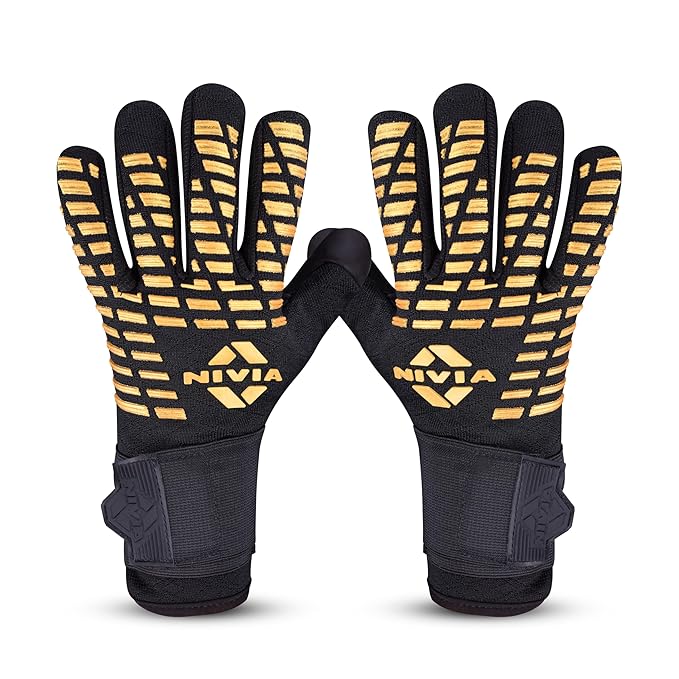
Negative cut molds to your hand, delivering a close, second-skin feel for precision saves.
Nivia Ashtang Gold Football Goalkeeper Gloves for Men & Women, Super Soft Grape Latex Palm with PU Foam Cushion, Compressfit Knitted Back (Medium)
Original price was: ₹1,899.00.₹1,306.00Current price is: ₹1,306.00.
Description
Goalkeeper Gloves for Men:
Complete Guide & Description
Goalkeeper gloves are one of the most essential pieces of equipment a keeper can own. They don’t just add flair or protection; they affect grip, comfort, injury risk, and performance under pressure. For male goalkeepers—whether amateur, club, semi‑pro or aspiring pro—choosing the right glove involves understanding many technical details and matching them to playing conditions, style, and personal preferences. This description walks you through what makes a great pair, what to look for, how to care for them, and what trade‑offs you’ll face.
1. Role & Importance of Goalkeeper Gloves
1.1 Grip & Ball Control
-
The primary task of a goalkeeper is to catch, parry or block the ball. A glove’s palm material, texture, cut, and fit all influence how well you can grip the ball, especially under challenging conditions (rain, mud, high pace shots).
-
Latex palms (or specialized synthetic grips) are used to maximize adhesion; softness vs durability is often a trade‑off. kiepps®+2vizari.com+2
1.2 Protection Against Injury
-
Goalkeepers face powerful shots, hard surfaces, collisions. Gloves cushion impact, protect from abrasions, prevent finger hyperextension. Some models have built‑in finger “spines” or stiffeners that resist bending back. StMichaelsSoccer.com+3IndiBlogHub+3GoalKeeper Guide+3
-
Wrist support via closure systems also plays a crucial role to avoid wrist strain. IndiBlogHub+2vizari.com+2
1.3 Confidence & Psychological Edge
-
Knowing you have gloves that grip well and protect your hands gives psychological security, allowing you to commit to difficult saves or dives. It can reduce hesitation. vizari.com+1
1.4 Weather & Surface Adaptation
-
Conditions vary: wet, dry, cold, artificial turf, natural grass. The glove’s materials and design must cope (e.g. grip in wet, durability on abrasive artificial surfaces). kiepps®+2GoalKeeper Guide+2
2. Key Components & Technical Specs
To select or understand goalkeeper gloves, here are the parts and what to know about each.
| Component | What It Is / What It Does | What to Look For |
|---|---|---|
| Palm Material | The part of the glove that contacts the ball. Usually latex or synthetic latex. It defines grip, cushioning, wear rate. vizari.com+2kiepps®+2 | Soft “premium” latex gives great grip but wears faster; harder latex is more durable; latex formulated for wet conditions; texture (smooth, textured) matters. |
| Cut / Finger Cut | How the glove is stitched / shaped around the fingers: several styles (flat cut, roll finger, negative cut, hybrid). Conversion of fit, feel, contact, and flexibility. Pro Direct Sport+2kiepps®+2 | Try different cuts. Negative cut tends to be tighter, better “feel”, but less room. Flat cut more room, more comfort. Roll or hybrid offer compromises. |
| Finger Protection | Inserts/spines or reinforced backhand parts to protect fingers from bending backwards. vizari.com+2IndiBlogHub+2 | Decide if you need finger spines (match level, injury history). Some gloves allow removable spines. Too rigid can reduce comfort or flexibility. |
| Backhand Padding / Construction | The rear part of the glove — protects from impact when punching or deflecting. Also contributes to glove structure. vizari.com+2IndiBlogHub+2 | Look for good foam or gel padding, but not so bulky as to reduce flexibility. Some designs also use breathable mesh or composite materials. |
| Closure / Wrist Support | How the glove attaches at the wrist. Important for fit, safety, keeping glove in place. IndiBlogHub+2Pro Direct Sport+2 | Wide wrap straps + Velcro are common; elastic + Velcro hybrid; some gloves have long cuffs. Make sure wrist closure supports your motion and doesn’t slip. |
| Ventilation & Lining | To handle sweat, heat, moisture. Gloves can get soggy inside, which reduces grip and comfort. vizari.com+2GoalKeeper Guide+2 | Mesh panels, perforations, moisture‑wicking inner linings, breathable materials. Good ventilation also helps in hot climates. |
| Durability Features | Reinforced stitching, abrasion resistance (especially in palm or fingertips), latex thickness, backing materials. IndiBlogHub+2kiepps®+2 | For training gloves, durability matters more; match gloves may use softer, tackier latex but wear faster. If you play on artificial turf often, you’ll want gloves built to resist that abrasion. |
3. The Different Cuts & Their Effects
How gloves are cut (finger shape, seam placement) has a large influence on how they feel, how well you can control the ball, how fast you can get them on/off, and how long they last.
| Cut Type | Description | Pros | Trade‑Offs |
|---|---|---|---|
| Flat Cut | Traditional; seams outside the fingers; palm is relatively flat. | More room; slightly more forgiving fitting; comfortable for wider fingers or longer nails. | Less of a tight “wrap” around fingers; slightly less precise feel; may allow more movement inside glove. |
| Roll Finger Cut (Rolled / Rolled Fingers) | Latex is rolled around the fingers, giving more palm surface; fingers are more wrapped. | Better foam contact, more grip surface; good for catching; often more cushioning. | Can feel bulkier; less finger mobility (especially for some cuts); may wear out faster in high‑impact zones. |
| Negative Cut | Seams on inside; very close hugging fit around fingers. Minimal excess material. | Excellent feel, control; better contact with ball; precise feedback. | Harder to get on/off; may be tight for some hand shapes; less padding; more stress on latex/seams. |
| Hybrid Cuts | Combine features of more than one cut (e.g. negative on some fingers, roll on others). | Tries to get best of both worlds: some extra surface or padding + tight fit where needed. | Can be more complex; may cost more; durability in mixed seams can vary. |
4. Types of Goalkeeper Gloves by Use
Depending on level, playing surface, weather, budget, what you use the gloves for (match vs training), you will want different gloves. Here are categories:
4.1 Match Gloves vs Training Gloves
-
Match Gloves are generally premium, with soft high‑end palm latex, more features, less durable in rough use but better performance (grip, feel).
-
Training Gloves are designed to be tougher, more durable, may use thicker or more abrasion‑resistant latex, simpler or fewer premium features. You often go through training gloves faster, so having a pair dedicated to training helps preserve your match‑glove performance. Pro Direct Sport
4.2 Weather‑Specific Gloves
-
Wet Weather / Aqua / Rain Gloves: special latex formulations or palm textures to maintain grip even when wet. Important for matches or training in rainy environments. Pro Direct Sport+2kiepps®+2
-
Dry Conditions / Hot Weather Gloves: focus more on ventilation, lighter materials, thinner palms might suffice.
-
Cold Weather Gloves: may include insulation, thicker linings for warmth, but still need good grip. Gloves stiffen in cold; need flexible materials. GoalKeeper Guide
4.3 Surface‑Specific Gloves
-
Natural grass: softer latex works well; ground is forgiving.
-
Artificial turf / synthetic pitches: more abrasive; gloves that resist wear, possibly harder or more reinforced palms.
-
Indoor hard courts: similar concerns to turf; wear, abrasion, grip issues.
4.4 Level of Play / Positioning
-
Beginners or youth players may prefer gloves with more padding, more durable materials, less emphasis on super soft latex which wears fast.
-
Advanced / professional keepers may prioritize grip, feel, responsiveness, even if it means more frequent replacement.
-
Some keepers also prefer gloves with finger protection (spines) especially if they dive often, come off high crosses, or have had finger injuries.
5. Fit, Sizing & Comfort
Getting the right size and fit is crucial—gloves that are too big or small degrade performance and may lead to injury or discomfort.
5.1 Measuring Your Hand
-
Measure from the base of the palm to the tip of the middle finger; around the widest point of your knuckles (excluding thumb). Compare to brand size charts (they vary).
-
Try gloves if possible. Differences in brand cuts mean size “9” in one brand might feel different in another.
5.2 Tightness vs Rotational Control
-
Gloves should be snug but not constricting. If too loose, the ball can shift inside glove. If too tight, you may limit blood flow or feel discomfort.
-
Fingers: enough space to move slightly, but not so much that catching feels sloppy.
5.3 Fingers & Thumb Design
-
Some gloves have anatomical finger designs (curved fingers) to match how fingers curl around ball.
-
Thumb design varies – some have wrap thumb, roll thumb, or “negative/thumb wrap” for more surface or improved grip.
5.4 Weight, Bulk & Flexibility
-
Heavier gloves (lots of padding, thicker palms) offer more shock protection but can reduce speed or reaction.
-
Flexibility in the backhand, finger zones helps with punching, quick bursts, handling.
6. Brand Features, Technology & Extras
Glove makers enhance gloves with technology and design tweaks. Here’s what to watch for.
6.1 Latex Quality & Foam Types
-
Manufacturers often market particular latex brands or “foam grades” (e.g. German latex, Swiss latex, “Aqua foam”, etc.) with different softness, tackiness, durability. hera-sports.com+2vizari.com+2
-
Foam thickness in the palm: more thickness = more cushioning; thinner = more feel / feedback.
6.2 Finger Protection Technologies
-
Finger spines or stays: plastic or carbon inserts that help resist finger hyperextension. Some gloves have removable spines. vizari.com+1
-
Some gloves use flexible zones or segmented protection to balance protection and mobility.
6.3 Grip Enhancements & Surface Textures
-
Additional textures, patterns on palm: dotted, raised, ridged etc. to help catch or control the ball.
-
Grip coatings or treatments for wet grip. Some gloves marketed with “sticky latex” or “rain grip” variants.
6.4 Backhand Reinforcement & Punching Zones
-
If your game requires a lot of punching away crosses or shots, backhand strength and padding matters. Some gloves have extra reinforcement or stiff punch zones.
6.5 Wrist Straps & Closure Systems
-
Velcro straps with either short or long wraps; some gloves have double straps or wrap around wrist for extra security.
-
Hybrid closures: combining elastic with Velcro, etc.
-
Some gloves offer extended wrist cuffs for extra support.
7. Trade‑Offs & What to Prioritize
Since no glove is perfect, you’ll have to decide what trade‑offs you’re willing to accept, and what features you prioritize.
| Trade‑Off | What You Gain | What You Lose / What to Compromise |
|---|---|---|
| Grip vs Durability | Softer, high‑tack latex gives excellent grip especially in dry or wet conditions (short term). | It wears out faster; subject to cuts, abrasion; more frequent replacement. |
| Protection vs Feel / Mobility | More padding, finger spines, thicker palms increase protection. | Reduced flexibility; heavier glove; slower reaction; possibly less “feel” of the ball. |
| Roominess vs Tightness | Roomier gloves give more comfort, breathe more easily, reduce risk of tightness pain. | Less precise control; more glove material to manage during catch; possible slipping inside glove. |
| Cost vs Features | Higher cost gloves often bring better latex, better technology, superior construction. | For beginners or occasional use, many features may be underutilized; cheaper gloves may suffice. |
8. Durability & Maintenance
Making gloves last longer is important—not just for saving money, but to maintain grip performance. Here are how gloves degrade and how to care for them.
8.1 How Gloves Wear Out
-
Latex in the palm loses tackiness over time (drying out, oil/salt/dirt clogging pores).
-
Seams can tear especially on high impact zones or where cuts are complex.
-
Backhand padding flattens; foam compresses.
-
Repeated bending, stretching leads to cracks or splits.
8.2 Cleaning & Drying
-
After every use, rinse with lukewarm water to remove dirt, grass, sweat. Avoid harsh soaps or chemicals that degrade latex. GoalKeeper Guide+1
-
Avoid direct heat sources (radiators, heaters) that can warp or dry the latex too quickly. Air dry inside‑out, then outside.
-
Use glove bags or mesh bags so air circulates.
8.3 Storage
-
Store flat or gently open; avoid folding in ways that crease palms or bend fingers excessively.
-
Keep away from UV light in storage (sunlight can degrade latex).
-
If possible, alternate gloves (having two pairs: one for match; one for training) to reduce continuous wear on one pair. Pro Direct Sport+1
8.4 Maintenance Extras
-
Some keepers use glove conditioner sprays or balms to restore tackiness.
-
Slight dampening before use (in dry conditions) can help grip.
-
Make small repairs if stitching starts to come undone.
9. Choosing the Right Gloves: A Decision Process
Here’s a suggested process to help a male goalkeeper decide on gloves, considering all the above.
-
Define priorities: Is your priority grip, protection, durability, comfort, or all of them? Do you dive a lot? Play in all weather? On artificial surfaces?
-
Estimate frequency / intensity: How often Goalkeeper Gloves for Men do you train? How often in matches? More use → more durable pair or multiple pairs.
-
Check your budget: Set a realistic price range; you’ll get Goalkeeper Gloves for Men more features for more money, but mid‑range gloves often offer excellent value.
-
Try gloves / test fit: If possible, try Goalkeeper Gloves for Men them in person: Goalkeeper Gloves for Men test catch, test grip in wet (sprinkle water), flex fingers, see if closure feels stable.
-
Match glove cut & fit to your hand shape: Flat, Goalkeeper Gloves for Men roll, negative or hybrid cuts depending on finger length, palm width.
-
Check finger protection: If you’ve Goalkeeper Gloves for Men had injuries or play Goalkeeper Gloves for Men aggressively, spines / reinforced zones may be worthwhile.
-
Think weather & surfaces: Rain, turf, cold, Goalkeeper Gloves for Men all demand specific design features.
-
Go for dual‑pair strategy: One glove for training / v rough use; one for matches.
10. Leading Brands, Examples & Price Ranges
While this guide is more about what to look for in gloves, knowing what brands / models are available helps you see what’s feasible.
-
Many brands (globally and locally) offer goalkeeper gloves: e.g. Adidas, Nike, Puma, Reusch, Uhlsport, Sells, etc.
-
Entry‑level/training gloves often cost less; match / Goalkeeper Gloves for Men pro‑level gloves cost more, especially with better latex, finger‑protection features, special cuts.
Some models (from recent product roundups in India) Goalkeeper Gloves for Men show trade‑offs:
-
Gloves like Nivia Ditmar Spider offer Goalkeeper Gloves for Men decent grip, comfort, good for beginners. The Economic Times
-
Brands like Kobo Professional offer Goalkeeper Gloves for Men more professional build, with finger spines and stronger latex palms. The Economic Times+1
-
Some gloves (training) use thicker, rougher latex for durability, Goalkeeper Gloves for Men while match gloves use softer latex, more grip but less durability.
Be prepared: even the best gloves need replacing Goalkeeper Gloves for Men annually or Goalkeeper Gloves for Men more often depending on use.
11. Common Mistakes & How to Goalkeeper Gloves for Men Avoid Them
Many keepers (especially starting out) make mistakes in choosing Goalkeeper Gloves for Men or using gloves. Knowing them helps avoid frustration.
-
Getting gloves too big: Loose gloves reduce control, Goalkeeper Gloves for Men make it harder to clean grip, risk stitches tearing.
-
Buying too soft latex for all use: If you use one pair for training and matches, soft latex will degrade fast. Use durable gloves for rough‑use training and save premium ones for matches.
-
Ignoring weather conditions: Using dry‑weather Goalkeeper Gloves for Men gloves in rain or using gloves not made for cold leads to loss of grip / stiffness.
-
Poor maintenance: Letting gloves dry in bad conditions, Goalkeeper Gloves for Men using harsh cleaning agents, storing improperly. Each degrades glove faster.
-
Neglecting fit around wrist / closure: A glove slipping at wrist or coming loose will reduce performance and risk injury.
12. What Makes Exceptional Gloves: Features of Pro‑Level Gloves
For those wanting gloves that deliver at a higher level—semi‑pro Goalkeeper Gloves for Men or pro level—here are features to expect or look for.
-
Premium palm latex (often brand‑identified or proprietary), Goalkeeper Gloves for Men sometimes different palms for wet/dry conditions.
-
Advanced cut / hybrid designs that maximize grip + ergonomic flexibility.
-
High‑quality finger protection: advanced spines or internal stays, that balance protection vs movement.
-
Reinforced punching/backhand zones; durable seams.
-
Excellent closure systems: long wrist straps, wraparound Goalkeeper Gloves for Men cuffs, maybe elastic + Velcro hybrids.
-
Good ventilation and sweat management: mesh backhands, perforations, moisture‑wicking linings.
-
Finish & design touches: aesthetic appeal, branding, Goalkeeper Gloves for Men sometimes custom fit options.
13. Lifespan & Replacement: How Long Gloves Last
You’ll want to know when to replace gloves, and how to extend lifespan.
-
Match gloves, with premium latex, will often last fewer matches but high‑quality performance. Training gloves take more wear but are less “sticky” late in life.
-
If you notice significant loss of grip (balls slipping, Goalkeeper Gloves for Men especially in less harsh conditions), it’s time. Also if padding is compressed or palm/tips are Goalkeeper Gloves for Men excessively worn.
-
Rotating gloves helps: alternate pairs to let latex “rest”.
-
Repairs: some models allow replacing parts (e.g. straps) Goalkeeper Gloves for Men but often palms are not serviceable.
14. Cost vs Value: How Much Should You Spend?
Spending more gives better materials and features, but it isn’t always necessary, depending on your usage.
| Price Tier | What You Get | What You Should Expect / Prioritize |
|---|---|---|
| Budget / Entry‑level | Decent basic grip, simple cut, minimal extras, durable but less sophisticated latex, simpler closures. | Good for training, for beginners. Don’t expect pro‑level grip; accept faster wear. |
| Mid‑Range | Better latex, more choice in cut/finger protection, better closure, better comfort/padding. | Best value for many club or serious amateur keepers. |
| High / Pro Level | Top latex grades, advanced protective features, optimal cuts, better craftsmanship, sometimes customizable options. | Costs more, needs care, but performance can be significantly better in critical saves/situations. |
15. Summary: What Makes the Ideal Glove for You
Putting it all together, here are the qualities that define the right Goalkeeper Gloves for Men goalkeeper glove for a man, depending on his needs:
-
Grip matched to your playing surface and weather.
-
Fit & cut matching your hand shape and style (snappy vs roomy).
-
Protection if you dive often or play in harsh conditions—finger protection, wrist support.
-
Durability vs performance trade‑offs: decide what you value more or rotate gloves.
-
Comfort & ventilation so your hands stay dry, glove doesn’t slip, feels good through full match.
-
Budget realistic for how often you play/train.
-
Maintenance plan: you’ll need to care for gloves well.
Reviews
There are no reviews yet.