
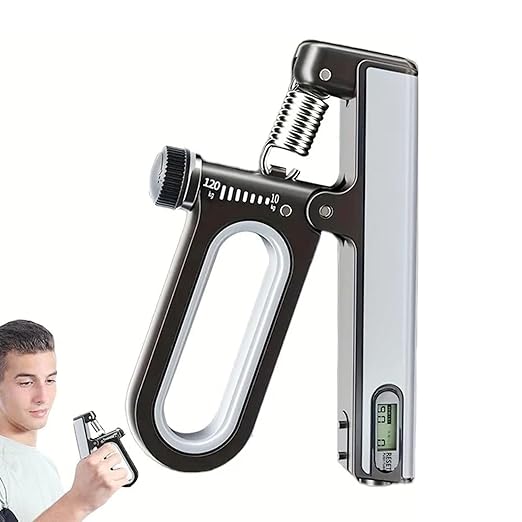
SMART TIMING & COUNTING – This hand grip strength trainer features a built-in timer and counter that tracks your hand grips during exercise progress very time. By using the timing and counting function, you can know better your hand training progress and training results within 60 seconds or 90 seconds. Besides, our grip trainer is very easy to use, just simply press the button firmly to count and time automatically and rotate the button to clear the digits.
UDKI Grey Hand Grip Strengthener with Smart Timer & Counter, Adjustable Resistance 10-120kg, O-Shape Non-Slip Handle, Forearm, Wrist, & Arm Exerciser for Muscle Building & Injury Recovery
Original price was: ₹1,500.00.₹599.00Current price is: ₹599.00.
Description
Hand Grip Strengthener
: The Ultimate Guide to Building Grip Power
1. Introduction to Hand Grip Strengtheners
1.1 What Is a Hand Grip Strengthener?
A hand grip strengthener is a compact exercise device designed to improve the strength and endurance of the muscles in your hands, fingers, wrists, and forearms. Typically, it consists of a spring-loaded mechanism or resistance bands that provide adjustable tension, allowing users to perform repetitive squeezing motions.
1.2 Why Focus on Grip Strength?
Grip strength is a fundamental component of overall physical fitness and functionality. It affects daily activities like opening jars, carrying groceries, typing, and playing musical instruments. For athletes, especially in sports such as rock climbing, tennis, golf, weightlifting, and martial arts, grip strength is critical for performance and injury prevention.
1.3 Brief History and Evolution
Grip training dates back centuries, with manual tools used by warriors and laborers. Modern hand grip strengtheners evolved from simple springs to include ergonomic designs, adjustable resistance, and digital tracking technology.
2. Anatomy of Grip: Understanding the Muscles Involved
2.1 The Forearm and Hand Muscles
The muscles responsible for grip strength include the flexor muscles in the forearm (flexor digitorum superficialis and profundus), intrinsic hand muscles (lumbricals, interossei), and wrist stabilizers. Strong, balanced development of these muscles improves grip efficiency.
2.2 Types of Grip
-
Crushing Grip: The strength used when squeezing an object, typically targeted by hand grip strengtheners.
-
Pinching Grip: Using the thumb and fingers to pinch an object.
-
Support Grip: Holding onto a heavy object for an extended period.
-
Finger Grip: Strength focused on individual finger control.
3. Types of Hand Grip Strengtheners
3.1 Spring-Loaded Grip Strengtheners
The most common type; these devices use a metal spring to provide resistance. The user squeezes the handles together to work the muscles. Resistance usually ranges from 20 to 100+ pounds.
3.2 Adjustable Grip Strengtheners
Allow users to modify resistance levels, often with a dial or screw mechanism, making them suitable for beginners and advanced users alike.
3.3 Grip Balls and Putty
Soft rubber balls or putty that can be squeezed to improve grip and hand strength. They offer varying levels of resistance and are excellent for rehabilitation.
3.4 Digital and Smart Grip Trainers
Modern devices with sensors that measure grip force, provide feedback, track progress, and sometimes connect to smartphone apps.
3.5 Finger Exercisers
Target individual fingers separately, useful for musicians, rock climbers, or rehabilitation after injury.
4. Benefits of Using a Hand Grip Strengthener
4.1 Improved Overall Grip Strength
Stronger grip enhances your ability to perform everyday tasks, sports, and weight training.
4.2 Enhanced Forearm and Hand Muscle Tone
Consistent training leads to visibly stronger and more defined muscles.
4.3 Injury Prevention
Stronger muscles and tendons help prevent injuries such as tendonitis, carpal tunnel syndrome, and wrist sprains.
4.4 Better Dexterity and Hand Function
Improves fine motor skills and coordination, benefiting musicians, typists, and those with manual jobs.
4.5 Improved Sports Performance
In sports like climbing, tennis, and golf, a powerful grip can provide a competitive edge.
4.6 Rehabilitation and Therapy
Useful for recovery after hand injuries, surgeries, or conditions like arthritis and nerve damage.
5. How to Use a Hand Grip Strengthener Correctly
5.1 Choosing the Right Device and Resistance Level
Beginners should start with low resistance to avoid strain. Gradually increase as strength improves.
5.2 Proper Technique
-
Hold the grip strengthener firmly in your hand.
-
Squeeze slowly and steadily until handles nearly touch.
-
Hold the squeeze for 1-3 seconds.
-
Slowly release to the starting position.
5.3 Recommended Sets and Repetitions
Start with 2-3 sets of 10-15 repetitions per hand, resting 30-60 seconds between sets. Perform exercises 3-4 times per week.
5.4 Warm-Up and Stretching
Warm up your wrists and fingers with light movements. Stretch after workouts to maintain flexibility.
6. Training Programs and Progression
6.1 Beginner Programs
Focus on mastering technique and building endurance with light resistance and higher reps.
6.2 Intermediate Programs
Increase resistance and lower reps, adding variations like holds and pulses.
6.3 Advanced Programs
Incorporate heavy resistance, timed holds, and dynamic exercises for maximal strength and endurance.
7. Common Mistakes and How to Avoid Them
7.1 Overtraining and Fatigue
Excessive training can lead to tendonitis or muscle strain. Allow rest days.
7.2 Poor Form
Jerky movements reduce effectiveness and increase injury risk.
7.3 Neglecting Balanced Training
Include finger, wrist, and forearm exercises for comprehensive strength.
7.4 Ignoring Pain or Discomfort
Persistent pain signals injury risk. Stop and consult a professional if needed.
8. Hand Grip Strengthener for Different User Groups
8.1 Athletes and Sports Enthusiasts
Target sport-specific grip improvements; combine with other training.
8.2 Musicians
Focus on finger strength and dexterity for better instrument control.
8.3 Office Workers and Typists
Prevent repetitive strain injuries like carpal tunnel by strengthening hand muscles.
8.4 Rehabilitation Patients
Use softer devices and low resistance to regain function post-injury.
8.5 Elderly Population
Improve hand function, reduce frailty, and maintain independence.
9. Hand Grip Strengthener vs Other Grip Training Methods
9.1 Free Weights and Barbells
Provide grip challenge but focus more on overall arm strength.
9.2 Farmer’s Walk and Deadlifts
Functional grip training but require more space and equipment.
9.3 Climbing and Bouldering
Great for dynamic grip strength but less accessible.
9.4 Bodyweight Exercises
Push-ups and pull-ups build grip but may not isolate hand muscles fully.
10. How to Choose the Best Hand Grip Strengthener
10.1 Resistance Range and Adjustability
Select a device that matches your strength and can grow with you.
10.2 Comfort and Ergonomics
Look for non-slip handles, comfortable grip size, and durable materials.
10.3 Portability
Compact size for easy carrying and use anywhere.
10.4 Price and Brand Reputation
Balance budget with quality; read reviews and seek trusted brands.
10.5 Additional Features
Some devices offer tracking, apps, or multi-functional training.
11. Maintenance and Care Tips
-
Wipe down after use to prevent sweat buildup.
-
Store in a cool, dry place.
-
Check springs or resistance bands regularly for wear.
-
Replace worn parts as needed.
12. Frequently Asked Questions (FAQs)
12.1 How often should I train grip strength?
3-4 times per week, with rest days for recovery.
12.2 Can hand grip strengtheners help with arthritis?
Yes, gentle exercises can improve function and reduce stiffness but consult a doctor first.
12.3 Will grip training make my hands bulky?
No, it develops muscle tone and strength without excessive bulk unless combined with heavy overall weight training.
12.4 Can I use grip strengtheners if I have a wrist injury?
Only under professional guidance with appropriate devices.
13. Conclusion
Hand grip strengtheners are invaluable tools for anyone looking to improve hand and forearm strength, dexterity, and injury resistance. Whether you are an athlete, musician, office worker, or recovering from injury, consistent grip training can enhance your quality of life and performance. Selecting the right device, using proper technique, and following a progressive training plan ensures safe and effective results.
Reviews
There are no reviews yet.