
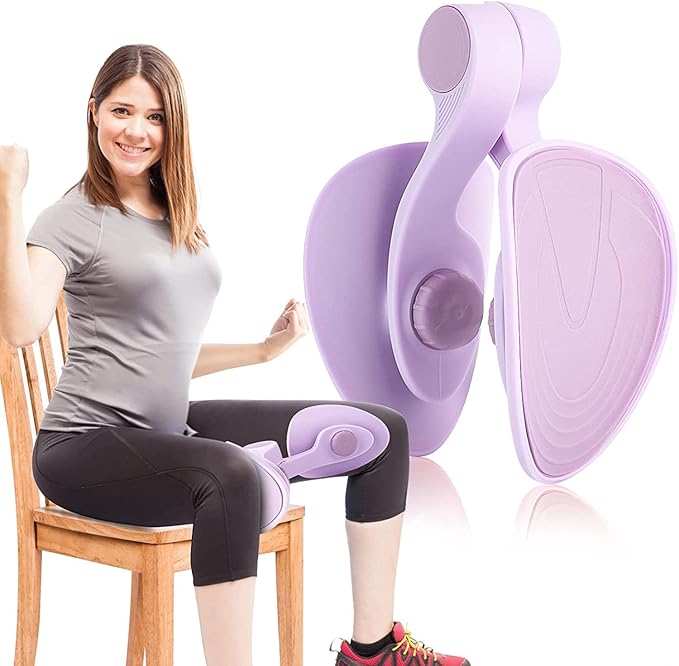
Multi Workout Equipment: The simple but effective pelvic floor trainer is an excellent home fitness exerciser for strengthening the core, arms, back, calves, triceps, legs, buttocks, as well as the pelvic floor muscles. The thigh master is easy to use inside and out, targeting different body parts for different movements, making it versatile
Gopendra Hip & Pelvis Trainer | Thigh Master and Inner Thigh Exercise Equipment | Pelvic Floor Exerciser Device | Training Tool | for Home, Gym, Fitness, Workout, Stretcher | for Men & Women
Original price was: ₹1,599.00.₹499.00Current price is: ₹499.00.
Description
Here’s a comprehensive 2,500-word article on the Hip & Pelvis Trainer, complete with subheadings and detailed insights into training this crucial part of the body. This article is suitable for a blog, fitness guide, or educational material. If you want it formatted for web or print, I can adjust that too.
Hip & Pelvis Trainer:
Unlocking Strength, Mobility,and Stability
Introduction
The hips and pelvis form the cornerstone of human movement. Whether you’re an elite athlete, an office worker, or someone recovering from injury, strengthening and mobilizing this region is key to Hip & Pelvis Trainer overall performance and injury prevention. A Hip & Pelvis Trainer isn’t just a person—it’s also a concept, a set of tools, and a structured training approach designed to optimize the function of your lower kinetic chain.
This guide explores everything you need to know about hip and pelvis training, including anatomy, benefits, exercises, equipment, and specialized programs.
1. Understanding the Hip and Pelvic Complex
1.1 Anatomy Overview
The hip joint is a ball-and-socket joint where the head of the femur fits into the acetabulum of the pelvis. It allows Hip & Pelvis Trainer for a wide range of motion—flexion, extension, abduction, adduction, internal and external rotation.
The pelvis consists of three bones—the ilium, ischium, and pubis—that form a basin-like structure supporting the spine and abdominal organs. It connects the spine to the legs, playing a crucial role in weight distribution and movement.
1.2 Muscle Groups Involved
Key muscles include:
- Gluteus maximus, medius, minimus – hip extension, Hip & Pelvis Trainer abduction, and stabilization
- Iliopsoas – powerful hip flexor
- Hamstrings – posterior thigh, assist in hip extension
- Adductors – inner thigh, stabilize and move the leg inward
- Hip rotators – control internal and external rotation
- Pelvic floor muscles – foundational for stability and core Hip & Pelvis Trainer function
2. Why Hip & Pelvis Training Matters
2.1 Functional Movement
Every step, squat, jump, and bend involves the hips and pelvis. Without Hip & Pelvis Trainer proper function, movements become inefficient and compensations occur, often leading to pain or injury.
2.2 Injury Prevention
Weak or tight hips are linked to:
- Lower back pain
- Knee valgus (knock knees)
- ACL tears
- Hip impingement
- Sciatica
2.3 Enhanced Performance
Strong, mobile hips allow for:
- Greater power generation (running, jumping, lifting)
- Improved balance and coordination
- Enhanced agility and change of direction
- Better posture and breathing mechanics
3. Principles of Hip & Pelvis Training
3.1 Mobility First
Before adding strength, ensure the hip joints can move through Hip & Pelvis Trainer full ranges:
- Hip flexion/extension
- Internal/external rotation
- Abduction/adduction
3.2 Stability is Key
Training pelvic and core stability helps protect the spine and improve Hip & Pelvis Trainer movement quality. It’s essential for sports performance and everyday function.
3.3 Strength in All Planes
Most programs emphasize sagittal (forward/back) movement. Hip training should include:
- Frontal plane (side-to-side)
- Transverse plane (rotational)
3.4 Unilateral Training
Single-leg exercises mimic real-life movements and expose asymmetries. They’re Hip & Pelvis Trainer critical for balance, coordination, and athleticism.
4. Types of Hip & Pelvis Trainers
4.1 Human Trainers (Coaches and Therapists)
Professionals specializing in hip and pelvis training include:
- Physical therapists
- Strength & conditioning coaches
- Pilates instructors
- Yoga therapists
- Athletic trainers
They assess movement, identify dysfunctions, and prescribe personalized Hip & Pelvis Trainer programs.
4.2 Equipment-Based Trainers
Several tools can be classified as “hip & pelvis trainers” in a physical sense:
- Hip circle bands – for glute activation and lateral movement
- Balance pads and BOSU balls – for pelvic stability
- Cable machines and resistance bands – to train hip movements
- Pilates reformers – for controlled hip mobility and strength Hip & Pelvis Trainer
- Pelvic floor trainers – biofeedback tools to improve internal muscle control
5. Exercises for Hip & Pelvis Development
5.1 Mobility Exercises
Hip 90/90 Transitions
Improves internal and external rotation. Sit on the floor with legs bent at 90°, switch sides without using your hands.
Hip Flexor Stretch
Targets tight iliopsoas. Perform in a kneeling lunge, tucking the pelvis Hip & Pelvis Trainer under to stretch the front hip.
Windshield Wipers
Lying on your back with knees bent, drop knees side to side to mobilize hips and pelvis.
5.2 Stability Drills
Glute Bridge
Focus on activating glutes and maintaining a neutral pelvis.
Dead Bug
Lying on your back, move opposite arm and leg while keeping pelvis still.
Bird-Dog
From all fours, extend opposite limbs while keeping hips level.
5.3 Strength Movements
Bulgarian Split Squat
A unilateral powerhouse move that strengthens glutes, hamstrings, and adductors.
Romanian Deadlift
Trains hip hinging, builds posterior chain strength.
Side-Lying Hip Abduction
Isolates glute medius, critical for pelvic stability.
Cable Hip Extensions
Great for targeting glutes through full range with constant tension.
5.4 Dynamic & Athletic Exercises
Lateral Band Walks
Strengthens glutes and stabilizes hips during movement.
Skater Jumps
Train lateral power and pelvic Hip & Pelvis Trainer control.
Rotational Med Ball Throws
Challenge hip rotation and core power.
6. Special Focus: Pelvic Floor Training
The pelvic floor is often overlooked in traditional fitness programs. It supports organs, assists with continence, and contributes to core stability.
6.1 When It’s Needed
- Post-pregnancy recovery
- Chronic low back or hip pain
- Urinary incontinence
- Pelvic organ prolapse
6.2 Training Techniques
- Kegel exercises – contract and relax pelvic muscles
- Hypopressive breathing – reduces intra-abdominal pressure
- Biofeedback devices – help cue proper engagement
7. Training Programs by Goal
7.1 For Beginners
Focus: Mobility + Activation
Duration: 3x/week
Sample Exercises:
- Hip Flexor Stretch – 2×30 sec
- Glute Bridge – 3×10
- Side-Lying Abduction – 3×12
- Dead Bug – 3×10
7.2 For Athletes
Focus: Power + Stability
Duration: 4–5x/week
Sample Exercises:
- Bulgarian Split Squat – 3×8 each side
- Cable Hip Extensions – 3×12
- Skater Jumps – 3×20 sec
- Med Ball Rotational Throws – 3×10
7.3 For Rehab/Postural Support
Focus: Alignment + Core Control
Duration: 2–3x/week
Sample Exercises:
- Clamshells with Band – 3×15
- Bird-Dog – 3×10 each side
- Glute Bridge March – 3×10
- Kegels – 3×10 slow contractions
8. Common Mistakes to Avoid
8.1 Overemphasis on Stretching
Tight hips often stem from weakness, not just stiffness. Stretching alone won’t resolve the root issue—active mobility and strength are essential.
8.2 Neglecting Internal Rotation
Most people train external rotation and abduction but ignore internal rotation, leading to imbalances and injury risk.
8.3 Poor Core Integration
Training the hips without involving the core (especially the deep transverse abdominis and pelvic floor) results in limited carryover to real-world movement.
8.4 Skipping Unilateral Work
Many lifters skip single-leg training due to difficulty or discomfort. This avoids addressing key asymmetries that can cause long-term issues.
9. Integrating Hip & Pelvis Training Into Your Routine
9.1 Warm-Ups
Use hip mobility drills as part of a dynamic warm-up before running, lifting, or sports.
9.2 Strength Sessions
Include compound and isolation hip movements in leg or full-body workouts.
9.3 Recovery Days
Practice gentle hip openers and stability exercises during active recovery.
9.4 Weekly Planning Example
| Day | Focus |
|---|---|
| Monday | Lower Body Strength + Glutes |
| Tuesday | Mobility + Core |
| Wednesday | Active Recovery (Yoga/Pilates) |
| Thursday | Athletic Power (Jumps/Sprints) |
| Friday | Unilateral Strength + Stability |
| Weekend | Rest or Gentle Movement |
10. Tools and Products That Help
Top Equipment Picks
- Mini resistance bands for glute activation
- Hip thrust benches for glute bridges
- Foam rollers and lacrosse balls for myofascial release
- Pelvic floor trainers (Elvie, Perifit) for guided Kegel work
- Balance discs to challenge pelvic control
Conclusion
The hips and pelvis are not just

Reviews
There are no reviews yet.