
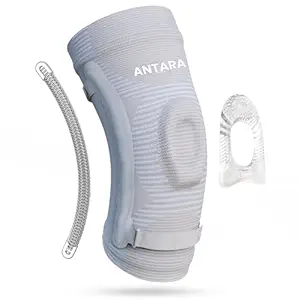
[Enhanced Knee Stability] – Equipped with flexible leaf side hinges, this knee cap delivers exceptional lateral stability, especially beneficial for those experiencing knee weakness or instability. The hinges support the joint without restricting natural motion, making it easier to walk, bend, or move freely with confidence.
AGEasy Antara Hinged Knee Braces for Osteoarthritis | Knee Brace for Men & Women | Knee Caps for Pain Relief | Breathable Knee Brace with Side Hinges | Knee Support for Joint Pain & Injury Recovery
Original price was: ₹1,499.00.₹999.00Current price is: ₹999.00.
Description
Knee Braces for Osteoarthritis:
Comprehensive Guide
Introduction
Osteoarthritis (OA) is one of the most common joint disorders, especially affecting the knees, which bear much of the body’s weight. Knee osteoarthritis leads to pain, stiffness, swelling, and reduced mobility. It significantly impacts the quality of life for millions worldwide. Among various management options, knee braces have emerged as a non-invasive and effective tool to alleviate symptoms, improve function, and potentially delay the need for surgical intervention.
This article explores the types, benefits, mechanism, fitting, and usage of knee braces for osteoarthritis, helping patients and caregivers make informed decisions.
Understanding Knee Osteoarthritis
What is Osteoarthritis?
Osteoarthritis is a degenerative joint disease characterized by the breakdown of cartilage, the smooth tissue that cushions joints. This leads to bones rubbing against each other, causing pain, inflammation, and decreased mobility. It is often termed “wear and tear” arthritis.
How Does Osteoarthritis Affect the Knee?
The knee joint comprises the femur (thigh bone), tibia (shin bone), and patella (kneecap), cushioned by cartilage and supported by ligaments and muscles. In knee OA:
-
Cartilage wears down unevenly, often affecting one side of the knee more than the other.
-
This causes the joint to become misaligned.
-
Bone spurs or osteophytes may form.
-
Joint inflammation and swelling occur.
-
Pain increases during weight-bearing activities like walking or climbing stairs.
Role of Knee Braces in Osteoarthritis
What are Knee Braces?
Knee braces are external supports worn around the knee to provide stability, reduce pain, and improve function. They are made from materials such as neoprene, metal hinges, fabric, or plastic.
Why Use Knee Braces for Osteoarthritis?
-
Pain Relief: By stabilizing the knee and reducing excessive movement, braces alleviate stress on damaged cartilage.
-
Improved Alignment: Braces can help realign the knee joint, reducing pressure on the affected area.
-
Increased Mobility: Reduced pain and better stability help patients walk or perform daily activities more easily.
-
Non-Surgical Intervention: Braces are a conservative treatment option that can delay or reduce the need for surgery.
-
Complement to Other Therapies: They can be used alongside physical therapy, medications, or injections.
Types of Knee Braces for Osteoarthritis
1. Unloader or Offloader Braces
-
Purpose: Designed to shift weight away from the damaged side of the knee.
-
How it Works: They apply pressure to the thigh and calf, creating a force that opens the joint on the affected side.
-
Best For: Patients with unicompartmental osteoarthritis, usually affecting either the medial (inside) or lateral (outside) knee.
-
Example: Medial compartment OA patients benefit from valgus braces (pushing knee outward).
2. Support or Sleeve Braces
-
Purpose: Provide compression and mild support.
-
How it Works: Made from neoprene or elastic materials, these braces warm the joint and improve blood flow.
-
Best For: Mild OA or as adjunct support during physical activity.
-
Example: Simple sleeves worn under clothing.
3. Hinged Knee Braces
-
Purpose: Provide moderate to strong support and limit side-to-side motion.
-
How it Works: Metal or plastic hinges stabilize the knee and prevent abnormal movement.
-
Best For: Moderate OA or cases with ligament instability.
-
Example: Post-injury or post-surgical OA patients.
4. Patellofemoral Braces
-
Purpose: Target the kneecap (patella) to reduce pain caused by patellofemoral OA.
-
How it Works: They stabilize and align the patella to reduce tracking problems.
-
Best For: OA affecting the patellofemoral joint.
How Knee Braces Help Manage Osteoarthritis
Pain Reduction Mechanism
Knee braces reduce pain primarily by:
-
Redistributing Load: Offloader braces reduce compressive forces on the affected compartment.
-
Limiting Unnecessary Movement: Stabilization decreases irritation of damaged cartilage.
-
Providing Compression: Compression reduces inflammation and swelling.
-
Proprioception: Braces improve joint position awareness, preventing movements that could worsen pain.
Improving Joint Function
-
Enhanced stability allows better control during walking, stair climbing, and other activities.
-
Improved alignment reduces abnormal wear and tear.
-
Braces can support weakened muscles around the knee.
Fitting and Selection of Knee Braces
Professional Assessment
-
A healthcare professional (orthopedist or physiotherapist) should assess the type and severity of OA before recommending a brace.
-
Proper diagnosis via physical exam and imaging (X-rays, MRI) helps identify affected compartments.
Measuring for Fit
-
Accurate measurements of thigh, knee, and calf circumference are crucial.
-
The brace should be snug but not restrict circulation.
-
Comfort and ease of use affect compliance.
Custom vs. Off-the-Shelf Braces
-
Custom Braces: Tailored to the individual, offering better fit and function but more expensive.
-
Off-the-Shelf Braces: More affordable and widely available but may not fit perfectly.
How to Use and Care for Knee Braces
Wearing the Brace
-
Follow the healthcare provider’s instructions for duration and activities.
-
Typically, braces are worn during activities that cause pain.
-
Remove during rest or sleep unless otherwise advised.
Maintenance and Cleaning
-
Regularly clean the brace according to manufacturer guidelines.
-
Inspect for wear and tear.
-
Replace when support diminishes.
Benefits and Limitations
Benefits
-
Non-invasive and low-risk.
-
Can be used alongside other treatments.
-
Helps improve quality of life.
-
Cost-effective compared to surgery.
Limitations
-
May cause skin irritation or discomfort.
-
Effectiveness varies among individuals.
-
Does not cure osteoarthritis, only manages symptoms.
-
Compliance may be an issue due to bulkiness or appearance.
Research and Evidence Supporting Knee Braces
Clinical Studies
-
Studies show that offloader braces can reduce knee adduction moment, an indicator of joint load.
-
Randomized controlled trials report improvements in pain and function scores.
-
Some evidence suggests braces may delay Knee Braces for Osteoarthritis knee replacement surgery.
Guidelines and Recommendations
-
Orthopedic and rheumatology guidelines Knee Braces for Osteoarthritis often recommend braces as part of a multimodal approach to knee OA.
-
Emphasis is on patient education and Knee Braces for Osteoarthritis individualized treatment plans.
Alternative and Complementary Treatments
-
Physical therapy focusing on strengthening Knee Braces for Osteoarthritis muscles around the knee.
-
Weight management to reduce Knee Braces for Osteoarthritis joint load.
-
Medications such as NSAIDs or corticosteroid injections.
-
Assistive devices like canes.
-
Surgical options if conservative treatments fail.
Future Trends in Knee Bracing
-
Development of lighter, more Knee Braces for Osteoarthritis comfortable materials.
-
Smart braces with sensors to Knee Braces for Osteoarthritis monitor joint movement and load.
-
Personalized 3D-printed braces for Knee Braces for Osteoarthritis optimal fit.
-
Integration with mobile apps for therapy tracking.
Conclusion
Knee braces play a crucial role in managing osteoarthritis by providing pain relief, improving Knee Braces for Osteoarthritis joint stability, and enhancing mobility. When used correctly and in conjunction with other treatments, they can significantly improve the quality of life for those suffering from knee OA. Selecting the right type of brace and ensuring proper fit and use are key to maximizing benefits. Ongoing research continues to refine brace technology, promising better outcomes for patients in the future.
Reviews
There are no reviews yet.