
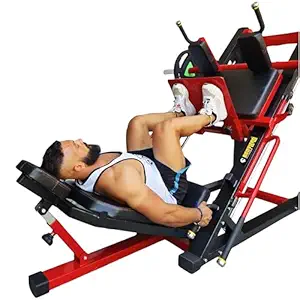
OPTIMAL DESIGN: This Leg Press/Hack Squat Machine is expertly designed for powerful, comfortable, and safe workouts. It’s perfect for targeting your quads, glutes, and calves at home or in the gym. With three lockout positions controlled by the user during the workout, it provides safety and the option of different start/stop positions.
Bodylean Fitness Incline Leg Press Machine Hack Squat Plate Load Gym Machine | Lower Body Workout | Ideal for Home and Commercial Use | Targets Quadriceps, Glutes, Calves, and hamstrings
Original price was: ₹80,000.00.₹59,560.00Current price is: ₹59,560.00.
Description
The Complete Guide to Leg Press Machines:
Benefits, Types, and Usage
Introduction
The leg press machine is a staple piece of equipment in gyms worldwide. Designed to target the major muscle groups of the lower body, it offers an effective, safe, and versatile way to build strength and endurance in the legs. Whether you are a beginner starting your fitness journey or an elite athlete focusing on muscle hypertrophy, the leg press machine is a vital tool for achieving your lower body goals.
This comprehensive guide will explore everything you need to know about leg press machines — including their types, benefits, correct usage, and tips to maximize your workouts safely and effectively.
What Is a Leg Press Machine?
A leg press machine is a resistance training device that allows you to push weight away from your body using your legs. The movement mimics the natural action of squatting but offers more controlled resistance and stability, reducing the risk of injury and allowing for targeted muscle activation.
The basic principle involves sitting or reclining on the machine, placing your feet on a platform, and pushing the platform away by extending your legs against the resistance provided by weights or hydraulic systems.
Muscles Worked by the Leg Press Machine
The leg press primarily targets the muscles of the lower body, including:
-
Quadriceps (front thigh muscles)
-
Hamstrings (back of the thigh)
-
Gluteus Maximus (buttocks)
-
Calves (gastrocnemius and soleus muscles)
-
Hip adductors and abductors (stabilizing muscles)
The machine allows you to focus on these muscles with less strain on the back and core compared to free-weight squats.
Types of Leg Press Machines
There are several types of leg press machines, each designed for different purposes and user preferences:
1. Horizontal Leg Press
-
Description: The user sits upright and pushes the platform forward horizontally.
-
Advantages: Easy to use, good for beginners, and less pressure on the lower back.
-
Limitations: May not fully activate the glutes compared to angled presses.
2. 45-Degree (Inclined) Leg Press
-
Description: The seat is inclined at a 45-degree angle, and the platform is pushed diagonally upwards.
-
Advantages: Offers a natural motion that engages glutes more and provides greater resistance options.
-
Limitations: Requires proper form to avoid knee or back strain.
3. Vertical Leg Press
-
Description: The user pushes a platform vertically upward while lying flat on their back.
-
Advantages: Provides a different angle of resistance and challenges muscles uniquely.
-
Limitations: High spinal load if form is incorrect; not recommended for beginners.
4. Seated Leg Press
-
Description: Similar to horizontal, but the seat can be adjustable with different angles.
-
Advantages: Adjustable positioning for customized workouts.
-
Limitations: Bulkier machines; require space.
Benefits of Using a Leg Press Machine
1. Strengthens Lower Body Muscles
By targeting major muscle groups, the leg press helps increase muscle mass, endurance, and strength.
2. Supports Joint Stability
Controlled motion reduces the risk of injury and helps strengthen the knees and hips.
3. Reduces Lower Back Strain
The machine provides back support, making it ideal for those with back issues or beginners.
4. Versatility in Training
Adjustable weights and seat angles allow for targeting different muscle fibers and varying workout intensity.
5. Suitable for All Fitness Levels
Whether you’re new to weight training or an experienced lifter, the leg press offers scalable resistance.
How to Use a Leg Press Machine Safely and Effectively
Step 1: Adjust the Seat
Ensure the seat is adjusted so that your knees are at about a 90-degree angle when your feet are on the platform.
Step 2: Position Your Feet
Place your feet shoulder-width apart on the platform. You can adjust the foot placement to target different muscles:
-
Higher placement targets glutes and hamstrings.
-
Lower placement emphasizes quadriceps.
Step 3: Proper Form
-
Keep your back and head pressed against the seat.
-
Push the platform away using your heels, not your toes.
-
Extend your legs fully without locking your knees.
-
Control the return movement to the starting position.
Step 4: Breathing
Exhale while pushing the platform away and inhale while returning.
Common Mistakes to Avoid
-
Locking the Knees: This can lead to joint injuries.
-
Lifting the Lower Back: Maintain contact with the seat to avoid back strain.
-
Using Too Much Weight: Start with manageable loads to maintain form.
-
Shallow Range of Motion: Fully extend and flex for maximum muscle activation.
Training Tips and Variations
1. Single-Leg Press
Improves balance and corrects muscle imbalances by working one leg at a time.
2. Narrow vs. Wide Stance
Varying foot width changes the muscle emphasis; narrow targets quads, wide targets inner thighs.
3. Plyometric Leg Press
Some advanced machines allow for explosive presses, useful for power athletes.
Who Should Use a Leg Press Machine?
-
Beginners: Safe introduction to lower body resistance training.
-
Rehabilitation Patients: Controlled motion aids recovery from injury.
-
Athletes: Builds explosive strength and power.
-
Elderly: Maintains muscle mass and joint health.
Leg Press vs. Squats
Leg Press
-
Controlled, supported movement.
-
Lower back support reduces injury risk.
-
Limited core engagement.
Squats
-
Free-weight exercise requiring balance.
-
Engages core and stabilizers.
-
Higher injury risk if form is poor.
Both have their place in a balanced workout regimen.
Maintenance and Care of Leg Press Machines
Regular maintenance ensures safety and longevity:
-
Inspect cables and pulleys.
-
Lubricate moving parts.
-
Tighten bolts and check for wear.
-
Clean upholstery and frames regularly.
Conclusion
The leg press machine is a versatile and effective tool for anyone looking to strengthen their lower body safely. By understanding its types, benefits, and correct use, you can optimize your workouts and achieve your fitness goals more efficiently. Whether you’re a casual gym-goer or a serious athlete, incorporating the leg press into your routine offers powerful results with minimal risk.
Reviews
There are no reviews yet.