
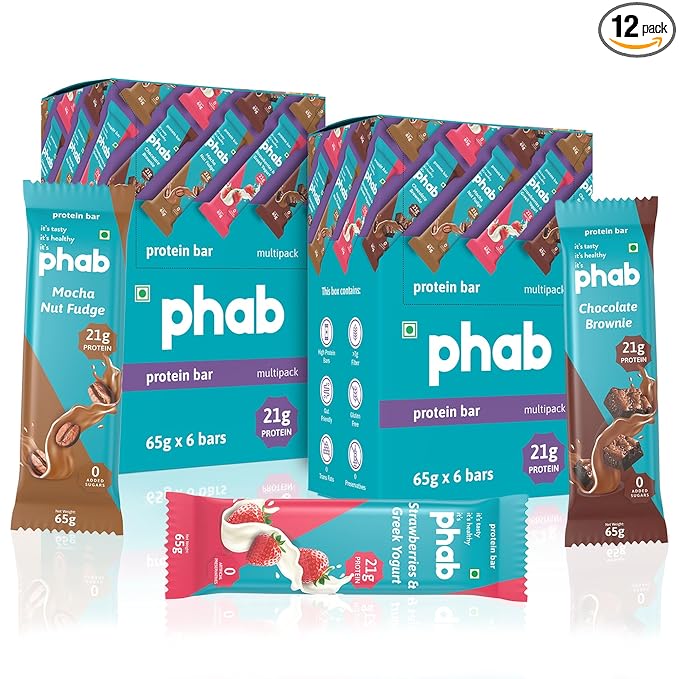
HEALTHY AND YUMMY: A snack lover’s dream come true, the phab Protein Bars Variety Pack is nutrient-rich and delicious.
Phab Assorted Protein Bar with 21g Protein, 8g High Fibre & 0 Added Sugar 100% Vegetarian | Diabetic Friendly Healthy & Tasty Protein bars | Trans Fat-Free & No Preservatives Protein bars (Pack of 12 x 65g)
Original price was: ₹1,620.00.₹1,129.00Current price is: ₹1,129.00.
Description
Protein Bars:
A Comprehensive Description
1. What Is a Protein Bar?
A protein bar is a convenient snack or meal supplement designed to provide a significant amount of protein, often combined with carbohydrates, fats, fiber, vitamins, and minerals. The goal is to support muscle maintenance, recovery after exercise, or to serve as a compact source of nutrition when whole‑food meals aren’t available.
Protein bars are often sold ready‑to‑eat. Some are built for athletes, some for weight loss, some more as meal replacements, and others simply as snacks enriched with protein.
2. Types of Protein Bars
Protein bars come in many forms. Key types include:
-
Meal Replacement Bars / High‑Calorie Bars: Bars with higher calories (often 250‑400 + kcal) designed to substitute a meal, including higher carbs, fats, sometimes micronutrients.
-
Post‑Workout / Recovery Bars: Lower in simple sugars (or balanced), with good protein content to help muscle recovery, often with a favorable protein:carbs ratio.
-
Low‑Sugar / Keto / Low‑Carb Bars: Designed for people restricting carbs; these use sugar substitutes or very limited sugars.
-
Plant‑Based Bars: For those avoiding animal products; protein derived from peas, soy, brown rice, nuts, etc.
-
Nutrient‑Fortified / Specialty Bars: Bars with added vitamins, minerals, or special ingredients (e.g. superfoods, collagen, probiotics).
3. Key Nutritional Components
To understand what makes a protein bar “good” vs “less good,” here are the main nutritional factors:
| Component | Role / Importance |
|---|---|
| Protein | Helps muscle repair, satiety (feeling full), supports metabolism. The source (whey, casein, egg, plant) affects digestibility, amino acid profile. |
| Carbohydrates | Provide energy; some are fast acting, some slow (fiber, whole grains). Important in recovery or energy bars. |
| Fats | Good fats (unsaturated) help with fullness, nutrient absorption; saturated and trans fats should be limited. |
| Fiber | Helps digestion, prolongs satiety, stabilizes blood sugar. |
| Added Sugars / Sweeteners | Hedonic appeal (taste), but high added sugar can lead to rapid energy spikes, health issues. Sweeteners or sugar alcohols are often used; these have pros & cons. |
| Micronutrients | Vitamins & minerals add value, especially if replacing a meal or eaten often. |
| Ingredient Quality & Purity | Whole‑food ingredients vs heavily processed; presence of allergens; presence of fillers or artificial additives; the label honesty. |
4. What to Look for: Choosing a Good Protein Bar
If you’re buying a protein bar (or making your own), here are criteria that help you differentiate:
-
Protein Amount & Quality
-
Aim for a protein content appropriate for your goal: e.g. ~10‑20 grams minimum depending on whether it’s a snack or meal replacement. Znergy+2Healthline+2
-
Protein type matters: whey isolate or concentrate, egg white, plant proteins (pea, soy, brown rice). Knowledge Sky+2Longevity Technology+2
-
-
Added Sugar & Sweeteners
-
Keep added sugar in check. Many protein bars disguise high sugar content which can reduce their health value. Longevity Technology+3Healthline+3Znergy+3
-
Check the type of sweeteners: natural (dates, honey, stevia) vs artificial / sugar alcohols. Some sugar alcohols may cause digestive discomfort. Baylor Scott & White Health+2Znergy+2
-
-
Fiber Content
-
Fiber helps with satiety, digestion, slowing down sugar absorption etc. A bar with ~3‑5 grams of fiber is generally good; more is better, depending on total calories. Medical News Today+2Znergy+2
-
-
Balanced Macronutrients
-
Not just protein: fats and carbs matter. You want a protein bar that gives energy and does not overload on saturated fat, unhealthy oils, or empty carbs. Healthshots+1
-
-
Ingredient Quality
-
Fewer, simpler, recognisable ingredients. Whole nuts, seeds, whole grain oats, natural flavorings. Avoidance of overly processed fillers. proteinbar.com+2Knowledge Sky+2
-
Allergen or dietary‑restriction friendly options: dairy‑free, gluten‑free, vegan etc. Longevity Technology+1
-
-
Calorie Content Appropriate to Purpose
-
If using as snack: lower calories. If replacing a meal or needing high energy (e.g. athlete), more calories needed. Longevity Technology+2Znergy+2
-
-
Taste / Texture / Palatability
-
Even the “perfect” bar won’t help if you can’t stand eating it. Texture (chewy vs crunchy vs soft), flavor, aftertaste (especially with sweeteners), mouthfeel etc. matter.
-
5. Benefits of Protein Bars
Here are advantages of having protein bars in your diet:
-
Convenience: Easy to carry, doesn’t require cooking; useful for travel, busy schedules.
-
Post‑Workout Recovery: Helps replenish protein (and carbs if included) soon after exercise.
-
Satiety and Cravings Management: High protein + fiber helps reduce hunger pangs, reduces the tendency to snack unhealthily.
-
Support for Specific Goals
-
Muscle gain / strength training: to ensure sufficient protein.
-
Weight loss or maintenance: can help meet protein needs without overeating, as protein is more satiating.
-
Dietary restrictions or lack of access: fills gaps in protein / micronutrients when whole‑foods are unavailable or expensive.
-
-
Nutrient Density: Good bars can provide micro‑nutrient boost (vitamins/minerals) along with macro nutrients.
6. Potential Drawbacks and Risks
Protein bars are not perfect; there are potential cons, especially if used improperly or chosen poorly.
-
High Sugar / Sweeteners: Some bars contain as much sugar as candy bars. This can lead to energy crashes, weight gain, dental issues, metabolic problems. Healthline+2Medical News Today+2
-
Calorie Overload: If treating bars as snack but consuming high‑calorie ones regularly, risk of unintended weight gain.
-
Allergens / Food Sensitivities: Many bars include dairy, soy, peanuts, gluten etc. Also some sweeteners or sugar alcohols can cause digestive issues. Health+2Healthshots+2
-
Additives, Artificial Flavorings & Fillers: Bars may include artificial preservatives, colors, flavor agents which may not add health value.
-
Misleading Labels: Marketing “high protein”, “low sugar” etc may hide bad ingredients; sometimes serving size, “net carbs”, “proprietary blends” make it hard to assess true nutritional value. Healthline+1
-
Cost: Protein bars can be expensive per gram of protein compared to whole‑food sources.
-
Over‑reliance: Relying too much on bars and neglecting whole foods (fruits, vegetables, natural protein sources) can lead to missing out on broader nutritional benefits.
7. How Protein Bars Are Made / Ingredients Breakdown
Understanding what typically goes into protein bars helps in evaluating them.
-
Protein Sources
-
Dairy proteins: whey concentrate, whey isolate, casein.
-
Egg proteins: egg white powder.
-
Plant proteins: pea protein, soy protein, rice protein, blends.
-
-
Carbohydrates
-
Whole grains (oats, rice flakes), dried fruit, sugars, starches.
-
Some use sugar alcohols, fibers, or slow‐digesting carbs for slower energy release.
-
-
Fats & Oils
-
From nuts, nut butters, seeds, coconut oil sometimes.
-
Some bars use less healthy oils (palm oil, hydrogenated oils) – better to avoid or limit.
-
-
Fiber and Bulking Agents
-
Natural fiber: oats, seeds, legumes, psyllium husk etc
-
Added fiber: chicory root, inulin, sometimes synthetic or isolated fibers.
-
-
Sweeteners & Flavorings
-
Natural: honey, dates, maple syrup, cane sugar in moderation.
-
Artificial or semi‑synthetic: stevia, monk fruit, sugar alcohols, flavors.
-
-
Binders / Texture Agents
-
Syrups, nut butters, gums, lecithin etc to hold the bar together and affect mouthfeel.
-
-
Additives / Fortification
-
Vitamins & minerals: often added to meal replacement bars.
-
Other functional ingredients: probiotics, collagen, antioxidants, spices etc.
-
-
Preservatives & Packaging
-
To extend shelf life, prevent spoilage.
-
Packaging sometimes includes moisture barriers, wrapping etc.
-
8. Ideal Use Scenarios: When & How to Use Protein Bars
Knowing how to integrate protein bars helps maximize benefit:
-
Between meals or as snack when you’re short on time or unable to eat whole food.
-
After workout: within ~30‑60 minutes to help muscle repair and recovery (especially if no other protein source is readily available).
-
Before workout, if your last meal was many hours ago: a light bar for energy.
-
Travel / Outdoor / Commute: portable nutrition, you don’t need refrigeration.
-
Weight management: Use bars in a controlled diet plan; select bars lower in sugar/calories, higher in fiber to help with feeling full.
9. Choosing / Customizing Bars for Your Goals
Depending on your individual goals (muscle gain, weight loss, vegan diet, etc.), here’s how to pick appropriately:
| Goal | What to Prioritize | What to Limit |
|---|---|---|
| Muscle gain / strength training | High protein per bar (20 g or more), good amino acid profile, moderate carbs, adequate calorie content. | Excessive saturated fat, too little carbs (so energy low), cheap protein sources with poor bioavailability. |
| Weight loss / Fat loss | Moderate protein (to reduce muscle loss), fiber, low added sugar, lower calories. | High calorie bars, bars that masquerade as healthy but are sugar/carb heavy. |
| Vegan / Plant‑based | Plant protein blends, natural flavoring, whole ingredients, fortified with micronutrients. | Bars with hidden dairy or animal products; poor flavor or texture; very low protein. |
| Meal Replacement | Balanced macros (protein, fats, carbs), enough calories, micronutrients included. | Bars too low in calorie or protein, bars with too much sugar or fillers, lacking satiating components. |
10. Making Homemade Protein Bars
If you want maximum control over ingredients, making your own is a good option. Key points for homemade bars:
-
Use a good quality protein powder or whole‑food protein (nuts, seeds, legumes).
-
Choose natural binders: nut butters, honey or date paste, mashed bananas etc.
-
Include fibrous ingredients: oats, ground flaxseed, chia.
-
Mind proportions: get enough protein, not too much sugar, appropriate fats.
-
Test texture: bars should hold together, not too dry or too sticky.
-
Storage: many home bars benefit from refrigeration or freezing.
Recipes can be customized for flavor, dietary restrictions, caloric needs.
11. Nutritional Guidelines & Label Reading
When evaluating a bar, learn to read labels well:
-
Check serving size (some bars look small but pack high calories).
-
“Protein” claim: what is source and how much – is it “protein blend”, isolate, whole food etc.
-
Total vs added sugars: some sugars come from dried fruit or natural sources; added sugars matter more.
-
Fat breakdown: saturated vs unsaturated. Also see trans fats.
-
Fiber content: helpful to see total dietary fiber.
-
Ingredient list order: items listed first are present in higher quantities. If sugar or sugar derivatives appear early, likely high sugar coverage.
-
Allergens and any additives.
12. Scientific & Health Aspects
Some relevant research and health info:
-
High protein diets can help with muscle repair, and in some cases support weight loss via increased satiety. Healthline+2Longevity Technology+2
-
However, over‑consumption of protein (especially from low‑quality sources) can stress kidneys in sensitive individuals; also high sugar content in some bars can negate health benefits. Health+1
-
The timing of protein intake (e.g., post‑exercise) is beneficial. Bars are a tool to fill gaps rather than replace well‑balanced whole‑food meals generally. Healthline+1
-
Digestive effects: some ingredients (sugar alcohols, isolated fibers) may cause gastrointestinal discomfort for some users. Znergy+1
13. Trends & Innovations
What’s happening in the protein bar space:
-
Increasing number of plant‑based / vegan bars, using pea, soy, rice, nut proteins.
-
Use of superfoods, natural sweeteners, clean labeling (short ingredient lists).
-
Bars with specialized target audiences (e.g. bars for women with added iron/calcium, bars for athletes with higher dose protein + recovery ingredients). Longevity Technology
-
Gluten‑free, allergen‑friendly bars.
-
Bars that reduce or avoid artificial sweeteners, colorings, preservatives.
-
Innovation in texture & flavor: combining crunchy, chewy, coatings etc to improve palatability.
14. How Often & When Is It Safe or Useful to Consume
Frequency depends on your total diet, caloric needs, physical activity, and health:
-
Using protein bars 1‑2 times per day can be fine if part of an overall balanced diet.
-
For people meeting their protein needs via whole foods, bars may serve more as occasional supplement.
-
If using daily, rotate flavors/brands to avoid excess of certain additives.
-
Always consider total calories: a high‑calorie bar adds to daily energy intake whether or not you “burn” it.
15. Conclusion & Best Practices
To sum up, protein bars are a useful tool— but like all tools, their value depends on selection and use. Here are best practices:
-
Always read labels carefully.
-
Match the bar to your goals (snack vs meal replacement vs workout recovery).
-
Prioritize whole‑food ingredients, natural sweeteners, fiber, good sources of protein.
-
Don’t let them replace real food entirely; aim for a balanced diet with fruits, vegetables, lean proteins, whole grains.
-
Monitor how your body responds (energy, digestion).
Reviews
There are no reviews yet.