
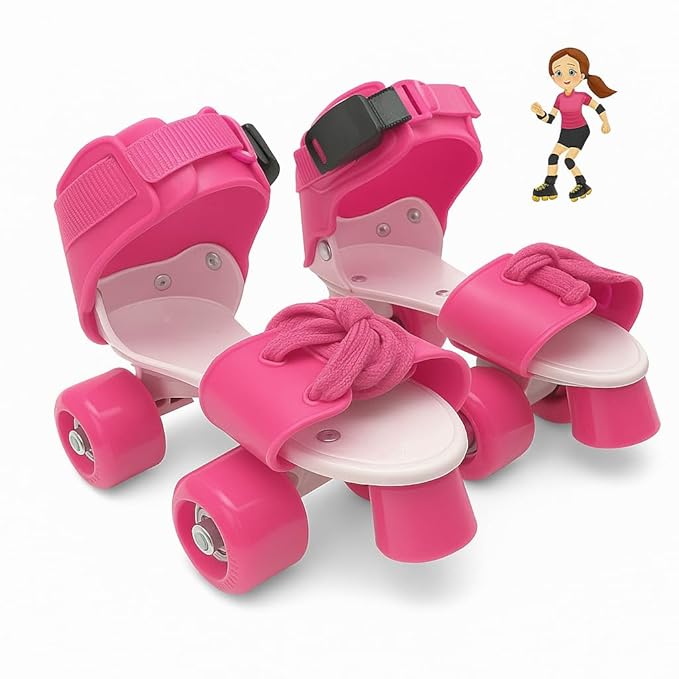
Adjustable Size & Comfortable Fit: Toy Imagine inline skates feature a beginner-friendly design with adjustable sizes (UK 5–12), making them perfect roller skates for kids ages 4 to 12 years. Ideal skating shoes for girls and boys who are just starting to learn skating.
Toy Imagine Adjustable Inline Roller Skates for Kids Girls Age 4–12 | Beginner-Friendly Skating Shoes with Front Brake & Polyurethane Wheels | Skates for Boys & Girls 4+ Years (Pink, Size 5–12 UK)
Original price was: ₹1,999.00.₹599.00Current price is: ₹599.00.
Description
What Are Roller Skates for Kids?
Roller skates are shoes or boots fitted with wheels, used for recreation, Roller Skates for Kids exercise, or sport. For children, they’re a fun way to build coordination, balance, confidence, and physical fitness. Roller Skates for Kids Skates allow kids to glide over smooth surfaces, learning to maneuver forward, stop, turn, and maybe Roller Skates for Kids even perform tricks under supervision. The experience can be both play and skill development.
Types of Roller Skates
There are several styles, each with its own advantages and suited to different ages, skill levels, and uses.
1. Traditional Quad Skates (Four-Wheeled)
-
Design: Two pairs of side-by-side wheels, usually arranged in the front and back (a “truck” at each end). The boot looks more like a casual shoe or soft boot.
-
Stability: Very stable, especially at low speeds. Good for beginners because of balance.
-
Versatility: Best for smooth pavement, skating rinks, indoor surfaces. Some models are also okay outdoors with appropriate wheels.
-
Style: Often colorful, with classic looks; many child‐friendly designs with graphics or themes.
2. Inline Skates (Rollerblades)
-
Design: Wheels in a single line—usually 3–5 wheels depending on size. The boot is often higher around the ankle for more support.
-
Speed and Maneuverability: Faster, better suited for longer distances; easier to do weaving and quicker turns once the basics are mastered.
-
Terrain: Good for sidewalks, paths, maybe trails (if equipped with larger wheels). Less suited to rooms or very small indoor areas unless wheels designed for that.
-
Learning Curve: A bit steeper for very young kids; more balance needed. But protective gear helps.
3. Adjustable Skates
-
Growing with the Child: Sizes that can adjust—some skates let you increase length of the boot so they fit as the child grows through several sizes.
-
Cost-Effective: More economical long term, since replacements are needed less often. But ensure the adjustment mechanism is secure and doesn’t compromise safety or stability.
4. Specialty Skates
-
Speed Skates / Racing: Low-cut, lightweight boots with specialized wheels, suited more for older kids and experienced skaters.
-
Artistic / Jam Skates / Roller Derby: Designed for tricks, dance, quick maneuvers. Might have toe stops, more flexible boots.
-
Outdoor Adventure Skates: Larger wheels, shock absorption, rugged construction for surfaces like trails or rough pavement.
Key Components & What to Look For
When considering roller skates for kids, each part has trade‑offs. Understanding the components helps make better choices.
| Component | What It Does / Importance | What to Look For in Kid’s Skates |
|---|---|---|
| Boot / Shell | Encloses foot, gives support. Soft or hard material. | Comfortable, adequate ankle support, breathable materials; good padding; size room for toes; durable stitching. |
| Frame / Chassis | Holds wheels; connects to boot; transfers power and balance. | Strong material (aluminum, reinforced plastic); not too heavy; good strength for outside use if outdoor skating. |
| Wheels | Size, hardness affect speed, stability, grip. | For kids: softer wheels for grip and smoother ride; medium size if mixed indoor/outdoor; larger wheels for speed or rough surfaces. |
| Bearings | Allow wheels to spin smoothly. | Standard ABEC rating (or equivalent); smooth roll; sealed bearings protect from dirt. |
| Trucks / Trucks (for quads) | Axle holders; affect turning and stability. | Tight enough to prevent wobbling; adjustable some; reliable bushings for responsive controls. |
| Brakes / Toe Stops / Heel Brakes | Essential for stopping safely. | Easy to use; readily accessible; replaceable; durable. |
| Closure System | Laces, buckles, Velcro straps. | Secure fastening; easy for child to use; helps keep ankles stable. |
Sizing and Fit
Getting the right size is crucial. Poor fit can lead to discomfort, blisters, poor control, even injuries.
-
Measure the Foot: Length & width. Ensure room for toe movement (about 0.5–1 cm at front).
-
Ankle Support: The boot should hold the ankle firmly but not painfully.
-
** heel fit**: Heel should not lift when walking. If heel moves, skater has less control.
-
Try with Socks: Use same thickness socks child will wear while skating.
-
Adjustable Models: Make sure adjustment doesn’t leave gaps or compromise support.
Safety Gear & Accessories
Roller skating involves risk of falls, so protective gear is essential, especially for kids.
-
Helmet: Certified skate/scooter/bike helmet; fits snug; straps secure.
-
Wrist Guards: More falls involve hands; guards protect wrists and prevent fractures.
-
Knee Pads & Elbow Pads: Cushions pads for sliding falls; should be durable and well‑fitted.
-
Mouthguards: Optional; helpful if child is doing tricks or higher risk activities.
-
Lights / Reflective Gear: If skating near dusk or in low light.
-
Skate Bag or Carry Case: Useful to transport, protect skates.
Materials & Construction Considerations
Durability, comfort, maintenance depend heavily on materials and build quality.
-
Boot Material:
-
Soft skate boots: usually vinyl, synthetic leather, or textile. Comfortable, lighter, more flexible.
-
Hard shell boots: Plastic or composite shell; more protection; often used for inline skates or rough terrain.
-
-
Padding & Lining: Soft linings reduce chafing; moisture‑wicking linings help avoid sweaty feet problems.
-
Reinforcement Points: Seams, toe‑box, heel, around ankle—areas of stress should be reinforced (stitching, overlays).
-
Frame Material: Plastic cheaper, lighter; metal (aluminum, alloy) stronger, more durable; possibly heavier or more expensive.
-
Hardware: Screws, bolts should be rust‑resistant; parts that wear out (wheels, bearings, toe stops) should be replaceable.
Choosing for Age, Skill, Use
Different factors matter depending on age, how experienced the child is, and where they will ride.
By Age Group
-
Toddlers / Preschool (2–5 yrs):
-
Focus more on balance, stability.
-
Quad skates with soft boots; small sizes.
-
Brakes very important; possibly built‑in features like training wheels or support strap handles.
-
-
Early Elementary (6–9 yrs):
-
Can begin inline skates if the child has sufficient balance.
-
Wheels not too large; moderate hardness.
-
Good ankle support; adjustability for growth.
-
-
Pre‑teens / Teens:
-
More options: performance, speed, outdoor skating.
-
Higher quality materials, advanced features.
-
By Skill Level
-
Beginner:
-
Emphasis on safety, ease.
-
Stable quad skates or inline with strong support; moderate speed.
-
-
Intermediate:
-
May want more maneuverability, higher speeds.
-
Better wheels and bearings; more responsive trucks or frame.
-
-
Advanced / Specific Skate Styles:
-
For tricks, dance, jam, derby: specialized boots and chassis.
-
For speed: minimal boot weight; aerodynamic design.
-
By Surface and Terrain
-
Indoor vs Outdoor:
-
Indoor: smoother surface. Softer wheels that grip and don’t leave marks.
-
Outdoor: rougher terrain or pavement. Harder, more durable wheels; shock absorption.
-
-
Mixed Use:
-
Compromise in wheel hardness and size. Possible to swap wheels for different surfaces.
-
What to Look For: Checklist Before Buying
Here is a practical checklist when selecting roller skates for kids:
-
Correct Size & Room: Enough toe room; secure heel; good width.
-
Support: Ankle support, high cuff, stiff boot or strong soft boot.
-
Brake or Stop Mechanism: Location, ease, safety.
-
Wheel Size & Hardness: Match surface and speed needed.
-
Bearings Quality: Smooth spin; sealed or easy to maintain.
-
Adjustability: For growing feet (switch size); adjustable straps.
-
Comfort: Padding, lining, breathability, weight.
-
Weight: Lighter is easier for kids; heavy skates can tire them quickly.
-
Durability: Solid construction, good materials.
-
Style & Appeal: If the design engages the child (fun colors, characters), they’re more likely to use them.
Common Problems & How to Address Them
Even with good skates, kids may face some issues. Knowing them helps avoid frustration.
-
Blisters & Hot Spots: Caused by rubbing. Use thicker or smoother socks; break‑in time; ensure padding in boots; adjust straps so foot doesn’t move too much.
-
Ankle Pain: Likely from insufficient support; or too much flexibility; need stiffer boots or higher cuff.
-
Loose Wheels / Screws: Check every time before skating; use proper tools; avoid overtightening.
-
Slips on Wet or Rough Surfaces: Use suitable wheels; avoid skating in wet conditions; ensure brakes work well.
-
Foot Growth: Feet grow fast; adjustable skates help; plan budget for replacement every season or two depending on growth.
Benefits of Roller Skating for Kids
Roller skating is more than just fun. It Roller Skates for Kids offers many developmental, physical, social, and psychological benefits.
-
Balance & Coordination: Learning to Roller Skates for Kids balance, shift weight, turn.
-
Muscle Development: Leg muscles, Roller Skates for Kids core; helps posture.
-
Cardiovascular Health: Aerobic Roller Skates for Kids exercise; heart and lung fitness.
-
Flexibility & Agility: Quick reflexes; body movements.
-
Confidence & Independence: Mastering new skills; sense of achievement.
-
Social Skills: Skating with peers; encouragement; possibly joining classes or clubs.
-
Mental Health: Release of energy; stress reduction; fun adds joy.
Safety Practices & Tips
Even with safety gear, Roller Skates for Kids good practices reduce risks.
-
Start on smooth, Roller Skates for Kids level surfaces.
-
Always wear full Roller Skates for Kids safety gear—helmet, knee/elbow pads, wrist guards.
-
Teach how to fall safely (e.g. roll, avoid putting hands straight out).
-
Supervise until child Roller Skates for Kids has good control.
-
Begin slow; maybe even Roller Skates for Kids with assistance (holding hand, using support).
-
Teach proper braking before Roller Skates for Kids going fast.
-
Ensure visibility: bright clothes; reflective patches for low light.
-
Check equipment regularly: wheels, fastenings, brake condition.
Care, Maintenance, and Storage
To make skates last, they need Roller Skates for Kids maintenance.
-
Cleaning: Wipe off dirt, debris Roller Skates for Kids after use. Clean wheels and frame. Avoid water soaking boots unless waterproof.
-
Drying: Allow boots to dry fully to prevent odor/mold; remove liners if possible.
-
Lubrication: Bearings need cleaning and occasional lubrication. Use proper skate bearing oil.
-
Wheel Maintenance: Rotate Roller Skates for Kids wheels (front to back) to even out wear. Replace when worn down or cracked.
-
Hardware Checks: Regularly check bolts, screws; tighten if loose; replace any damaged parts.
-
Storage: Cool, dry place; avoid Roller Skates for Kids extreme heat or moisture; protect from damp ground.
Price Ranges & What to Expect
Understanding what you get at different Roller Skates for Kids price points helps manage expectations.
-
Entry Level / Budget:
-
Basic soft boots; plastic frames or simple metal; minimal extras.
-
Ideal for beginners, Roller Skates for Kids occasional use.
-
Might need replacement Roller Skates for Kids sooner as child grows.
-
-
Mid‑Range:
-
Better materials; adjustable sizes; better bearings and wheels; more comfort.
-
Good durability; often a good Roller Skates for Kids investment.
-
-
High End / Specialist:
-
Premium materials; advanced features; performance‑oriented design.
-
Larger wheel sizes; specialized style (dance/derby/racing).
-
More expensive but high quality; may last a long time.
-
Comparing Brands & Quality
Brands differ in reputation, quality, spare‑part availability, and warranty.
-
Look for brands with good customer service, replacement parts (wheels, brakes, liner).
-
Read reviews from parents and kids—how durable, comfortable, safe are they?
-
Sometimes local brands are cheaper, but imports may offer better technology/features.
-
Ensure warranty or return policy—especially for size‑fit and defects.
Choosing the Right Model: Case Scenarios
Here are some sample situations and what model types may suit them.
| Scenario | Recommendation |
|---|---|
| A 4‑year‑old who wants to skate in a backyard or driveway | Soft‑boot quad skates, adjustable size, generous ankle support, moderate wheels; strong knee/elbow/wrist protection. |
| A 8‑10 year old skating outdoors, on sidewalks & paths | Inline skates or quads with tougher wheels; possibly hard shell or reinforced frame; good brake/stop; abrasion protection. |
| An older child interested in tricks / dance / skate park | Specialty skates with solid ankle cuff, responsive trucks or frames; replaceable parts; possibly toe stops; spot for grind if needed. |
| Mixed indoor + outdoor use | Medium hardness wheels; perhaps swap wheels depending on location; good bearings; washable liners; adjustability. |
Environmental & Health Considerations
-
Materials: Choose skates made from non‑toxic materials; avoid harmful chemical finishes; breathability to avoid sweat accumulation.
-
Foot Health: Proper fit to avoid misalignment; time‑limits on skating to avoid overuse injuries.
-
Sustainable Options: Some brands use recycled plastics, eco‑friendly packaging. Replaceable parts extend life.
-
Noise & Surface Damage: Softer wheels make less noise, less damage to indoor flooring.
Summary: What Makes a Great Pair of Roller Skates for Kids
-
Safety & Fit First: Proper sizing, protective gear, stability.
-
Appropriate Type for Age & Terrain: Quad vs inline vs specialty; indoor vs outdoor.
-
Quality Components: Good wheels, bearings, frame, boot materials.
-
Comfort & Usability: Padding, closures easy to use; lightweight where possible.
-
Durability & Replaceable Parts: Parts that wear out should be replaceable.
-
Encouragement & Fun: Design, color, ease of access matters—if kid likes them, they’ll use them more.
Reviews
There are no reviews yet.