
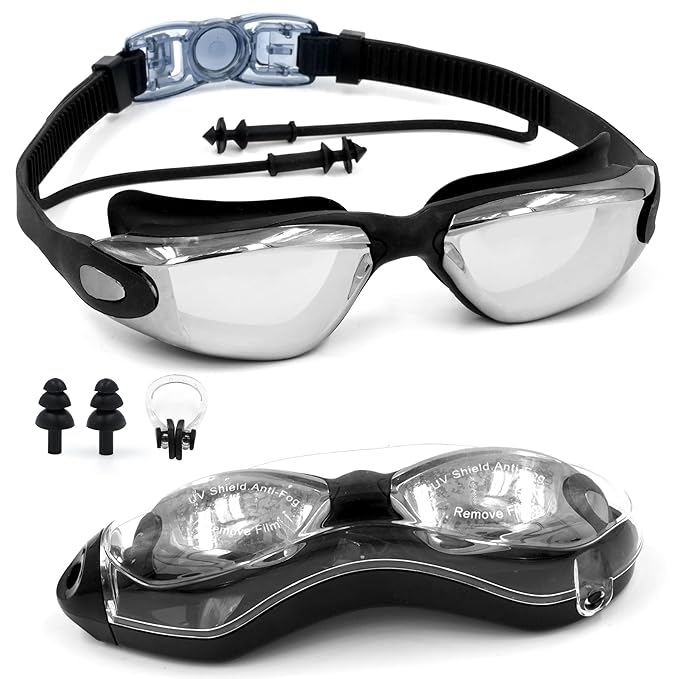
PROFESSIONAL SWIMMING GOGGLES: These swimming goggles for men & women, are designed for professional swimmers and enthusiasts alike. These swim goggles are a great addition to make your swim safer, comfortable & more enjoyable.
SLOVIC Swimming Goggles for Men [Black] | Swimming Goggles for Women | Anti-Fog & UV Protected Swimming Glasses for Men | Swimming Accessories | Leaf-Proof Goggle with Adjustable Straps & Nose Clip
Original price was: ₹999.00.₹599.00Current price is: ₹599.00.
Description
Swimming Goggles for Men:
A Comprehensive Guide
Swimming is one of the most engaging, healthful, and versatile forms of exercise. Whether for competition, training, open‑water swimming, casual laps, or snorkeling, having a good pair of goggles is essential for comfort, performance, and eye protection. Although many goggles are “unisex,” there are particular considerations for men’s goggles—fit, size, style, usage—that help optimize performance and satisfaction. This article delves into everything you need to know: design, materials, styles, fit, care, buying tips, and more.
1. Why Goggles Matter for Men’s Swimming
1.1 Eye Protection from Water & Chlorine
Pool water contains chlorine and other disinfectants that can irritate eyes, making them red, itchy, or blurry. A good seal prevents splashing and the direct intrusion of chemically treated water. In open water (lakes, oceans), salt, debris, or microorganisms can also be harsh, so goggles shield the eyes.
1.2 Improved Visibility Underwater
Being able to see clearly under water is important both for safety and for navigation, especially in competitive pools, open water, or when doing flip turns. Distorted vision underwater slows reaction times; goggles with appropriate lenses (clear, tinted, mirrored) help visual acuity.
1.3 Reduced Glare and UV Protection
Outdoor swimming, especially in the sun, brings the issue of glare and harmful UV light. Goggles with UV protection or mirrored/tinted lenses reduce glare, protect eyes from UV rays, and help you keep better visibility.
1.4 Comfort During Long Sessions
Training sessions can be long—involving lots of laps, drills, intervals. Poorly fitting goggles may leak, press uncomfortably on the nose or brow, or fog up. All this distracts from training and can reduce performance. Comfort contributes to keeping consistent training.
1.5 Performance & Hydrodynamics
In competitive or fast swimming, goggles need to minimize drag. Sleeker profiles (low‑profile, small gaskets) reduce resistance. Also, hydrodynamic design helps streamline the head as you move through the water.
2. Key Components of Men’s Swimming Goggles
Before choosing, it helps to know the parts of the goggles, what materials are used, and how each component affects performance.
2.1 Lenses
-
Materials: Polycarbonate is most common—light, shatter‑resistant, durable. Some high‑end goggles may also use tempered glass or advanced optical materials.
-
Shapes:
-
Oval / round
-
Tear‑drop
-
“European low‑profile” (very slim)
-
Wide‑vision (for better peripheral vision)
-
-
Types of lenses:
-
Clear/transparent: best for indoor, low light.
-
Tinted: reduced brightness, good for outdoor or bright pools.
-
Mirrored: high glare control, often used outdoors or in very bright environments.
-
Polarized: reduce glare from reflective surfaces; useful outdoors.
-
-
Coatings:
-
Anti‑fog
-
Scratch‑proof layers
-
UV protection
-
Reflective mirror coatings
-
2.2 Gaskets or Seals
-
Materials: silicone (most common), thermoplastic rubber (TPR), foam (less common now, more in older/open‑water goggles).
-
Shape & size: large soft gaskets give comfort and good sealing; low‑profile gaskets reduce drag but may press harder and can be less comfortable for some faces.
2.3 Frame & Nose Bridge
-
Frames: Rigid or semi‑rigid structures that hold the lenses and connect them at the bridge of the nose.
-
Nose bridges:
-
Fixed: molded into frame; simpler but less adjustable.
-
Interchangeable: allow you to adjust width to accommodate different nose shapes.
-
Straps replaceable: split or single strap.
-
2.4 Straps
-
Straps go around the back of the head; sometimes two‑strap versions are used for stability.
-
Materials: silicone, latex, rubber.
-
Adjustability: buckles or sliders; easy buckle systems help swapping quickly or tightening during swim.
2.5 Ventilation & Anti‑Fog
-
Anti‑fog coating is essential; many goggles come with pre‑applied coatings, but you usually get better performance if you treat them gently (rinse with fresh water, avoid touching interior lens).
-
Ventilation is limited in goggles; some designs use small “vents” or micro grooves, but typically fogging is controlled by fit, coating, and care.
3. Fit & Sizing for Men
The fit is where many problems arise. Even the most expensive goggles won’t feel good if they don’t fit your face shape and nose bridge.
3.1 Face Shape Considerations
-
Flat faces / low nose bridge: goggles with softer, bigger gaskets help form seal. Adjustable nose bridges help. Some models are specifically “junior” or low‑profile, but many men with low nose bridges prefer models with a flexible bridge.
-
High nose bridge: goggles with spaced‑nose designs, or ones with stepless adjustable nose pieces, are best.
-
Prominent brow / deep eye sockets: need goggles that don’t press too much at brow; also avoid designs whose edges dig in.
3.2 Measuring & Testing Seal
-
Without straps, press the goggles gently to your face, inhale slightly: a slight suction means the seal is good. If they fall off, the gasket shape is wrong.
3.3 Strap Fit & Comfort
-
Straps should be wide enough and fit at a height that doesn’t irritate behind ears or on the back of head.
-
Split straps (two‐piece strap) often offer better stability, especially when doing flip turns or diving.
3.4 Nose Bridge Fit
-
If fixed: ensure bridge width matches your nose; too narrow = pinching, too wide = leaks.
-
If adjustable: you can change spacing or swap bridges to find ideal pose.
4. Types of Goggles & Use‑Cases
Different swimming activities demand different goggles. Choosing according to your primary usage will maximize benefit.
4.1 Competition / Racing
-
Low profile; minimal bulk to reduce drag.
-
Mirrored or tinted outdoors; clear indoors.
-
Very snug fit (but not painful).
-
Replaceable nose bridges (so you can fine‑tune).
4.2 Training & Lap Swimming
-
More comfort prioritized over minimal drag.
-
Soft gaskets; larger sealing surfaces.
-
Good visibility; often clear or lightly tinted lenses.
-
Durable materials; anti‑scratch coatings.
4.3 Open Water & Triathlon
-
Wide vision: need good peripheral view to spot buoys or safety markers.
-
Strong seal: waves, splashes, currents make leaks more likely.
-
UV protection; glare reduction is essential under sun.
-
Anti‑fog and anti‑scratch helpful due to harsh conditions.
4.4 Recreational / Leisure Swimming & Snorkeling
-
Comfort and ease of use more important than speed or hydrodynamics.
-
Possibly masks instead of goggles for broader field of view.
-
Soft seals, easy adjustment.
5. Materials, Durability & Build Quality
Material composition determines longevity, comfort, and performance.
5.1 Lens Materials
-
Polycarbonate: structure resilience, impact resistance, usually default.
-
Tempered glass: rare in goggles; heavier, more fragile if dropped; sometimes used for specialty or snorkeling.
-
Coatings:
-
Anti‑fog: must be maintained.
-
UV: blocks harmful sun rays.
-
Mirror / polarized / tinted: reduce glare.
-
5.2 Seal & Gasket Materials
-
Silicone: soft, long‑lasting, resists degradation by UV & chlorine better than rubber.
-
Latex / Rubber: cheaper; less durable; can degrade faster; may cause allergies for some users.
-
Foam: sometimes in kids’ goggles or mask setups; less used in competitive goggles.
5.3 Strap & Buckle Systems
-
Good buckles: push‑button, snap, or low‑profile systems help adjustment and durability.
-
Single vs double strap: double straps add stability; single strap is simpler.
5.4 Frame & Nose Bridge
-
Fixed rigid frames are sturdy; adjustable bridges allow customization.
-
Plastic frames must be strong, resistant to UV and chlorine; avoid ones that warp over time.
6. Style, Aesthetics & Psychological Factors
Though function is key, appearance and psychological comfort also matter.
6.1 Color & Lens Finish
-
Tinted / mirrored lenses look “professional” and can reduce glare—often preferred outdoors or in bright settings.
-
Clear lenses are simple, less flashy, suitable for indoor pools.
-
Frame color: matching swim cap / suit? Some people prefer understated, others bold.
6.2 Branding & Perceived Quality
-
High‑end brands may carry prestige and better warranties.
-
But not always required: mid‑range goggles often offer excellent performance.
6.3 Confidence & Fit
-
If you feel good in your gear, including goggles, that can boost performance mentally.
-
Goggles that leak, fog badly, or look “cheap” may distract or demotivate.
7. Common Problems, Solutions & Maintenance
Even good goggles need care. Understanding common issues helps you choose better and keep them working longer.
7.1 Fogging
Causes: condensation from breath, body heat; deterioration of anti‑fog coating.
Prevention / Solution:
-
Rinse interior with fresh water after each swim, let air‑dry.
-
Avoid touching or rubbing inside lens; oils and fingers degrade coatings.
-
Some people use anti‑fog sprays or drops.
-
Sometimes spit (yes, it’s a hack) and rinse lightly before swim — used by many swimmers; not ideal long term but popular.
7.2 Leakage
Causes:
-
Poor seal (shape mismatch).
-
Damaged gasket edges.
-
Loose strap; misaligned strap position.
Solutions:
-
Test seal before purchase.
-
Replace worn gaskets.
-
Adjust straps properly—not too tight but firm enough.
-
Make sure nose bridge is fitting well.
7.3 Discomfort / Pain
-
Pressure on eye sockets or brow.
-
Strap pulling hair or tugging behind ears.
-
Nose bridge pinching.
Fixes:
-
Softer gasket materials.
-
Wider, well‑placed straps.
-
Adjustable nose bridge or multiple bridge options.
-
Try different frame shapes.
7.4 Scratching / Lens Damage
-
Always use a protective case or pouch when not in use.
-
Avoid placing goggles lens‑down on rough surfaces.
-
Rinse off chemicals and salt after use to avoid corrosion or pitting.
8. Buying Guide: What to Look for
To choose the perfect pair of men’s swimming goggles, compare features, test where possible, and align with your use. This checklist helps.
| Feature | Why It Matters | What to Check |
|---|---|---|
| Lens Type (clear/tinted/mirrored/polarized) | Adapts to light conditions; comfort & visibility | If you swim a lot outdoors, consider mirrored/tinted with good UV rating |
| Seal / Gasket Material | Comfort, longevity, leak prevention | Opt for soft silicone; check user reviews for leaks / comfort |
| Nose Bridge Adjustability | Fit across different nose shapes | Removable/swap‑out bridges or adjustable models are better |
| Strap & Buckle design | Stability, ease of adjustment; comfort | Double strap options; easy‑release buckles; wide strap width |
| Profile / Hydrodynamics | Critical for competition; also influences comfort | Try low profile if racing; otherwise mid profile gives comfort |
| Anti‑fog & UV coating | Reduces maintenance & eye strain | Check rating, durability, whether coatings have warranty or replacement parts |
| Peripheral Vision | Useful in open water, turns, sighting | Wide lens design or wraparound styles help |
| Durability & Replacement Parts | Long‑term cost & value | Check if spare parts (nose bridge, strap) are available; read reviews on how long they last |
| Price & Brand Reputation | Sometimes higher price gets better tech; sometimes you pay for name | Balance cost vs features; mid‑range often best value |
9. Recommended Models & Brands (Typical of High‑Quality Men’s Goggles)
While specific models come and go, some brands are consistently reliable: Speedo, Arena, TYR, Aqua Sphere, 2XU, Finis, Zoggs, etc. When evaluating specific models, look for ones that check most boxes in the above table.
10. Maintenance, Care & Lifespan
Proper care extends lifespan and keeps performance high.
10.1 Immediate After‑Swim Care
-
Rinse goggles with fresh potable water to remove chlorine, salt, or debris.
-
Shake out excess water; allow to air‑dry in shade (avoid direct sunlight, which degrades materials).
10.2 Storage
-
Use a soft case or pouch to prevent Swimming Goggles for Men scratches.
-
Avoid leaving them in hot Swimming Goggles for Men cars or exposed to sunlight for long periods (heat warps gaskets and frames; UV degrades lenses/coatings).
10.3 Replacement Intervals Swimming Goggles for Men
-
Anti‑fog effectiveness fades: depending on frequency of use, Swimming Goggles for Men maybe 6‑12 months.
-
Gaskets degrade; Swimming Goggles for Men straps lose elasticity.
-
Replace when you notice fogging that can’t be fixed, leaks Swimming Goggles for Men persist, or comfort is compromised.
10.4 Hygiene
-
Clean goggles periodically with mild soap (non‑perfumed) Swimming Goggles for Men if salt/chlorine build‑up.
-
Avoid sharing goggles without cleaning—eye infections can spread.
11. Fit Testing: How to Try Goggles Before You Buy
Whenever possible, test goggles in real or simulated Swimming Goggles for Men conditions.
-
Press goggles without straps to face; inhale Swimming Goggles for Men lightly—if they stay on, seal works.
-
Walk to water, or splash water into them; see if Swimming Goggles for Men leaks occur.
-
Tilt head up/down, shake head; straps should keep Swimming Goggles for Men gaskets sealed.
Also try various sizes of nose bridges; what works for someone else may Swimming Goggles for Men not work for you.
12. Special Considerations for Specific Swimming Goggles for Men Needs
Some men have additional needs or preferences. Below are examples Swimming Goggles for Men and how to address them.
12.1 Prescription / Visual Correction
-
If you need vision correction, prescription swimming goggles Swimming Goggles for Men are available. These are less common and more expensive, so make sure of the power and fit.
-
Alternatively, swim masks with corrective lenses may work.
12.2 Sensitive Skin / Allergies
-
Some people are allergic to latex or certain plastics. Look for Swimming Goggles for Men hypoallergenic silicone seals and straps.
-
Avoid materials known to irritate.
12.3 Hair / Beard / Head Shape
-
Long hair or beards: ensure straps don’t tangle hair; consider strap designs that avoid hair snagging.
-
Helmet or swim cap users: strap should accommodate Swimming Goggles for Men cap without slipping.
12.4 Kids / Young Adults
-
Some men with smaller faces may prefer “junior” or Swimming Goggles for Men “youth” sizes.
-
Always try fit first.
13. Cost vs Value: How Much Should You Swimming Goggles for Men Spend?
You can find goggles in many price ranges. Understanding what you get for your money helps avoid over‑paying or choosing low‑quality gear.
| Price Tier | Typical Price (USD / Local Equivalent) | What You Get | Trade‑Offs |
|---|---|---|---|
| Budget | Low cost (entry‑level) | Basic lens; fixed nose bridge; standard gasket; minimal extras | Less durable; anti‑fog weak; strap may stretch; potential leaks; fewer color / style options |
| Mid‑Range | Moderate price | Better materials (silicone), good seals, some anti‑fog; removable nose bridges; decent brand; possibly mirrored/tinted lenses | Still compromises in coating longevity; less trim for racing; maybe fewer replacement parts |
| High‑End / Competition | Top price (premium) | Advanced lens tech, excellent coatings, hydrodynamic profile, multiple bridge options, spare parts, designed for speed and durability | Expensive; may be overkill for casual users; fragile or tight fit; style may prioritize speed over comfort |
When swimming regularly (training, competition), spending on mid‑to‑high range Swimming Goggles for Men tends to pay off over time.
14. Men vs Women vs Unisex: Are There Real Differences?
Although goggles are often labelled “unisex,” there are Swimming Goggles for Men practical differences to consider.
-
Size: women often have narrower faces and smaller Swimming Goggles for Men nose bridges; some goggles made female‑oriented are narrower or have fixed bridges suited for smaller noses.
-
Design & aesthetic: color, styling might be different; but performance components are often same.
-
For men with large heads, wide faces, or broad nose Swimming Goggles for Men bridges, look for unisex or men‑oriented models; some women’s models may not seal well.
15. Sample Shopping Process: Steps to Find the Right Pair
Putting it all together, here’s how you might go about selecting goggles:
-
Define your main use: indoor pool, outdoor pool, open water, racing, recreational.
-
List must‑have features: e.g., anti‑fog, UV protection; adjustable nose bridge; mirrored lenses if outdoors.
-
Set your budget.
-
Research brands/models, read reviews, Swimming Goggles for Men check materials and fit.
-
Try on: test seal, comfort.
-
Evaluate performance: does it leak, fog, irritate Swimming Goggles for Men during swim?
-
Care test: do straps stay tight, does gasket stay soft, Swimming Goggles for Men is coating lasting?
-
Decide: pick what gives the best performance for your budget and comfort.
16. Summary: What Makes an Excellent Pair of Goggles for Men
To wrap up, here are the essential attributes of a top‑quality pair of men’s swimming goggles:
-
Proper Fit: seals well, no leaks, comfortable over brow and nose.
-
Appropriate Lens Type: matching your light environment (clear, tinted, mirrored).
-
High‑quality Materials: soft silicone gasket, durable lens, sturdy straps.
-
Good Visibility: wide peripheral vision when needed; clear field of view.
-
Anti‑fog & UV Protection: to protect eyes and reduce maintenance.
-
Durability & Spare Parts: ability to replace strap/nose bridge; resistance to chlorine, sun, physical wear.
-
Ease of Use: comfortable strap adjustment, secure buckle, ease of putting on/taking off.
-
Hydrodynamics (if needed): low profile for racing; less drag.
Reviews
There are no reviews yet.