
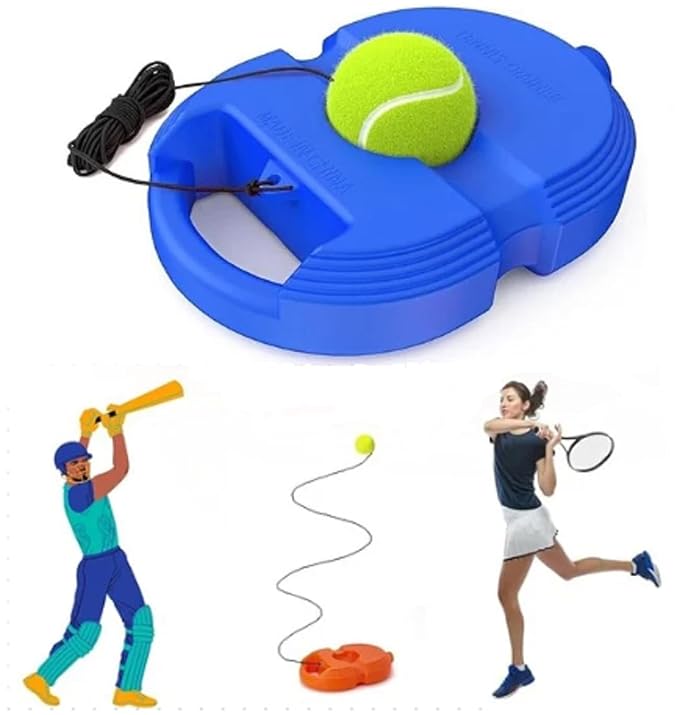
【Importent Note】 We Recommend That You Fill The Base With Sand For More Stability Rather Then Water
🏓 Table Tennis Trainer:
The Ultimate Guide to Mastering Your Ping Pong Skills
🎯 Introduction
Whether you’re a beginner trying to hit your first rally or an advanced player fine-tuning your spin control and reflexes, consistent practice is the key to becoming better at table tennis. Unfortunately, most players don’t always have a partner available — and that’s where the table tennis trainer becomes a game-changer.
A table tennis trainer is a solo training tool that helps players improve their strokes, consistency, hand-eye coordination, footwork, and overall technique — without the need for a partner or coach. In this comprehensive guide, we’ll explore everything you need to know about table tennis trainers: what they are, how they work, their benefits, types, usage tips, and how to choose the right one for your skill level and goals.
🧠 1. What Is a Table Tennis Trainer?
A table tennis trainer is a device or system that enables a player to practice table tennis alone. It typically consists of a spring-loaded rod, flexible shaft, or ball-return mechanism, attached to a base with a ping pong ball at the end.
It helps simulate rally-style play, allowing you to hit the ball and have it return toward you repeatedly. Some advanced trainers include robotic systems, spin settings, or even AI-based feedback for competitive training.
🏆 2. Key Benefits of Using a Table Tennis Trainer
✅ 2.1 Practice Anytime, Anywhere
You don’t need a partner or coach. You can practice at home, outdoors, or even in the office.
✅ 2.2 Improve Stroke Technique
Focus on perfecting your forehand, backhand, topspin, and slices without distractions.
✅ 2.3 Enhance Reaction Time
Constant ball returns help train your reflexes and agility.
✅ 2.4 Boost Hand-Eye Coordination
A repetitive ball movement pattern improves your timing and shot accuracy.
✅ 2.5 Build Muscle Memory
Training frequently with a consistent rhythm develops strong muscle memory.
✅ 2.6 Safe for Beginners
Beginners can start slow and build confidence without competitive pressure.
✅ 2.7 Great for Kids and Adults
Fun and engaging for all ages, making it a great tool for learning and bonding.
🔧 3. How a Table Tennis Trainer Works
🏓 Basic Components:
-
Ball – Attached to a string or flexible rod.
-
Rod/Shaft – Usually made of carbon steel, fiberglass, or plastic.
-
Base – Weighted to prevent tipping during practice.
-
Spring Mechanism (optional) – Provides natural recoil for realistic rallies.
🌀 How It Works:
-
The player hits the attached ball with a paddle.
-
The ball rebounds due to tension in the rod or spring.
-
The player continues to hit it as it returns, simulating rally play.
Some advanced models include dual ball arms or adjustable speed settings to simulate more dynamic game scenarios.
🔍 4. Types of Table Tennis Trainers
📌 4.1 Rod-Based Trainers
-
Ball attached to a flexible rod (bending motion).
-
Best for beginners and kids.
-
Portable, affordable, easy to use.
📌 4.2 Return Ball on String
-
Elastic string connected between base and ball.
-
Ideal for light practice and rhythm building.
📌 4.3 Table Tennis Robots
-
Machines that launch balls at different speeds, spins, and angles.
-
Great for advanced players, serious training.
📌 4.4 Rebound Boards / Nets
-
Bounces the ball back after a shot.
-
Simulates real opponent’s return.
📌 4.5 App-Based Smart Trainers
-
AI or app-connected systems track your performance and provide real-time feedback.
-
Includes stroke analytics, reaction speed, and training drills.
🧩 5. Who Should Use a Table Tennis Trainer?
🎓 For Beginners:
-
Learn grip and stroke mechanics.
-
Build confidence in a low-pressure environment.
-
Reduce fear of missing the ball.
🏋️♂️ For Intermediate Players:
-
Sharpen technique.
-
Increase training volume between matches.
-
Practice footwork.
🎯 For Competitive Athletes:
-
Fine-tune reaction time and shot precision.
-
Set up repetitive stroke drills.
-
Use data feedback from smart trainers.
👨👩👧 For Families and Kids:
-
Fun introduction to ping pong.
-
Encourage physical activity and hand-eye development.
🛠️ 6. How to Use a Table Tennis Trainer Effectively
📝 Step-by-Step Instructions:
-
Assemble the trainer (insert shaft into base and attach the ball).
-
Adjust height and tension depending on your level and stroke.
-
Stand in ready position — feet shoulder-width apart.
-
Use controlled strokes to hit the ball consistently.
-
Increase speed gradually as you get comfortable.
🎯 Training Tips:
-
Start with forehand drills.
-
Progress to backhand and combo drills.
-
Try shadow footwork to mimic real gameplay.
-
Track performance (number of successful hits per minute).
📋 7. Sample Table Tennis Trainer Drills
| Drill Name | Goal | Level |
|---|---|---|
| Forehand Rhythm Drill | Build timing and consistency | Beginner |
| Backhand Bounce | Develop control and balance | Beginner |
| Alternating Sides | Work both forehand and backhand | Intermediate |
| Speed Challenge | Improve reaction time | Intermediate |
| Spin Simulation | Master topspin/backspin strokes | Advanced |
🏠 8. Where to Use a Table Tennis Trainer
🏡 Home
-
Living room, garage, or backyard.
🏢 Office
-
Great for brain breaks and improving focus.
🏫 School or Gym
-
Ideal for physical education or table tennis clubs.
🧳 Travel
-
Compact models can fit in suitcases or backpacks.
🛍️ 9. How to Choose the Right Table Tennis Trainer
🧠 Consider These Factors:
✔️ Skill Level
-
Beginners: Choose basic rod/string-based models.
-
Advanced: Opt for robots or adjustable rebound trainers.
✔️ Portability
-
Lightweight and foldable designs are travel-friendly.
✔️ Stability
-
Look for non-slip, weighted bases for reliable use.
✔️ Adjustability
-
Adjustable height and resistance offer more training variety.
✔️ Budget
-
Basic trainers start at $15–$30.
-
Robots range from $150–$1,500+.
✔️ Extra Features
-
Spin settings, speed control, feedback via apps.
🏅 10. Best Table Tennis Trainers (Top Picks)
| Brand/Model | Type | Best For | Price Range |
|---|---|---|---|
| Reflexball Pro Trainer | Rod-based | All levels | $25–$40 |
| iPong Table Tennis Robot | Robot | Intermediate–Advanced | $150–$200 |
| JOOLA Return Trainer Board | Rebound board | All levels | $50–$80 |
| Smart Pong Pro | AI + app-based | Advanced training | $500–$1000+ |
| Simple Spin Trainer Kit | String-based | Kids & Beginners | $15–$25 |
🧼 11. Maintenance and Safety Tips
✔️ Clean the Ball and Shaft
Use a damp cloth regularly to remove dust and sweat.
✔️ Store Indoors
Keep away from extreme heat or water.
✔️ Check for Damage
Inspect the base, rod, or string for signs of wear or loosening.
✔️ Practice Safely
Keep a clear space around the trainer and wear proper footwear.
📈 12. Tracking Progress with a Trainer
Many advanced trainers and smart systems allow you to:
-
Measure rally count per session.
-
Track stroke accuracy.
-
Monitor reaction speed.
-
Set personal goals and benchmarks.
Using a basic counter or timer can also be effective for tracking manual improvements.
🔁 13. Trainer vs. Traditional Practice
| Feature | Table Tennis Trainer | Real Practice |
|---|---|---|
| Partner Required | ❌ | ✅ |
| Stroke Repetition | ✅ | ✅ |
| Footwork Practice | ✅ | ✅ |
| Spin Variation | ❌ / ✅ (robot only) | ✅ |
| Game Simulation | ❌ | ✅ |
| Convenience | ✅ | ❌ |
A trainer complements real practice, not replaces it.
🧠 14. Frequently Asked Questions (FAQs)
❓ Can I use a table tennis trainer as a beginner?
Yes! It’s one of the best tools to learn form, rhythm, and timing at your own pace.
❓ Do trainers really improve skills?
Absolutely. Repetition builds muscle memory and consistency.
❓ How long should I train daily?
Start with 15–20 minutes and gradually increase.
❓ Are they good for kids?
Yes! They’re
Reviews
There are no reviews yet.