
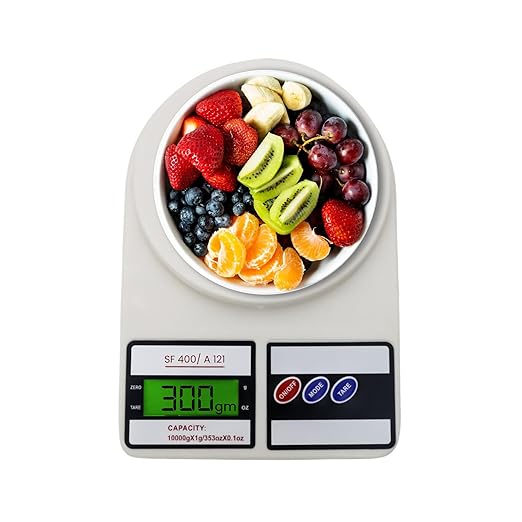
High-Precision Sensors: Equipped with advanced sensors for quick and accurate measurements, this kitchen scale ensures precise results to make your healthy recipes deliciously perfect.
Atom 10Kg Kitchen Weight Machine 6 Months Warranty, Digital Scale with LCD Display, Scale for Home Baking, Cooking & Balance Diet. Weighing Machine with capacity 10Kg, SF400/A121,Color May Vary
Original price was: ₹599.00.₹205.00Current price is: ₹205.00.
Description
Kitchen Weight Machine:
Your Complete Guide to Choosing, Using & Maintaining It
Table of Contents
-
Introduction: What Is a Kitchen Weight Machine?
-
Key Features to Look for
-
Types of Kitchen Weight Machines
-
Why Precision Matters
-
How to Use One Correctly
-
Common Problems & Troubleshooting
-
Maintenance & Care Tips
-
Buying Guide: What to Prioritize Kitchen Weight Machine
-
Top Models in the Market (India Focus + Global)
-
Cost vs Quality: What You Get at Different Price Points
-
Kitchen Weight Machines in Special Contexts
-
Conclusion
1. Introduction: What Is a Kitchen Weight Machine?
A kitchen weight machine (often called a kitchen scale) is a device used to measure the weight (or sometimes volume) of ingredients. From flour, spices, meats, liquids to portions for dieting, it helps ensure accuracy in cooking, baking, nutritional tracking, restaurant or commercial food preparation, etc.
1.1 Basic Components
-
Weighing platform or pan: Where you put the ingredients. Can be flat, bowl‑style, detachable, etc.
-
Sensor mechanism: Strain gauge, load cell, spring system (in mechanical models).
-
Display / read‑out: Digital LCD/LED or analog dial.
-
Control buttons/functions: Power on/off, tare/zero, unit switching (grams, ounces, pounds, fluid ounces), etc.
-
Power source: Batteries (AA, AAA, coin cell), Kitchen Weight Machine sometimes built in rechargeable battery, or AC adapter in some commercial / heavy‑duty models.
1.2 What It’s Used For
-
Accurate measurement for baking (where fractions of grams matter)
-
Portion control & dietary tracking
-
Ensuring consistency in recipes
-
Commercial use: restaurants, catering, food shops
-
Weighing for packaging / selling, if small business
2. Key Features to Look for
If you plan to buy or use a kitchen weight machine regularly, certain features distinguish better models from mediocre ones.
2.1 Capacity & Accuracy
-
Capacity: How much maximum weight it can handle Kitchen Weight Machine (e.g. 5kg, 10kg, or more). If you bake large quantities or work commercially, higher capacity helps.
-
Accuracy / Resolution: How small an increment it can detect Kitchen Weight Machine (e.g. 1 g, 0.1 g, etc.). For precise baking or nutrition, you want finer resolution.
2.2 Tare Function
Allows you to zero out the weight Kitchen Weight Machine of a container (bowl, plate), so you measure only the contents. Helps avoid extra cleaning Kitchen Weight Machine and improves accuracy when layering ingredients.
2.3 Units & Versatility
Switching between weight units (grams, kilograms, pounds, ounces) and sometimes volume units ( ml / fl oz ) for certain liquids. Multi‑unit capability adds flexibility.
2.4 Display & Readability
-
Large, clear display
-
Backlit/LCD display for low light or dim kitchen
-
Bright vs contrast, anti‑glare
-
Sometimes detachable display or remote display Kitchen Weight Machine (in high end / commercial)
2.5 Form Factor & Platform Design
-
Size and portability — small ones can fit in drawers or hang. Larger ones for commercial or bulk cooking
-
Material of platform (stainless steel, glass, plastic) — ease of cleaning, durability, hygiene
-
Water‑resistance / splash proof if used near wet areas
2.6 Power & Auto‑Off
-
Battery type and life
-
Auto‑off feature to conserve battery
-
Low‑battery indicator
2.7 Additional Features
-
Overload indicator (if you put too heavy weight)
-
Piece counting mode (for counting items by weight)
-
Memory / hold function
-
Built‐in timer (in some models)
-
Connectivity (rare, but smart scales with app integration exist)
3. Types of Kitchen Weight Machines
There are a few broad categories, each suited to Kitchen Weight Machine different needs.
3.1 Mechanical (Analog) Scales
-
Spring or balance board‑based
-
No need for batteries
-
Less precise (especially for small increments)
-
Often durable and simple
3.2 Digital Basic Scales
-
Simple digital readout Kitchen Weight Machine
-
Tare, unit switch
-
Good for everyday cooking & portion control
3.3 Advanced Digital / Smart Scales
-
High resolution, often 0.1 g increments
-
Additional features (piece counting, connectivity, app integration)
-
More expensive
3.4 Commercial & Heavy‑Duty Scales
-
High capacity (e.g. 20 kg, 50 kg or more)
-
Larger platform
-
Built for frequent, heavy use
3.5 Specialized Scales
-
Baking scales (very fine precision)
-
Nutrition / macro‑tracking scales (with built‑in nutritional info or app integration)
-
Weighing scales with built‑in bowls or detachable plates
4. Why Precision Matters
4.1 Baking & Cooking Consistency
Baking is chemistry — small deviations can change texture, rise, moisture content. Cooking needs less precision but still benefits from accuracy for consistent taste.
4.2 Health & Nutrition Tracking
If you’re tracking macros (protein, carbs, fats), the difference between 1g vs 5g error can add up daily. For diets, weight loss, meal prep, precision matters.
4.3 Cost Efficiency
Buying in bulk ingredients: small errors multiply over time. Wasting more flour or food than you think unless weights are accurate.
4.4 Safety & Standardization in Commercial Use
For food labeling, packaging, and legal compliance, accuracy might be regulated. Incorrect weights can lead to penalties or customer dissatisfaction.
5. How to Use One Correctly
Even the best machine won’t help if used poorly. Here are best practices.
5.1 Placing the Scale
-
Put on a flat, stable surface
-
Avoid vibrations, drafts, direct sun (which can affect sensors)
5.2 Zeroing / Taring
-
Place empty container, press tare/zero so display reads 0
-
Then add ingredients in layers, Kitchen Weight Machine taring between each if desired
5.3 Incremental Weighing
-
Weigh small items first, then larger; but if resolution supports, you can weigh large then small
-
For liquids, ensure consistent units (ml vs fl oz), tilt if necessary
5.4 Calibration
-
Occasionally calibrate (if applicable) using known weights (coins, standard weights)
-
If scale has auto‑calibration, follow manual instructions
5.5 Handling Overload
-
Avoid exceeding maximum capacity
-
Overloading can damage sensors permanently
5.6 Cleaning & Hygiene
-
Clean platform after each use
-
Use damp cloth, mild detergent; avoid water entering display or battery compartment
6. Common Problems & Troubleshooting
Even good scales can show issues. Recognizing and fixing them can extend life.
| Problem | Possible Cause | What to Do |
|---|---|---|
| Inaccurate readings / drift | Dirt or residue on platform; loose components; need for calibration | Clean platform, recalibrate, ensure stable surface |
| Display not working or dim | Battery low; display damaged; power issue | Replace batteries; check for any damage; avoid moisture |
| Tare not resetting to zero correctly | Faulty tare button; overload; container too heavy | Test tare with lighter container; don’t exceed tare capacity; if faulty, get service |
| Scale auto‑turns off too quickly | Auto‑off setting; battery saving feature | Avoid letting scale be idle too long; choose model with longer auto‑off time |
| Overload / error messages | Trying to weigh more than capacity | Remove items; stay within limit; invest in a higher capacity scale |
7. Maintenance & Care Tips
Proper maintenance keeps the machine accurate and lasting longer.
-
Regular cleaning: After each use, wipe platform; do not let spills accumulate.
-
Keep dry: Avoid moisture especially near sensors and battery compartments.
-
Battery care: Replace or recharge batteries on time; remove if not using long‑term.
-
Proper storage: Store in dry area, avoid direct heat or cold.
-
Handle gently: Dropping or bumping digital scales damages sensors.
-
Periodic calibration/testing: Use standard weights if possible (coins, known weights) to check accuracy.
8. Buying Guide: What to Prioritize
When selecting a kitchen weight machine, think through what features you need vs what you can live without. Here are priorities to help decide.
8.1 Define Your Use Case
-
Are you baking often vs just daily cooking?
-
Do you need portion control for diet, or commercial food prep?
-
Do you need to measure liquids or have to count pieces?
8.2 Capacity & Accuracy Balance
Higher capacity often means slightly less sensitivity to minute weights; lower capacity might suffice if you measure small things. Choose capacity not overkill but sufficient for your typical use.
8.3 Display Quality & Readability
If you often work in dim light, want to read weights from some distance, look for good display, backlight, contrast.
8.4 Durability
Material (steel, glass, plastic), build quality—especially hinges, buttons, where battery fits—impacts lifespan.
8.5 Brand & After‑Sales
-
Warranty (1 year or more)
-
Availability of customer support in your area
-
Replacement parts or repair service
8.6 Price vs Features
Aim for sweet spot — don’t overpay for features you’ll not use. Sometimes simple scales with good sensor and basic features suffice.
9. Top Models in the Market (India Focus + Global Examples)
Here are example/representative models with their traits, so you know what you might get in different price ranges. (Prices are indicative, subject to deals & discounts.)
| Model | Capacity | Key Features | Approx Price / Range* | What Makes It Stand Out |
|---|---|---|---|---|
| HealthSense Chef‑Mate KS‑40 | 1‑5 kg | Tare function, touch button, LCD, multiple units, good display; slim design. dukanindia.in | ~ ₹700‑₹1,350 (discounts vary) dukanindia.in | Reliable brand, basic but good build / features. |
| KiloMaxx HK‑03 (10 kg) | 10 kg | Stainless steel platform, battery included, heavy‑duty for bigger loads. kilomaxx.in | ~ ₹1,999 (on sale) kilomaxx.in | Useful if you often weigh large batches. |
| Desidiya SF‑400A | 10 kg | Backlit LCD, small form, tare, overload indicator, portable. Zepto+1 | ~ ₹299 (sale) to higher depending on seller. Zepto | Quite inexpensive, decent features for casual/budget users. |
| Thermoplast Digital 10 kg | 10 kg | Strain gauge sensor, auto zero, low battery indicator, simple design. thermoplast.in+1 | ~ ₹300‑₹500 depending on model. thermoplast.in | Good mid‑low cost option for those needing up to 10 kg. |
*Prices are approximate at time of writing; may vary with offers, shipping, brand.
10. Cost vs Quality: What You Get at Different Price Points
Here’s a rough breakdown of what to expect at various budget levels and what compromises or benefits come with each.
| Price Tier | What You Often Get | Trade‑Offs / Limitations |
|---|---|---|
| Budget (₹200‑₹500 / ~US$3‑10) | Basic digital scale, 5‑10 kg capacity, auto‑off, simple design, minimal styling. | Lower durability, less accurate for small increments, simpler displays, cheaper materials (plastic) |
| Mid‑Range (₹500‑₹2,000 / ~$10‑$25‑30) | Better platform materials (stainless steel), better sensors, tare function, better displays/backlights, reliable brands, 1 year warranty. | May still lack ultra‑fine resolution, fewer advanced features (no app, piece counting, etc.), build may not be industrial grade |
| Premium / Commercial (>₹2,000) | High reliability, very accurate, larger capacity, more advanced features (unit conversions, app sync, piece counting), often more durable material, maybe water resistant. | Higher cost; you may be paying for features you don’t need for everyday home use. |
11. Kitchen Weight Machines in Special Contexts
Some use‑cases require extra considerations.
11.1 Baking / Pastry
-
Need fine resolution (0.1 g or better)
-
Accurate measurement of dry and liquid ingredients
-
Prefer minimum error and good platform surface
11.2 Diet & Nutrition
-
Accurate at small quantities (grams)
-
Tare function is very useful
-
Units in grams, ounces, possibly ml/fl oz for liquids
11.3 Commercial / Food Business
-
Higher capacity (large weights)
-
Durable materials and construction
-
Regulatory compliance (if selling food by weight)
-
Possibly legal calibration / certification
11.4 Travel / Portable Use
-
Battery powered, light, compact
-
Possibly foldable or stackable
-
Capable of being used in diverse environments
12. Conclusion
A kitchen weight machine is an underrated but extremely useful tool. Whether you’re cooking daily, baking meticulously, dieting, or even running a food business, having an accurate, reliable scale makes life easier, reduces waste, ensures consistency, and helps you hit your goals.
When buying, focus on your typical use first (how heavy, how precise), then pick features accordingly. A mid‑range model from a good brand often gives the best return on investment. And always care for it properly — clean, calibrate, and store well — to prolong its usefulness.

Reviews
There are no reviews yet.