
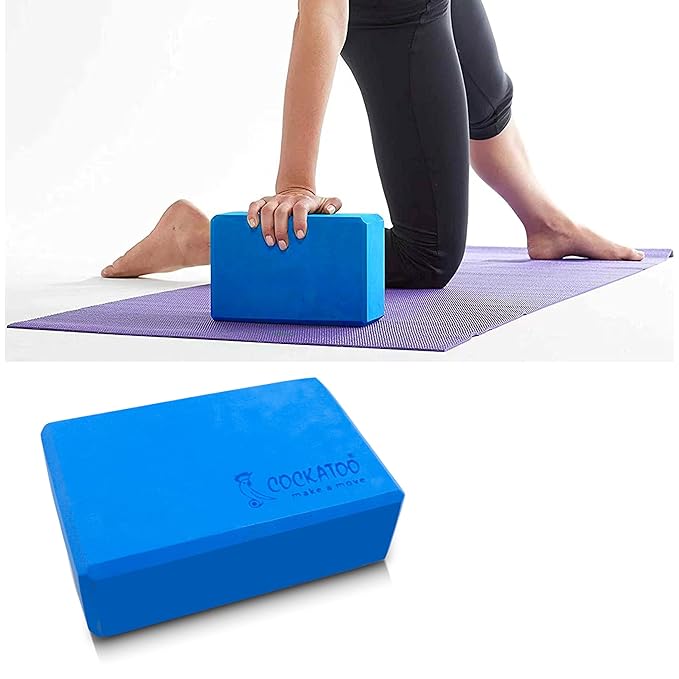
Yoga blocks provide the stability and balance needed in your practice to help with optimal alignment, deeper poses and increased strength.
Cockatoo Yoga Block – Supportive Latex-Free EVA Foam Soft Non-Slip Surface for Yoga, Yoga Bricks Pack Of 1 (6 Month Warranty)
Original price was: ₹549.00.₹279.00Current price is: ₹279.00.
Description
Yoga Blocks:
Mastering Props for Safer, Deeper Yoga
Table of Contents
-
What Is a Yoga Block?
-
History & Origins of Yoga Props
-
Benefits of Using Yoga Blocks
-
Types of Yoga Blocks (Materials, Sizes, Shapes)
-
How to Choose the Right Block for You
-
Basic Techniques & Poses with Yoga Blocks
-
Intermediate & Restorative Poses Using Blocks
-
Advanced Uses & Creative Variations
-
Common Mistakes & How to Avoid Them
-
Safety Tips & Precautions Yoga Block
-
Incorporating Yoga Blocks into Daily Practice
-
Care, Maintenance & Longevity Yoga Block
-
Frequently Asked Questions (FAQs)
-
Conclusion
1. What Is a Yoga Block?
A yoga block (sometimes called a prop or support block) is a tool used in yoga practice to assist with alignment, deepen stretches, provide balance, and make postures more accessible or safer. It acts as an extension of the body: bringing the ground closer to you, or lifting parts of the body so that a stretch or posture can be held with better form and comfort.
Blocks are especially helpful when flexibility, strength, or mobility limitations prevent full expression of a pose. They allow adaptive practice—practicing “your pose,” not someone else’s ideal—so you can gradually progress without strain or injury.
2. History & Origins of Yoga Props
-
Traditional yoga in many lineages used minimal props—blankets, straps—but blocks are a relatively modern addition in many styles.
-
Blocks became more prominent with the rise of Western yoga studios, therapeutic yoga, and restorative yoga, where the focus shifted not only on stretch and strength but on safety, support, and individualized practice.
-
The idea is rooted in making yoga accessible—props like blocks, straps, bolsters democratize postures, especially for beginners or those with physical constraints.
3. Benefits of Using Yoga Blocks
Using yoga blocks in practice brings multiple physical, mental, and safety benefits. Below are some key advantages, many confirmed by teachers and yoga‑resource sources:
3.1 Improved Alignment & Postural Support
Blocks help maintain correct alignment when you can’t yet reach the floor or hold a stretch fully. For example, using a block under the hand in Triangle Pose (Trikonasana) helps avoid overreaching and twisting. Hydrow+2Firefly Athletics+2
3.2 Increased Flexibility without Strain
Blocks allow you to modify the depth of stretches so you can gradually increase range of motion safely. They lessen the risk of over‑stretching tight muscles (hamstrings, hips, spine). Vitacost+1
3.3 Greater Stability & Balance
Balancing poses become more accessible with blocks under hands or feet—less wobble and more ability to hold pose while working on strength. Vitacost+1
3.4 Support in Restorative & Gentle Yoga
Blocks are invaluable in restorative poses, allowing relaxation without strain on joints. For example, placing blocks under knees, sacrum, or back in restful positions decreases discomfort. Hydrow+2sense22yoga.com+2
3.5 Enhancing Awareness & Muscle Engagement
Blocks can be used to help you “feel” muscle engagement (for example squeezing a block between thighs or hands). This builds awareness of alignment, engages stabiliser muscles, and helps avoid compensatory misalignment. Hydrow+2Jacqui Noël Yoga+2
3.6 Accessibility & Inclusion
For beginners, or those with mobility limitations, injuries, or tightness in certain areas, blocks enable participation in yoga without forcing the body into uncomfortable or unsafe positions. WebMD+1
4. Types of Yoga Blocks (Materials, Sizes, Shapes)
Knowing what types of blocks exist helps you choose what suits your practice, comfort, and budget.
| Feature | Common Options | Pros & Cons |
|---|---|---|
| Materials | • Foam (high density foam) • Cork • Wood (hardwood) • Bamboo composites • Bamboo or eco‑blend materials |
Foam: lighter, cheaper, softer; less durable, may compress over time. Cork: good grip, eco‑friendly, more stable, but can be heavier and more expensive. Wood: very stable, long lasting; can be hard on joints or uncomfortable if not padded. |
| Sizes / Dimensions | Standard size ~ 9‑10 in × 6 in × 4 in (≈23×15×10 cm) (varies by brand) Taller blocks Narrow or wide blocks |
Taller blocks help reach when flexibility is limited; wide blocks help distribute pressure. Smaller blocks easier to carry; thinner ones more portable. |
| Shapes / Profiles | Rectangular cubes Rounded/curved edges Blocks with multiple height options Soft/ergonomic edges |
Rounded or soft edges help comfort especially under palms or back of knees. Multi‑height blocks (flatter vs thicker side) offer more versatility. |
| Density & Firmness | Soft (very compressible) Medium Firm / Hard |
Firm blocks give more stability and less give; soft blocks can be more comfortable but may lose shape or provide less reliable support. |
5. How to Choose the Right Block for You
When purchasing or selecting yoga blocks, consider:
-
Your flexibility / mobility level: If new or stiff, go for taller and firmer blocks so support is sufficient.
-
Your practice style: More restorative/yin → more comfortable materials/bigger surface area. Power/Vinyasa → need durability, grip, light weight for quick transitions.
-
Body size & proportion: Taller people may need blocks that are longer or thicker; people doing inversions or arm balances may benefit from firm, stable blocks.
-
Material preferences & environmental concerns: Eco‑friendly materials, free of harmful chemicals. Cork, eco‑foam, sustainable wood.
-
Budget vs longevity: Good blocks cost more but often last longer; cheap blocks may degrade early.
-
Grip & texture: If you sweat a lot, or practice hot yoga, choose blocks with good grip, textured surfaces.
6. Basic Techniques & Poses with Yoga Blocks
Here are foundational ways to use blocks and some starter poses to try. Good for beginners or warming up.
6.1 Basic Techniques of Using Blocks
-
Placing under hands, feet, or head to reduce reach distance.
-
Using blocks under seat to sit more comfortably upright.
-
Holding blocks between hands/thighs for activation.
-
Using blocks to lift sacrum or support lower back in restorative poses.
6.2 Starter Poses Using Blocks
| Pose | How to Use Block | Benefits |
|---|---|---|
| Triangle Pose (Utthita Trikonasana) | Place block under lower hand so you don’t have to reach floor. Helps maintain straight spine and avoid rounding. Vitacost+1 | |
| Standing Forward Fold (Uttanasana) | Block under hands if they don’t reach mat; helps release hamstrings without straining lower back. Nike.com+1 | |
| Seated Forward Fold (Paschimottanasana) | Block under seat or under feet/hands to allow more comfort. Hydrow+1 | |
| Half Moon Pose (Ardha Chandrasana) | Lower hand on block to help balance; block height adjusted to need. Vitacost+1 | |
| Bridge Pose / Supported Bridge | Block under sacrum to support extension and relief in lower back. Hydrow+1 |
7. Intermediate & Restorative Poses Using Blocks
Once you’re comfortable with basics, you can deepen your practice or rest more fully with blocks.
7.1 Restorative Sequence Examples
-
Reclined Bound Angle Pose (Supta Baddha Konasana) with blocks under knees AND under head. Relaxes hips, opens chest. Vitacost+2Hydrow+2
-
Supported Fish Pose (Matsyasana) using blocks under chest/back to open heart center gradually. Vitacost+1
-
Legs‑Up Against Wall with block under sacrum or lower back to support pelvis.
7.2 Intermediate Challenge Poses
-
Half Split (Ardha Hanumanasana) with block under hand to maintain chest lift, avoid rounding back. Hydrow+2Vitacost+2
-
Supported Twist or Revolved Poses with block under hand or seat to help stability and alignment.
-
Balancing Poses like Tree Pose (Vrksasana), Warrior III, using block under hand or foot for support or progression.
8. Advanced Uses & Creative Variations
Blocks aren’t just for “easier” or “helping” poses—they can be used creatively even at advanced levels to increase challenge, refine alignment, or in inventive sequences.
8.1 Heightened Leverage & Depth
Using blocks to lift feet or hands to increase leverage, which intensifies stretch or balance demands.
8.2 Block‑Based Balancing & Arm Balances
Blocks under hands in arm balances (Crow, Side Crow) to help with weight distribution and to progress safely.
8.3 Using Blocks for Strength Activation
Squeezing blocks between thighs or hands to engage inner thigh adductors, glutes, upper back etc. Helps refine muscular engagement. Hydrow+1
8.4 Yoga Block Sequences & Flows
Integrating blocks into flows—e.g., incorporating variation where blocks shift roles (hand support, hip support, chest opener) to increase fluidity and adaptability.
9. Common Mistakes & How to Avoid Them
Knowing what to avoid helps you use blocks effectively, not create new problems.
| Mistake | Why It’s a Problem | Fix / Alternative |
|---|---|---|
| Relying too much on block (using too tall or letting block do work your body should do) | You may stall progress; miss building strength, flexibility. | Gradually lower height; use block only temporarily; aim toward using less support. |
| Choosing block material that slips or degrades | Foam that gets slippery when moist, or blocks that tip over cause instability. | Choose better grip materials (cork, rubber), test feel; use textured blocks. |
| Not adjusting block height properly | If block is too low or too high, alignment may suffer (hip/knee/joint strain). | Test different heights; listen to body; use different positions of block. |
| Hard edges causing discomfort | Sharp edges, rough surfaces may hurt under palms, back etc. | Select blocks with softer or rounded edges; use padding under joints. |
| Poor block placement (wrong spot) | Misplaced block negates benefit, might misalign body. | Learn where block should go for each pose; instructor feedback helps. |
10. Safety Tips & Precautions
-
Always warm up sufficiently before deep stretches; use block‑assisted warm‑ups.
-
If you have injuries (back, wrist, knees, shoulders), consult teacher/therapist before using blocks in certain poses.
-
Use stable blocks—avoid blocks that wobble or compress too much under your weight.
-
Don’t force stretched positions: feel a stretch but avoid pain. Blocks help avoid overstretching but misuse can still harm.
-
Keep surfaces dry; clean blocks regularly to avoid slipping.
11. Incorporating Yoga Blocks into Daily Practice
-
Start classes with them: carry blocks to yoga class; place near mat so you can access quickly.
-
Include blocks in warm‑ups and cool‑downs. E.g. seated posture with block, gentle twists with support.
-
Use blocks in short restorative sessions or on rest days to help mobility and alignment.
-
Alternate block‑free vs block‑assisted practice to build strength.
12. Care, Maintenance & Longevity
-
Clean blocks regularly—foam blocks may absorb sweat; wipe with mild soapy water or yoga block sprays, dry thoroughly.
-
Avoid keeping in damp or direct sun exposure—materials like foam degrade, cork can warp.
-
If block gets warped, splits, or loses integrity, replace—it’s not worth risking injury.
-
Store blocks flat or upright; don’t leave heavy objects on top.
13. Frequently Asked Questions (FAQs)
Q: How many blocks should I have?
A: Two is usually useful (one for each hand in many poses). But one block suffices for many modifications. Having two gives more options.
Q: Block vs bolsters vs straps — which to pick?
A: They serve different functions. Blocks are firm supports for alignment, height, leverage. Bolsters are for soft support / relaxation. Straps help reach. Many practitioners use all three props.
Q: Can I use household items instead of blocks?
A: In a pinch yes—thick books, firm boxes—but they might not be stable, non‑slip, or safe. Proper blocks are recommended.
Q: Should I aim to stop using blocks?
A: Not necessarily. Blocks are aids, not crutches. Some advanced poses still benefit from blocks: alignment, depth, refinement. Use them as needed.
Q: Which material block is best for hot yoga?
A: Cork or dense rubber tends to perform better with sweat and heat; foam may get slippery.
14. Conclusion
Yoga blocks are powerful, versatile tools that make your practice safer, more accessible, and deeper. They support flexibility, alignment, strength, and restoration. Whether you’re a beginner finding your way into poses, or an experienced yogi looking to refine your alignment and depth, blocks can help you progress in your practice while reducing risk of injury.
Selecting the right block (material, size, firmness), using it with mindful technique, and gradually challenging yourself are keys. With consistent use and proper care, yoga blocks can become an indispensable part of your yoga toolkit—helping your body to open steadily, mindfully, safely.
Reviews
There are no reviews yet.