
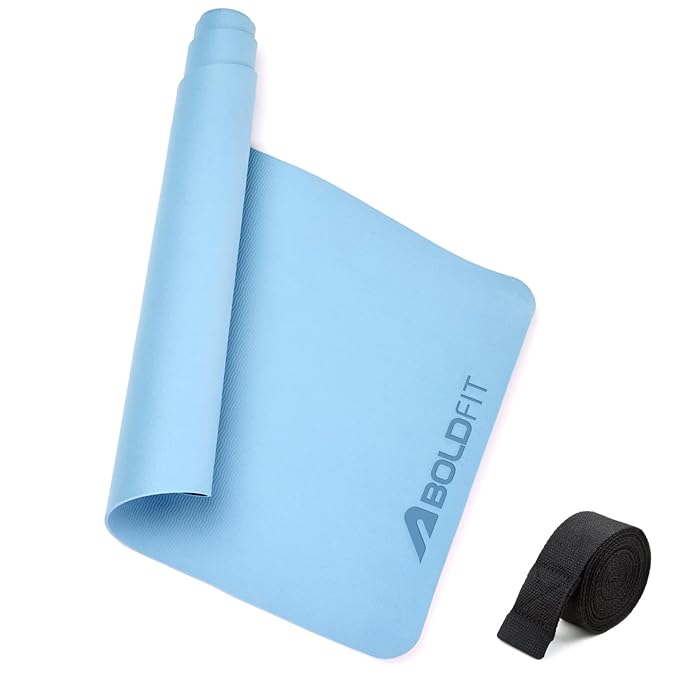
COMFORTABLE YOGA MAT – Boldfit Yoga Mat for men and women 5 mm thick yoga mats for exericise comfortably cushions spine, hips, knees and elbows on hard floors. The mat size is perfect for men and women of all shapes. This is the best yoga mat for men and women alike.
Boldfit Yoga Mats For Women Yoga Mat For Men Exercise Mat For Home Gym Mat Anti Slip YogaMate Workout Mat YogaMat For Kids Yoga Mate Gym Mats
₹399.00
Description
Yoga Mats:
Your Complete Guide to Choosing, Using & Caring
Table of Contents
-
Introduction
-
What Is a Yoga Mat & Why It Matters
-
Key Features of a Good Yoga Mat
-
Types of Yoga Mats by Material
-
Size, Thickness & Weight Yoga Mats Considerations
-
Grip, Texture & Stickiness: Why They’re Crucial
-
Yoga Mats for Different Styles of Yoga
-
Eco‑Friendliness & Sustainability Yoga Mats
-
How to Choose a Yoga Mat That Fits You
-
Care, Cleaning & Maintenance Yoga Mats
-
Common Problems & How to Fix Them
-
Comparing Price vs Quality Yoga Mats
-
When to Replace Your Yoga Mat
-
FAQs
-
Conclusion
1. Introduction
A yoga mat is more than just a cushion under your feet—it’s yourYoga Mats foundation. Whether you’re flowing through Vinyasa, holding a long Yin posture, sweating in Hot Yoga, or using the mat to meditate, the mat you have can affect comfort, safety, hygiene, and even how much you enjoy your practice.
This guide will explore everything—from materials and grip to Yoga Mats eco‑options and care—so you can Yoga Mats Power: 5 Game-Changers for Daily Practice pick a yoga mat that supports your needs, style, and values.
2. What Is a Yoga Mat & Why It Matters
A yoga mat is a specially designed mat—usually rectangular—that provides a non‑slip, cushioned surface for yoga practice. Key purposes:
-
Protection for knees, wrists, hips, elbows, and spine, from hard or uneven floors.
-
Traction & stability to prevent slipping during Yoga Mats poses.
-
Comfort for prolonged seated, kneeling, or lying down postures.
-
Hygiene: Using a personal mat helps avoid germs, sweat residues from shared studio mats.
-
Alignment help: Some mats come with visual or tactile guides for positioning.
The wrong mat can undermine these benefits: cause slipping, Yoga Mats discomfort, joint pain, or discourage you from practicing. So choosing wisely is important.
3. Key Features of a Good Yoga Mat
When comparing mats, these are the core features to evaluate:
-
Material: determines grip, smell, sustainability, Yoga Mats texture.
-
Thickness & density: impacts cushioning Yoga Mats and stability.
-
Size / length / width: enough space for your body.
-
Weight & portability: for travel or carrying to classes.
-
Grip / stickiness: especially when hands/feet are sweaty.
-
Texture & surface finish: smooth, ribbed, patterned, etc.
-
Eco‑credentials: non‑toxic, recyclable, Yoga Mats biodegradable.
-
Durability: how long it holds up—resistance to wear, tears, compressing.
-
Easy to clean and maintain.
We’ll go deeper into each of these.
4. Types of Yoga Mats by Material
Different materials offer different trade‑offs in grip, comfort, environmental impact, cost, etc. Here are common materials:
| Material | Advantages | Disadvantages |
|---|---|---|
| PVC (Polyvinyl Chloride) | Widely available; good grip initially; durable; affordable. coreasana.com+1 | Not eco‑friendly; may have chemical smells; grip may reduce over time; can be slippery when worn. Team Cnut+1 |
| Natural Rubber | Excellent grip; more sustainable; good cushioning; non‑toxic options exist. Team Cnut+1 | Heavier; may have initial odor; some people sensitive to latex; may wear out on high friction surfaces. shyambhai.yoga+1 |
| TPE (Thermoplastic Elastomer) | Lightweight; good cushioning; more eco‑friendly than PVC; often recyclable. veryfitlife.com+2Yoga Design Lab+2 | Less durable than rubber or PVC; may compress faster; grip might reduce with heavy sweat. |
| Cork | Naturally antimicrobial; excellent grip (especially when wet); sustainable; odor‑resistant. Team Cnut+1 | Can wear out or crack; steeper cost; less cushioning in some designs; may feel rough initially. |
| Jute / Cotton / Organic Fabrics | Natural fibers; breathable; often sustainable; softer texture. coreasana.com+2anahana.com+2 | Less cushioning; grip may be less when wet; may be harder to clean; shorter lifespan. |
| PU (Polyurethane) / Mixed Composite Mats | Good grip; often dual‑sided; sometimes alignment features; moisture absorption features. Yoga Design Lab+2anahana.com+2 | More expensive; combined materials may complicate recycling; some surfaces may degrade. |
5. Size, Thickness & Weight Considerations
These physical dimensions matter a lot depending on your body type, style of yoga, and where/how often you practice.
Thickness
-
Thin mats (≈ 1–3 mm): better stability, closer to the floor, good for travel or balancing poses. yogaposesandbenefits.com+1
-
Standard mats (≈ 4‑5 mm): balanced cushioning and stability. veryfitlife.com+1
-
Thick mats (6‑8 mm+): more cushioning for joints, comfort for restorative yoga, long holds, or sensitive knees. shyambhai.yoga+1
Length & Width
-
Typical standard: ~68 in (≈ 173 cm) length x ~24 in (≈ 61 cm) width. Wikipedia+2yogaposesandbenefits.com+2
-
Taller people may prefer longer mats (72‑80 in) to avoid overhang in poses like Savasana, Downward Dog.
-
Wider mats give extra room for movement, especially for big‑bodied persons or wide‑stance styles.
Weight & Portability
-
Travel mats: lighter & thinner so easier to carry.
-
Full‑size studio mats: heavier, more cushioning, bulkier for transport.
-
Consider whether you need a bag or strap.
6. Grip, Texture & Stickiness: Why They’re Crucial
Grip determines stability and safety especially when sweating or doing dynamic flows.
-
Stickiness / surface traction: prevents slipping of hands and feet.
-
Texture: patterns, ridges, raised grooves can increase grip. Some mats have PU or microfiber surfaces for better grip when wet. Yoga Design Lab+2Dxb News Network+2
-
Non‑slip even when wet: rubber, cork tend to maintain grip better under sweat or moisture. Team Cnut+1
7. Yoga Mats for Different Styles of Yoga
Different yoga styles emphasize different needs; picking a mat suited to your style makes a difference.
| Yoga Style | What to Prioritize in a Mat |
|---|---|
| Hot Yoga / Bikram | Excellent grip in sweat, antimicrobial, moisture‑absorbing material, easy to clean. |
| Vinyasa / Power Yoga / Ashtanga | Durability, grip, stability, moderate cushioning. Must handle dynamic movements. |
| Restorative / Yin / Meditation | Comfort & cushioning; softer materials; thickness; possibly wide or big mats; supportive. |
| Travel Yoga | Lightweight, thin, foldable or rollable easily; quick drying; compact. |
| Therapeutic / Rehab | Very good cushioning, joint protection; non‑slip; possibly eco‑friendly; hygienic. |
8. Eco‑Friendliness & Sustainability
For many practitioners, how the mat is made and its environmental impact are major considerations.
-
Natural materials (rubber, cork, jute) generally more sustainable than PVC. coreasana.com+1
-
Mats made with recycled materials or TPE often say so.
-
Avoid toxic chemicals, phthalates. Look for certifications (OEKO‑TEX, GOTS, etc.). coreasana.com+1
-
Lifespan matters: a longer‑lasting mat might be more sustainable than replacing cheap ones often.
9. How to Choose a Yoga Mat That Fits You
Putting together all the above, here’s a step‑by‑step to help you choose the right mat.
-
Assess your practice style & frequency
-
If you practice daily, dynamic styles or hot yoga → need high grip, durable, easy to clean.
-
If occasional/restorative → comfort and cushioning more important.
-
-
Set your budget
-
Lower price mats may use cheaper materials (PVC) or have weaker durability.
-
Mid‑range gives good balance. Premium mats cost more but may have eco materials, better craftsmanship.
-
-
Decide desired mat features
-
Material preferences (eco vs synthetic)
-
Thickness choice
-
Texture/grip level
-
Size for your height
-
Weight/portability concerns
-
-
Try out / feel if possible
-
Hands on texture, slip test with hands or feet if possible.
-
Flex/roll the mat to see how it springs back.
-
-
Review care & maintenance details
-
Can it be cleaned easily?
-
Does it resist odor or mildew?
-
Warranty or durability claims?
-
-
Look at additional helpful features
-
Alignment lines (printed or textured)
-
Dual surfaces (one side more grip, other more comfort)
-
Non‑slip bottom layer
-
Good packaging / carrying straps
-
10. Care, Cleaning & Maintenance
To keep your yoga mat performing well, clean and care for it properly.
-
Cleaning frequency: after sweaty practices; regular light clean for home practice.
-
Clean methods: mild soap + water, specialized yoga mat sprays, avoid harsh chemicals. Rinse and dry completely.
-
Drying: avoid direct sunlight for long durations, dry in shade; ensure fully dry before rolling up.
-
Storage: roll up loosely (not folding if not designed for it), store flat or rolled with smooth side out; in clean, dry place.
-
Avoid sharp/damaged surfaces: rough tiles or floors degrade the underside.
-
Odor removal: airing out; occasional spray with mild vinegar or antimicrobial solutions if odor is strong.
11. Common Problems & How to Fix Them
| Problem | Cause | Possible Solution |
|---|---|---|
| Mat slides or you slip | Low grip; worn surface; sweat buildup | Clean surface; wipe sweat; use towel during hot yoga; choose higher grip material (rubber/cork) |
| Mat rolls at ends | Improper length; curled edges; mat too short for you | Get a longer/wider mat; flatten out edges before each use; store rolled properly |
| Poor cushioning / discomfort on knees/wrists | Too thin; density too low; frequent high‑impact transitions | Choose thicker mat or add extra padding; use yoga blanket under joints |
| Odor / mildew | Sweat, moisture trapped; not dried properly | Regular cleaning; air/dry; avoid rolling up when wet |
| Cracks / tears | Weak material; sharp floors; frequent impact | Avoid dragging; use on smooth surfaces; invest in higher‑quality/more durable material |
12. Comparing Price vs Quality
Spending more doesn’t always guarantee better, but often you do get improved materials, better craftsmanship, and longer lifespan.
-
Budget Mats: Usually under a low price bracket. Might use cheaper PVC, thinner, less durable. Fine for occasional use.
-
Mid‑Range Mats: Better grip, decent materials (rubber or high quality synthetics), reasonable durability.
-
Premium Mats: Eco‑friendly, high performance, specialty features (alignment lines, dual surfaces), often longer warranties.
It’s a trade‑off: what you value most (eco, grip, durability, portability) will guide whether spending more is worth it for you.
13. When to Replace Your Yoga Mat
Even the best mat won’t last forever. Signs it’s time to get a new one:
-
Grip deteriorates and slipping becomes frequent.
-
Mat becomes permanently indent‑or compressed such that cushioning no longer protects joints.
-
Cracks, tears, peeling or edges are fraying.
-
Odor persists even after cleaning.
-
Mat doesn’t lie flat anymore (edges curl up).
Replacing when needed preserves safety, comfort, and hygiene.
14. FAQs
Q1: PVC or Natural Rubber — which is better?
A: It depends on priorities. Natural rubber offers better grip and is more eco‑friendly; PVC often cheaper and long‑lasting but less sustainable.
Q2: Do I need alignment‑lines on a mat?
A: Not necessary but helpful especially for beginners. Visual guides help with positioning hands/feet correctly.
Q3: Is a thicker mat always better?
A: Not always. Very thick mats can compromise stability (balance poses), be heavy, bulkier. Choose thickness based on your knees/wrists comfort and practice style.
Q4: How do I manage mat odor?
A: Clean regularly; air it out after use; use antimicrobial natural materials; avoid storing when damp.
Q5: Can I use the same mat for yoga, exercise, HIIT?
A: You can, but mat will wear faster. Dynamic moves, weights or shoes damage mats. If doing mixed workouts, consider having a separate exercise mat for heavy non‑yoga work.
15. Conclusion
A yoga mat is a foundational piece of gear for your practice. Picking the right one means balancing comfort, grip, durability, eco‑values, and portability. With good care, a well‑chosen mat can support your practice for years—making each session safer, more enjoyable, and more effective.
Additional information
| colour | Blue, Grey, Purple |
|---|
Reviews
There are no reviews yet.